
The Teachings of Don Juan Books in Order
Part ofCarlos Castaneda Books in OrderA guide to The Teachings of Don Juan series by Carlos Castaneda, featuring book summaries, publication order, and the background of the apprenticeship.
Last updated:
As an Amazon Associate, we earn from qualifying purchases (at no extra cost to you).
The Teachings of Don Juan books in publication order
12 books
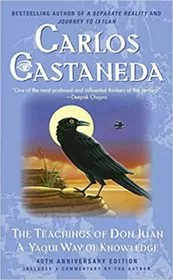
The Teachings of Don Juan
by Carlos Castaneda
1968
The first account of the author's apprenticeship with Don Juan Matus between 1960 and 1965. It details his terrifying and confusing initial encounters with "Mescalito" and other plant spirits as he struggles to comprehend a system of knowledge completely outside Western logic.
Recommended by
1 person Aubrey Marcus recommended this book
Aubrey Marcus
Aubrey Marcus mentioned this book on "The Tim Ferriss Show" podcast.
Aubrey Marcus's recommendation of this book
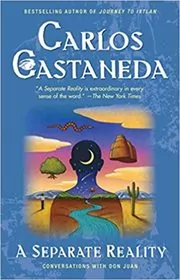
A Separate Reality
by Carlos Castaneda
1971
Returning to Mexico years after his first withdrawal, the author resumes his apprenticeship. He faces new tests of courage and attempts to "see" rather than just look, culminating in profound shifts in his perception of the world around him.
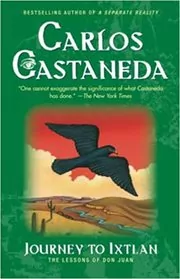
Journey to Ixtlan
by Carlos Castaneda
1972
Often cited as a key turning point in the series, this volume reveals that the psychotropic plants of the earlier years were not the point of the teachings. Instead, Don Juan focuses on "stopping the world" and the hard work of erasing self-importance to become a warrior.
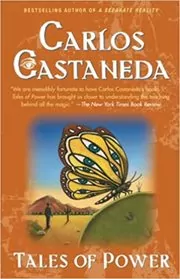
Tales of Power
by Carlos Castaneda
1974
This book marks the end of the author's direct apprenticeship. It distinguishes between the "Tonal" (the known world) and the "Nagual" (the unknown), leading to a dramatic final leap into the abyss that tests everything he has learned.
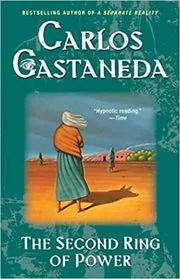
Second Ring of Power
by Carlos Castaneda
1977
Alone now, the author seeks out the other apprentices of Don Juan. He encounters a group of women warriors who challenge him physically and psychically, forcing him to defend his energy and prove his leadership.

Eagle's Gift
by Carlos Castaneda
1981
The narrative expands to explain the social structure of the sorcerers' party and the Rule of the Nagual. It recounts the history of the lineage and the specific energetic configurations required to seek freedom.
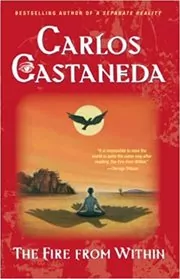
Fire from Within
by Carlos Castaneda
1984
A detailed exploration of the "assemblage point," the mechanism that determines what we perceive as reality. The text explains how sorcerers shift this point to access other worlds and the dangers of the "rolling force" of death.
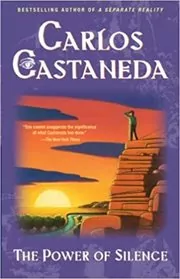
The Power of Silence
by Carlos Castaneda
1987
Through a series of abstract stories and "sorcery cores," Don Juan explains how to manipulate awareness. The focus is on reaching a state of inner silence, which allows the warrior to act without the interference of the mind.
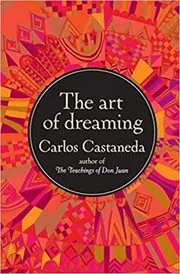
The Art of Dreaming
by Carlos Castaneda & John B. Beck
1993
A comprehensive guide to the practice of controlled dreaming. The author describes the "gates of dreaming," encountering inorganic beings in other realms, and the perilous role of the "scout" in exploring the unknown.
Magical Passes
by Carlos Castaneda
1997
This practical manual introduces Tensegrity, a modernized version of the physical movements used by ancient shamans. The exercises are designed to redeploy energy within the body and promote physical and mental well-being.
The Wheel of Time
by Carlos Castaneda
1998
A curated collection of key quotations and concepts from the first eight books of the series. The author provides new commentary on these ideas, offering a cohesive overview of the shamanic timeline and philosophy.
The Active Side of Infinity
by Carlos Castaneda
1999
The author compiles an "album" of the memorable events of his life, viewing his past through the lens of a sorcerer. It includes the controversial concept of the "foreign installation," a predator mind that limits human awareness.
Recommended by
1 person Corey Wayne recommended this book
Corey Wayne
"Great book." - Corey Wayne
Corey Wayne's recommendation of this book
The Teachings of Don Juan books in chronological order
Series background & context
The series begins with a chance meeting that sounds like something out of a movie. In the early 1960s, a young anthropology student named Carlos Castaneda traveled to the American Southwest. He was looking for information on medicinal plants, but instead, he found Don Juan Matus. Don Juan wasn't just a knowledgeable elder; he was a Yaqui "man of knowledge," or sorcerer. What Castaneda intended to be a standard academic study morphed into a terrifying and enlightening apprenticeship that lasted for decades.
The first few books, starting with The Teachings of Don Juan, are famous for their vivid descriptions of hallucinogens. You’ll read about peyote, jimson weed, and mushrooms, which Don Juan refers to as "power plants." For a long time, these substances defined the series in the public eye, becoming counterculture classics. But inside the narrative, Don Juan makes it clear that these weren't for recreation. They were battering rams designed to break down Castaneda’s stubborn rationality and force him to see that the world is stranger than he believed.
Then, the plants disappear from the curriculum entirely.
As the saga continues, the story takes a major turn. The series moves away from chemical aids to focus on the psychology of the "warrior." Here, the goal isn't to escape reality, but to "stop the world." The central premise is that the reality we perceive every day is just a description we’ve been socialized to accept. To break free from that description requires immense mental discipline.
Castaneda introduces specific practices to achieve this freedom. You will encounter concepts like "erasing personal history," which involves dropping the ego and the expectations others have of you. Later entries dive into complex metaphysics, specifically the "assemblage point." This is described as a specific spot on a person's luminous energy field where perception is assembled. By shifting this point through the arts of "dreaming" and "stalking," a sorcerer can perceive energy directly and enter entirely different worlds.
Reading these books is a unique experience because of how they are told. They are structured largely as dialogues. You get to watch Castaneda play the fool, constantly trying to take notes and ask logical questions while Don Juan teases him or tricks him into a state of heightened awareness. It represents a constant battle between the rigid Western mind and a magical universe that refuses to be pinned down by logic.
Whether you approach these texts as literal anthropological records or as powerful philosophical allegories, the impact is the same. The series challenges you to examine your own habits and assumptions. The journey from a bus station in Arizona into the depths of the "nagual" offers a different way to think about awareness itself, suggesting that the universe is much vast than our daily routines let us believe.














Edited by
Software engineer whose passion for tracking book recommendations from podcasts inspired the creation of MRB.
Lead investor at 3one4 Capital whose startup expertise and love for books helped shape MRB and its growth.
Comments
Did we miss something? Have feedback?
Help us improve this page by sharing your thoughts