
Don DeLillo Books in Order
Browse Don DeLillo books in order, with short summaries, major themes, and an easy guide to where to start with his novels, stories, and plays, all in one place.
Last updated:
As an Amazon Associate, we earn from qualifying purchases (at no extra cost to you).
Don DeLillo books in publication order
22 books
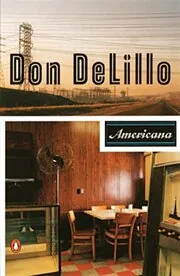
Americana
by Don DeLillo
1971
Television executive David Bell seems to have made it, but success leaves him feeling hollow and overexposed. He heads across America with a camera, chasing a truer version of himself and the country that made him.

End Zone
by Don DeLillo
1972
College running back Gary Harkness arrives at tiny Logos College in West Texas for a winning football season and finds himself obsessed with nuclear war. DeLillo turns the language of sport and strategy into a dark, funny meditation on violence.
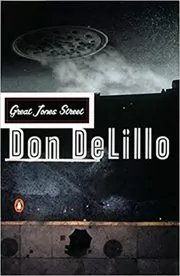
Great Jones Street
by Don DeLillo
1973
Rock star Bucky Wunderlick walks out on fame and hides in a shabby East Village apartment, hoping silence will save him. Instead he finds fans, handlers, and hangers-on closing in, and the culture he fled gets stranger by the day.
Recommended by
1 person Adam Sessler recommended this book
Adam Sessler
Adam Sessler recommended this book on Twitter.
Adam Sessler's recommendation of this book
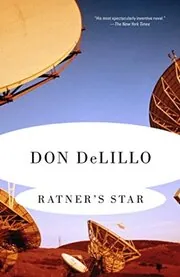
Ratner's Star
by Don DeLillo
1976
Teen math prodigy Billy Twillig is recruited to an underground research center to help decode a signal from outer space. The novel mixes science, satire, and absurd comedy as brilliant people chase meaning and keep missing each other.
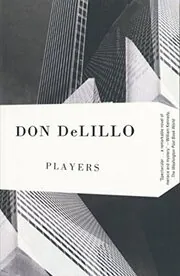
Players
by Don DeLillo
1978
Pammy and Lyle Wynant seem to have the polished Manhattan life, but boredom and emptiness sit just under the surface. After Lyle witnesses a killing on the Stock Exchange floor, both drift toward danger, detachment, and a world of casual political violence.
Running Dog
by Don DeLillo
1978
Reporter Moll Robbins chases a story that leads from Washington intrigue into the hunt for a rumored pornographic film linked to Hitler. What starts as a scoop turns into a violent, paranoid scramble involving collectors, criminals, and political fixers.
The Names
by Don DeLillo
1982
An American risk analyst living among expats in Greece becomes entangled in a strange pattern of ritual murders. It is part family story, part mystery, and a novel about language, place, and the uneasy way Americans move through the world.
Recommended by
1 person- Adam Sessler recommended this book
Adam Sessler
Adam Sessler recommended this book on Twitter.
Adam Sessler's recommendation of this book
White Noise
by Don DeLillo
1985
Jack Gladney, founder of Hitler Studies, lives in a college town with Babette and their blended family, surrounded by TV chatter and supermarket abundance. Then an airborne toxic event and a secret drug force the book's comic dread into something personal.

The Day Room
by Don DeLillo
1986
In this strange, slippery play, a hospital room starts to feel like a motel and characters keep shifting identities. DeLillo uses the unstable setting to explore performance, fear, and the uneasy border between everyday routine and existential panic.
Libra
by Don DeLillo
1988
DeLillo imagines Lee Harvey Oswald's path toward Dallas while weaving in intelligence operatives, rumor, and history's blind spots. The result is part political thriller, part character study, and a chilling look at how conspiracies grow.
Recommended by
1 person- Adam Sessler recommended this book
Adam Sessler
Adam Sessler recommended this book on Twitter.
Adam Sessler's recommendation of this book
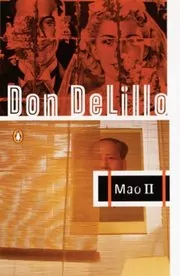
Mao II
by Don DeLillo
1991
Reclusive novelist Bill Gray steps back into the world when he is drawn toward an effort to free a kidnapped poet in Beirut. The novel pits writers, crowds, and terrorists against one another in a tense argument about image, violence, and influence.
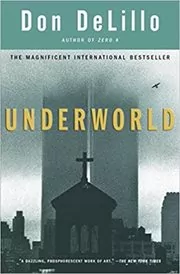
Underworld
by Don DeLillo
1997
Beginning with Bobby Thomson's famous 1951 home run, this sprawling novel follows a baseball, a waste executive, an artist, and decades of American history. It is big, crowded, and intimate at once, tracing how private lives absorb the Cold War and its aftermath.

Valparaiso
by Don DeLillo
1999
An ordinary business trip goes wrong when a man boards the wrong flight and lands in Valparaiso, Chile instead of Indiana. His mistake becomes a media event, and the play coolly satirizes television, celebrity, and the stories people tell about themselves.

Pafko at the Wall
by Don DeLillo
2001
Set during the 1951 Giants-Dodgers playoff game, this novella catches the crowd, the city, and the shock of Bobby Thomson's pennant-winning home run. It is both a baseball story and a vivid doorway into the larger world of Underworld.
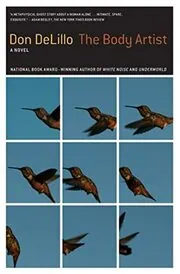
The Body Artist
by Don DeLillo
2001
Performance artist Lauren Hartke is left alone in a rented house by the sea after her husband's sudden death. As grief distorts time and perception, she encounters a strange man who seems to echo voices from her own life.

Love-Lies-Bleeding
by Don DeLillo
2002
After a devastating stroke leaves land artist Alex Macklin unable to speak, the people closest to him gather to decide what should happen next. This spare play turns family argument into a painful, darkly funny meditation on mercy, art, and the end of life.

Cosmopolis
by Don DeLillo
2003
Eric Packer, a 28-year-old billionaire asset manager, rides across Manhattan in a white limousine for a haircut while his huge bet against the yen goes bad. Over one feverish day, wealth, power, and certainty begin to come apart.
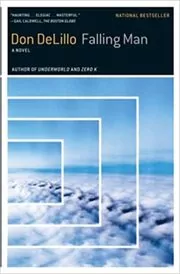
Falling Man
by Don DeLillo
2007
After escaping the World Trade Center on September 11, Keith Neudecker drifts back into the life of his estranged wife, Lianne. The novel follows their shaken attempts at ordinary life while the day's trauma keeps reshaping memory, intimacy, and time.
Recommended by
1 person- Adam Sessler recommended this book
Adam Sessler
Adam Sessler recommended this book on Twitter.
Adam Sessler's recommendation of this book
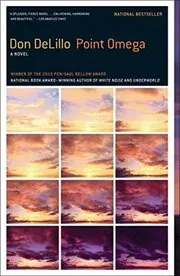
Point Omega
by Don DeLillo
2010
A filmmaker visits war theorist Richard Elster in the desert, hoping to shape a spare documentary from his thoughts on war and time. When Elster's daughter arrives and then disappears, the stillness turns haunting, intimate, and immense.

The Angel Esmeralda
by Don DeLillo
2011
This collection gathers nine stories set in places ranging from the Bronx and Manhattan to the Caribbean and outer space. Nuns, prisoners, travelers, and astronauts move through sharp, unsettling pieces about isolation, faith, violence, and ordinary American strangeness.
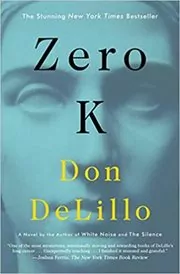
Zero K
by Don DeLillo
2016
Jeffrey Lockhart visits a secret desert compound where his billionaire father hopes technology can postpone death itself. As his dying stepmother prepares for cryonic preservation, the novel becomes an uneasy argument about mortality, money, and what it means to stay human.
Recommended by
1 person Sarah Jessica Parker recommended this book
Sarah Jessica Parker
"Oh man am I digging this book." - Sarah Jessica Parker
Sarah Jessica Parker's recommendation of this book
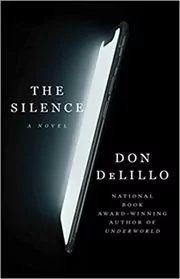
The Silence
by Don DeLillo
2020
On Super Bowl Sunday in 2022, five people gather in a Manhattan apartment as a worldwide technological breakdown cuts the digital world to black. DeLillo turns that sudden silence into a tense, eerie conversation about dependence, fear, and what remains when the screens go dead.
Where to start with Don DeLillo
If you want the clearest first book: White Noise → Libra → Mao II
If you want the big panoramic novel: Pafko at the Wall → Underworld
If you prefer shorter late-period books: The Body Artist → Point Omega → Zero K → The Silence
If you want early, stranger DeLillo: Americana → End Zone → Great Jones Street → Ratner's Star
Don DeLillo collections, short stories, and related book types
Short Stories/Novellas
Short Story Collections
Plays
Standalone Don DeLillo books
Author bio
Don DeLillo was born in New York City on November 20, 1936, and grew up in the Bronx in an Italian American Catholic family. That part of New York stayed with him. Its streets, voices, games, and crowded daily life echo through work like Underworld, and help explain why even his strangest books still feel tied to ordinary American talk.
He didn't start out as the kid everyone expected to become a novelist.
As a teenager, he took a summer job as a parking attendant, and the long hours of waiting pushed him toward serious reading. He graduated from Cardinal Hayes High School in 1954, then from Fordham University in 1958 with a degree in communication arts. After college he wanted a job in publishing, but wound up in advertising instead.
That detour mattered. DeLillo worked as a copywriter in New York for several years, and during that time he began writing fiction. He published short stories in the early 1960s, left advertising in the mid 1960s, and kept at his first novel until Americana arrived in 1971.
Readers often talk about his ear for American speech. A DeLillo conversation can sound funny, stiff, eerie, and painfully true all at once. He likes professors, analysts, traders, artists, wanderers, and people standing just outside the center of power, close enough to feel its pressure.
From the start, he was drawn to the machinery of modern life, television, sports, money, politics, crowds, slogans, and the strange things people say when they are trying not to say too much. End Zone turns college football and nuclear dread into the same language game. Great Jones Street looks at rock fame as both spectacle and trap. The Names follows Americans abroad and circles questions of language, violence, and belonging.
Then came the run of books many readers start with. White Noise made family life, supermarket culture, and fear of death feel funny and alarming at the same time, and it won the National Book Award. Libra reimagines Lee Harvey Oswald and the Kennedy assassination without pretending the mystery can ever be fully solved. Mao II, which won the PEN/Faulkner Award, asks what power a novelist still has in a world shaped by mass images and political violence.
Underworld is often the mountain.
That 1997 novel stretches across decades of American history, beginning with Bobby Thomson's famous home run and following, among other people, Nick Shay and the artist Klara Sax. Later books grew shorter and more stripped down, but they kept worrying the same big questions. In The Body Artist, Point Omega, Zero K, and The Silence, DeLillo returned again and again to time, grief, technology, and the ways people talk when the old systems stop making sense.
He also wrote plays, essays, a screenplay, and the story collection The Angel Esmeralda. Over the years he picked up major honors, including the Library of Congress Prize for American Fiction and the National Book Foundation's medal for distinguished contribution to American letters. Those prizes matter, but readers usually come back because his books keep finding the pressure points of American life, media noise, private dread, public spectacle, and the ordinary fear of death.
He has long been private about his personal life, but he has been associated for years with Westchester County, New York.



Edited by
Software engineer whose passion for tracking book recommendations from podcasts inspired the creation of MRB.
Lead investor at 3one4 Capital whose startup expertise and love for books helped shape MRB and its growth.
Comments
Did we miss something? Have feedback?
Help us improve this page by sharing your thoughts