
The Romanovs (Robert K Massie) Books in Order
Part ofRobert K Massie Books in OrderSee The Romanovs books by Robert K Massie in order, with short summaries, series background, and easy guidance on where to start with his Russia books.
Last updated:
As an Amazon Associate, we earn from qualifying purchases (at no extra cost to you).
The Romanovs (Robert K Massie) books in publication order
4 books
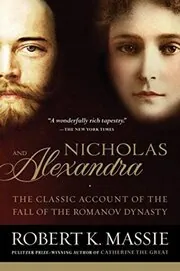
Nicholas and Alexandra
by Robert K Massie
1967
Massie follows Nicholas II and Alexandra as court intrigue, Rasputin, and their son Alexei's hemophilia collide with the growing Russian Revolution. It turns the fall of an empire into an intimate family tragedy.
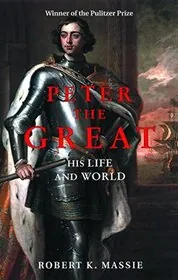
Peter the Great: His Life and World
by Robert K Massie
1980
This sweeping biography follows Peter from boy tsar to empire-building ruler, showing how his drive, brutality, curiosity, and reforms remade Russia. War, shipbuilding, court politics, and the founding of St. Petersburg all shape the story.
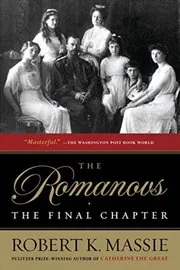
The Romanovs: The Final Chapter
by Robert K Massie
1995
Massie returns to the fallen dynasty through the hunt for the Romanovs' remains, the Anastasia claims, and the science used to test them. It reads like historical detective work, with politics, forensics, and old myths colliding.
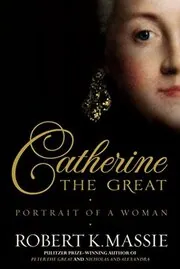
Catherine the Great: Portrait of a Woman
by Robert K Massie
2011
Born a minor German princess, Catherine remakes herself into Russia's empress and holds power through coups, court maneuvering, war, and sheer will. Massie keeps the focus on the woman behind the title as well as the empire she ruled.
The Romanovs (Robert K Massie) books in chronological order
Series background & context
The Romanovs books are less a strict series than a connected shelf of narrative histories about imperial Russia. Massie keeps circling the same question from different angles: how did this dynasty build such enormous power, and how did that power finally crack? Because he writes like a storyteller, the books feel linked even when they jump across centuries and switch from palace drama to archival detective work.
This is history with a strong human center.
The emotional core for many readers is Nicholas and Alexandra. It follows the last tsar and tsarina as they try to protect their marriage, their children, and their throne while Russia grows more unstable around them. The setting matters a lot here, from the insulated court at St. Petersburg to the wider empire outside it, because Massie shows how far royal family life could drift from the daily pressures building in the country. Alexei's hemophilia and Rasputin's rise are not side notes, they are part of the engine of the story.
The books also move backward to show where that imperial world came from. In Peter the Great: His Life and World, Russia is a restless, half-reformed state being pushed toward Europe by a ruler with huge energy and little patience. In Catherine the Great: Portrait of a Woman, the court becomes a place of ambition, maneuvering, culture, and hard political survival as a German-born princess remakes herself into empress. Read together, those biographies give the Romanov world a long arc, from expansion and reform to the brittle grandeur that would later fail Nicholas II.
Then the story turns into an investigation.
In The Romanovs: The Final Chapter, the usual palace rooms give way to graves, laboratories, archives, and arguments over memory. Massie follows the discovery of the imperial family's remains, the many Anastasia claims, and the scientific work that helped test old legends against physical evidence. The tension here comes from politics and proof. It still belongs with the earlier books because the dynasty's end is not only a tragedy from 1918, it is also a mystery people kept trying to solve for decades.
The two illustrated books add texture rather than a new plot. The Romanov Family Album brings Nicholas, Alexandra, and their children into view through private photographs, which makes them feel less like distant symbols and more like an actual family. The Last Courts of Europe widens the frame to the royal houses of prewar Europe and shows how connected these courts were by blood, marriage, ceremony, and habit. It helps explain why the Romanov story was never only Russian.
So what should you expect? Big biographies, strong character portraits, court politics, war, reform, family strain, and the steady sense that private weakness can have public consequences. You do not need to read every book in order, but together they create a rich picture of how a dynasty rose, ruled, and lingered in memory after it was gone.






Edited by
Software engineer whose passion for tracking book recommendations from podcasts inspired the creation of MRB.
Lead investor at 3one4 Capital whose startup expertise and love for books helped shape MRB and its growth.
Comments
Did we miss something? Have feedback?
Help us improve this page by sharing your thoughts