
The Ringing Cedars of Russia Books in Order
Part ofVladimir Megre Books in OrderThis page shows The Ringing Cedars of Russia books in order by Vladimir Megre, with short summaries, series background, and where to start.
Last updated:
As an Amazon Associate, we earn from qualifying purchases (at no extra cost to you).
The Ringing Cedars of Russia books in publication order
9 books
Anastasia
by Vladimir Megre
1996
On a trading expedition along the Ob River, businessman Vladimir Megre meets Anastasia, a woman living deep in the Siberian taiga. Their conversations about nature, love, and human purpose overturn his old life and launch the whole series.
The Ringing Cedars of Russia
by Vladimir Megre
1997
Megre revisits the Siberian journey that changed him and the hard road to publishing Anastasia. New episodes with Anastasia and her family widen the series into questions of faith, history, and human purpose.
The Space of Love
by Vladimir Megre
1998
Megre returns to Anastasia and their young son while danger and doubt gather around them. The book pushes deeper into childrearing, education, and the idea that a family's loving environment can shape its future.
Co-Creation
by Vladimir Megre
1999
This volume leans further into creation stories, family life, and practical steps for building a home in harmony with nature. Alongside taiga conversations, Megre explores love, ancestry, education, and shared responsibility for the future.
Who Are We?
by Vladimir Megre
2000
Searching for proof that Anastasia's ideas can work in ordinary life, Megre compares modern society with land-based community living. The book pushes the series toward its larger social vision of family, children, and a different future.
The Book of Kin
by Vladimir Megre
2002
Another visit to the taiga leads Megre into conversations with his growing son and deeper debates about family, history, education, and inherited wisdom. Stories and parables give this volume a strong focus on ancestry and the family line.
The Energy of Life
by Vladimir Megre
2002
With Anastasia's grandfather taking a larger role, this volume challenges Megre's thinking and turns toward sharper debates about thought, faith, history, and daily life. It is one of the series' more reflective and argument-driven books.
The New Civilization
by Vladimir Megre
2005
Another visit to Anastasia and her son opens into a broader vision of health, society, and cooperation with nature. This volume gives more practical detail about family homesteads and the civilization Megre hopes could grow from them.
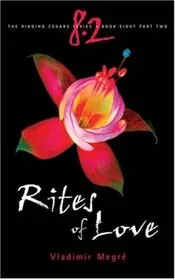
Rites of Love
by Vladimir Megre
2006
This later volume compares modern ideas about love, marriage, childbirth, and family with older customs Megre wants readers to reconsider. It is one of the series' most focused books on relationships, parenting, and cultural memory.
The Ringing Cedars of Russia books in chronological order
Series background & context
The Ringing Cedars of Russia books begin with a businessman on a river trip and a meeting that changes everything. In Anastasia, Vladimir Megre says he meets a woman living deep in the Siberian taiga, far from towns and ordinary comforts. She becomes the center of the whole series: teacher, challenger, mystery, and the voice for a very different way of living.
This is not a conventional fantasy or adventure series. The books read like a blend of memoir, spiritual conversation, philosophical argument, and social proposal. Megre writes himself into the story, so the tension often comes less from plot twists and more from long talks, sharp questions, and the gap between modern life and the life Anastasia describes.
Nature sits at the center of everything.
Across the series, Anastasia's ideas keep circling back to family, love, childbirth, childrearing, education, and the bond between people and land. One of the key concepts is the family homestead, a piece of land where a family can build a lasting home and what the books call a space of love. If you read beyond The Ringing Cedars of Russia and The Space of Love, that idea becomes the thread connecting almost everything else.
The cast stays fairly tight, but the scope grows wider. Later books bring in Anastasia's son, her grandfather, and more stories, parables, and historical claims. Co-Creation, Who Are We?, The Book of Kin, The Energy of Life, The New Civilization, and Rites of Love move further into questions about ancestry, ritual, religion, politics, history, and how whole communities should be organized.
That shift matters.
Readers coming in for a strong, scene-by-scene novel should know that the later volumes become more idea-driven than story-driven. They still return to the taiga, to Megre's visits, and to the emotional pull of Anastasia herself, but the books increasingly work like conversations about how life ought to be lived. Some readers love that openness and intensity. Others find it demanding.
The setting gives the series much of its pull. The taiga is not just a backdrop. It is presented as a place of memory, testing, and contact with a deeper order of nature. Even when the books move into debates about schools, marriage, history, or society, they keep returning to the forest glade as the model for a more grounded human life.
The series also moved beyond the page. It inspired readers interested in ecovillages, family homesteads, and intentional community, and that wider response is part of why the books still get talked about. If you are wondering what to expect, think of The Ringing Cedars of Russia as part spiritual memoir, part ecological vision, and part long-running argument about family, land, and the future.











Edited by
Software engineer whose passion for tracking book recommendations from podcasts inspired the creation of MRB.
Lead investor at 3one4 Capital whose startup expertise and love for books helped shape MRB and its growth.
Comments
Did we miss something? Have feedback?
Help us improve this page by sharing your thoughts