
The Revolutions Trilogy Books in Order
Part ofJohn Banville Books in OrderHistorical fiction by John Banville that reimagines the lives of Copernicus, Kepler, and Newton, focusing on the chaos behind their scientific order.
Last updated:
As an Amazon Associate, we earn from qualifying purchases (at no extra cost to you).
The Revolutions Trilogy books in publication order
3 books

Doctor Copernicus
by John Banville
1976
The story of Nicolaus Copernicus, the canon who shattered the medieval universe by placing the sun at its center. Banville depicts him not as a hero, but as a fearful, isolated man haunted by the implications of his own revolutionary discovery.
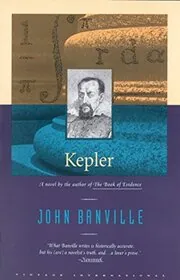
Kepler
by John Banville
1981
A fictionalized biography of Johannes Kepler, the brilliant mathematician who mapped the planetary laws. The novel portrays his struggle against poverty, illness, and the religious wars of the 17th century, all while he seeks the divine harmony of the spheres.

The Newton Letter
by John Banville
1982
A historian rents a cottage in the countryside to finish his biography of Isaac Newton. Instead, he becomes obsessed with the local family, misinterpreting their lives and relationships in a way that mirrors Newton's own breakdown and abandonment of science.
The Revolutions Trilogy books in chronological order
Series background & context
John Banville has always been fascinated by the gap between our perception of the world and the reality of it. In this sequence of novels, often collected as "The Revolutions Trilogy," he turns his gaze toward the history of science to explore that very disconnect. He dramatizes the lives of the men who dismantled the medieval view of the universe, focusing on Nicolaus Copernicus, Johannes Kepler, and Isaac Newton.
These aren’t your standard historical biographies filled with dusty dates and triumphant discoveries. Instead, Banville treats these scientific giants as complex, deeply flawed characters who are often baffled by the chaos of their own lives.
The series begins with Doctor Copernicus, a novel that plunges readers into a bleak, cold world. Banville portrays the Polish astronomer not as a fearless hero, but as an isolated, somewhat fearful figure. He is a man obsessed with the abstract purity of the stars, yet he struggles to navigate the sordid politics and family squabbles of sixteenth-century Europe. The narrative captures the terrifying implication of his theory: that the earth is not the center of anything, but merely a rock drifting through a void.
In Kepler, the tone shifts from the chilly silence of Copernicus to a more picaresque, chaotic energy. Johannes Kepler is depicted as a man constantly on the move, dodging religious persecution and the violence of the Thirty Years' War. He is a mathematician trying to find harmonic order—the "music of the spheres"—while his daily existence is plagued by financial ruin, illness, and a mother accused of witchcraft. It is a portrait of genius surviving in a world that seems determined to crush it.
The conclusion of the trilogy, The Newton Letter, throws a curveball.
Unlike the first two books, this isn't a historical dramatization set in the past. It is a contemporary novella about a historian who retreats to the Irish countryside to finish a biography of Isaac Newton. However, the historian finds himself distracted by the people living in the "big house" next door. He abandons his study of Newton’s perfect, mechanical laws to get entangled in a messy human drama where logic doesn't apply.
Through these three books, Banville explores a single, haunting theme: the cost of looking too closely at the universe.
The scientists in these stories seek an elegant, mathematical order in the heavens because they cannot find it on earth. They are visionaries who change history, yet they often remain strangers to the people closest to them. By blending rigorous historical detail with his signature lyrical prose, Banville suggests that the "revolution" wasn't just about planetary orbits. It was a fundamental shift in how we understand our own isolation.











Edited by
Software engineer whose passion for tracking book recommendations from podcasts inspired the creation of MRB.
Lead investor at 3one4 Capital whose startup expertise and love for books helped shape MRB and its growth.
Comments
Did we miss something? Have feedback?
Help us improve this page by sharing your thoughts