
The Prince of Nothing Books in Order
Part ofR Scott Bakker Books in OrderSee The Prince of Nothing by R Scott Bakker in order, with short summaries, series background, and guidance on starting his Second Apocalypse books.
Last updated:
As an Amazon Associate, we earn from qualifying purchases (at no extra cost to you).
The Prince of Nothing books in publication order
3 books
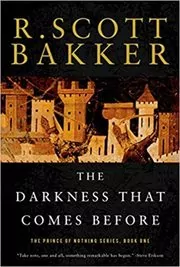
The Darkness That Comes Before
by R Scott Bakker
2003
As a vast Holy War gathers, sorcerer Drusas Achamian fears that an ancient apocalypse is returning. Into the chaos walks Kellhus, a mysterious monk whose intelligence and charisma begin bending armies, nations, and people to his will.
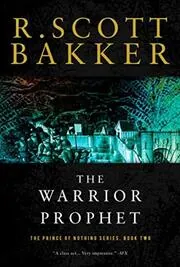
The Warrior Prophet
by R Scott Bakker
2004
The Holy War drives south through famine, rivalry, and bloodshed while Kellhus tightens his hold on the men around him. Achamian sees the danger growing, but stopping a man who can read and shape others is becoming almost impossible.
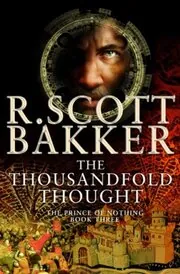
The Thousandfold Thought
by R Scott Bakker
2006
The Holy War nears Shimeh, and Kellhus stands at the center of prophecy, conquest, and betrayal. As Achamian, Esmenet, and Cnaiur are pulled toward a final reckoning, the Consult prepares the return of a greater catastrophe.
The Prince of Nothing books in chronological order
Series background & context
The Prince of Nothing is the opening movement of Bakker's larger Second Apocalypse cycle. It begins with The Darkness that Comes Before and follows a holy war across the Three Seas, but the real story is bigger than armies marching south. This is dark epic fantasy about power, belief, and what happens when a man who understands other people too well steps into a world already haunted by an older apocalypse.
At the center is Anasurimbor Kellhus, a monk-warrior from an isolated order called the Dunyain. He heads south searching for his father, yet he quickly becomes far more than a traveler. Kellhus can read expressions, habits, and weaknesses with frightening precision, and that lets him guide, unsettle, or dominate almost everyone he meets. The books keep asking a simple and disturbing question: if someone can always tell you what you want to hear, what chance do you have against him?
But Kellhus is only one side of the series. Drusas Achamian, a sorcerer of the Mandate School, brings the memory of older disasters into the story. Esmenet, a woman trying to survive in a brutal world, gives the books some of their most human perspective. Cnaiur urs Skiotha, a Scylvendi chieftain driven by pride, fury, and old wounds, brings a dangerous, unpredictable energy to every scene he enters.
Nobody in these books gets a safe, simple role.
The setting matters as much as the cast. Eärwa is full of empires, sects, sorcerous schools, and half-buried histories. The Holy War is supposed to reclaim the city of Shimeh from the Fanim, but behind that public cause sits a deeper threat: the Consult, the memory of the First Apocalypse, and the possibility that the No-God could return. Bakker lets religion, politics, and myth push on each other until every march, siege, and alliance feels loaded with more than one meaning.
Tonally, The Darkness that Comes Before, The Warrior Prophet, and The Thousandfold Thought are heavy, often bleak books. They spend time on strategy, theology, fear, and manipulation. They also trust readers to keep up with unfamiliar words, clashing cultures, and shifting loyalties. If that sounds demanding, it is. But that density is part of the appeal. The trilogy feels like a full civilization under pressure, not just a backdrop for a quest.
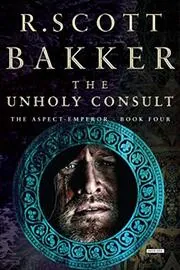
Read this series if you want fantasy that treats prophecy with suspicion, religion as lived politics, and warfare as something ugly and costly. It works best for readers who like long arcs, morally compromised characters, and a world where old ruins and old ideas are equally dangerous. And if you continue into The Aspect-Emperor, everything that starts here only grows stranger, larger, and darker.








Edited by
Software engineer whose passion for tracking book recommendations from podcasts inspired the creation of MRB.
Lead investor at 3one4 Capital whose startup expertise and love for books helped shape MRB and its growth.
Comments
Did we miss something? Have feedback?
Help us improve this page by sharing your thoughts