
The Great Jewish Revolt Books in Order
Part ofJames Mace Books in OrderBrowse The Great Jewish Revolt series by James Mace in order, with concise summaries, reading order, and background on this Roman-Judean war trilogy.
Last updated:
As an Amazon Associate, we earn from qualifying purchases (at no extra cost to you).
The Great Jewish Revolt books in publication order
3 books
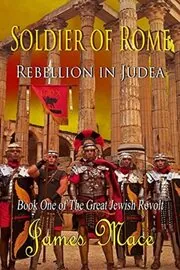
Rebellion in Judea / Kingdom of the Damned
by James Mace
2014
Revolt breaks out in Judea, and Josephus must defend Galilee against Rome's returning war machine. What begins as resistance quickly turns into a harsher story of siege, factionalism, and impossible odds.
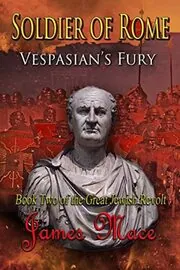
Vespasian's Fury
by James Mace
2014
After the fall of Jotapata, Vespasian drives deeper into Galilee and Judea while Jerusalem tears itself apart from within. Roman pressure and zealot infighting turn the revolt into a spiral of terror and loss.
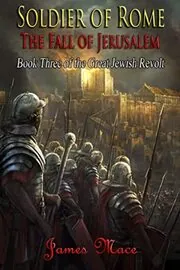
The Fall of Jerusalem
by James Mace
2016
As the Flavian house rises in Rome, the war in Judea closes around Jerusalem. Roman siegecraft, famine, and factional violence inside the city drive this final volume toward one of antiquity's bleakest endings.
The Great Jewish Revolt books in chronological order
Series background & context
The Great Jewish Revolt is a tight three-book series about one of the fiercest wars of the first century, the revolt in Judea against Rome from A.D. 66 to 70. It begins with rebellion in Galilee and Judea, moves through Vespasian's brutal reconquest, and ends with the siege and destruction of Jerusalem. The books lean into the scale of the conflict, but they stay focused on the people trapped inside it.
This series works because the struggle is never simple. Rome is an overwhelming military power, but the revolt is also split from within. Rival leaders, zealot factions, moderates, priests, and city crowds all pull in different directions. Josephus is an especially important figure in the background, not only as a commander but as a man caught between survival, loyalty, and history.
Everything narrows toward Jerusalem.
The setting shifts from Galilean strongholds to the battered towns of Judea and finally to the city itself, where hunger, fear, faith, and factional violence become as dangerous as the Roman legions outside the walls. That sense of pressure gives the trilogy its shape. Even when armies are moving across the map, the real tension often comes from internal collapse and from people realizing too late that their enemy is not only outside the gate.
The tone is dark, political, and relentlessly siege-driven. Readers who like military historical fiction will get plenty of campaigns and battles, but the books are just as interested in prophecy, leadership, and the choices people make when defeat starts to look unavoidable. The end point is well known. The pull of the series comes from how it gets there.
Start with Rebellion in Judea / Kingdom of the Damned, then continue to Vespasian's Fury and The Fall of Jerusalem. Read in order. This is a compact series, but it carries a lot of weight and gives a strong sense of a land tearing itself apart while Rome closes in.





Edited by
Software engineer whose passion for tracking book recommendations from podcasts inspired the creation of MRB.
Lead investor at 3one4 Capital whose startup expertise and love for books helped shape MRB and its growth.
Comments
Did we miss something? Have feedback?
Help us improve this page by sharing your thoughts