
The First Trilogy Books in Order
Part ofJoyce Cary Books in OrderExplore The First Trilogy by Joyce Cary in order, with short summaries and a guide to the books to help you choose where to start reading.
Last updated:
As an Amazon Associate, we earn from qualifying purchases (at no extra cost to you).
The First Trilogy books in publication order
2 books
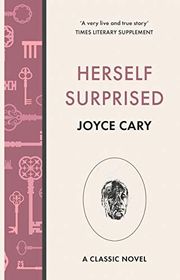
Herself Surprised
by Joyce Cary
1941
From prison, Sara Monday looks back over a life that began in poverty and domestic service. Her account follows the relationships and choices that carried her through decades of English life, revealing a perspective very different from those around her.
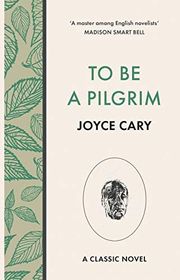
To Be a Pilgrim
by Joyce Cary
1942
Wealthy, disgraced lawyer Tom Wilcher retreats to his estate near the end of his life. Looking back on his relationships and actions, he struggles with guilt, spiritual longing, and the uneasy judgments of the younger people surrounding him.
Series background & context
The First Trilogy connects three people whose accounts of life refuse to fit neatly together: Sara Monday, lawyer Tom Wilcher and painter Gulley Jimson. Each novel gives one of them the narrative voice. Herself Surprised belongs to Sara, To Be a Pilgrim to Wilcher, and The Horse’s Mouth to Jimson. The books form a sequence of overlapping relationships and contrasting outlooks, with each speaker offering a different sense of what matters and what can be excused.
Sara’s story begins with the experience of domestic service. Born into poverty, she takes work as a cook while still young, and her account looks back over a life shaped by households, lovers and changing circumstances. Her relationships with Wilcher and Jimson connect the trilogy’s different social worlds. She is capable of explaining herself in ways that sound natural to her even when a reader may hear contradictions. The pleasure lies partly in the distance between the story she means to tell and what her telling reveals.
Wilcher sees the past through another set of obligations.
In To Be a Pilgrim, the wealthy lawyer has withdrawn to his country estate with a troubled conscience. Family history, responsibility and the effort to preserve a fortune occupy him. He has been both Sara’s employer and her lover, so his reflections open another view of someone the reader may already feel they know. The English country household matters because it gathers property, duty and private desire in one place. Those concerns cannot be separated from Wilcher’s understanding of himself.
Jimson brings artistic hunger into this domestic and moral argument. An impoverished painter and another of Sara’s lovers, he is rebellious, self-serving and often farcical in his behavior. He measures life against the demands of making art, while the others have their own reasons for resisting what he wants. His presence gives the linked stories energy and friction: an artist’s conviction about his work may be intensely felt without making him easy to live with. The trilogy allows that conviction to speak without requiring the other characters to share it.
The tone combines social comedy with uncomfortable self-revelation.
These novels suit readers who enjoy distinctive first-person voices and the work of comparing them. Their English settings place servants, owners, family members and artists in relationships that carry unequal money and authority. A change of narrator can make an apparently settled judgment feel provisional again. Begin with Herself Surprised for Sara’s account, then follow To Be a Pilgrim for the shift toward Wilcher’s memories and concerns. The linking question is how much of another person can ever be captured by one voice, especially when that voice is busy defending its own life.








Edited by
Software engineer whose passion for tracking book recommendations from podcasts inspired the creation of MRB.
Lead investor at 3one4 Capital whose startup expertise and love for books helped shape MRB and its growth.
Comments
Spotted a missing book, a wrong order or a mistake? Tell us and we'll fix this page.
We're a reading guide, not the author or publisher, so we can't send books or pass on messages.