
The Covenant Chronicles Books in Order
Part ofKai Wai Cheah Books in OrderSee The Covenant Chronicles by Kai Wai Cheah in order, with quick summaries, series background, and where to start with Luke Langdon's war.
Last updated:
As an Amazon Associate, we earn from qualifying purchases (at no extra cost to you).
The Covenant Chronicles books in publication order
3 books
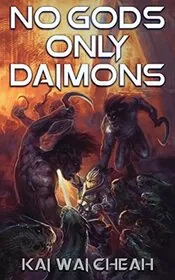
No Gods, Only Daimons
by Kai Wai Cheah
2017
In a future war where magic and advanced technology share the battlefield, black ops contractor Luke Langdon survives a disastrous summoning. An archangel's intervention turns a covert mission into a fight against terrorists, demons, and a hidden conspiracy.
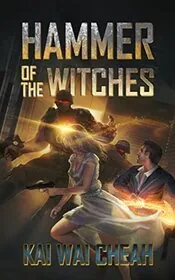
Hammer of the Witches
by Kai Wai Cheah
2018
While recovering from the first book's supernatural fallout, Luke Langdon and his allies are stalked by killers and pulled deeper into a widening conspiracy. Every new use of his powers helps him survive, but it also ties him more closely to forces he barely understands.
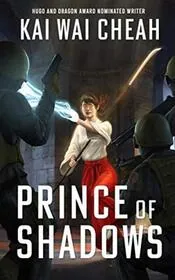
Prince of Shadows
by Kai Wai Cheah
2020
When a black op goes wrong, Luke Langdon is sidelined just as elder gods begin choosing human agents. Forced off the books, he and his allies race to protect a Japanese shrine maiden before a hidden world power turns her into its next weapon.
The Covenant Chronicles books in chronological order
Series background & context
The Covenant Chronicles is military fantasy and espionage fiction set in a future-shaped alternate world where advanced weapons, covert operations, and supernatural forces all share the same battlefield. Magic is not just background flavor here. It is built into history, religion, statecraft, and war, so every firefight carries a little more weight than it would in a straight thriller.
At the center of the series is Luke Langdon, a black ops contractor who lost his faith after surviving a terrorist attack as a teenager. By the time the story opens, he is skilled, dangerous, and used to doing the kind of work governments prefer not to explain in public. Then a summoning experiment goes wrong, and the war he thought he understood stops being only human.
It gets stranger, and more dangerous, fast.
Across the books, Luke is pushed between rival states, terrorist networks, intelligence services, assassins, and powers that do not fit neatly into modern categories. Archangels, elder gods, and the force called the Unmaker all matter here, but the series treats them as active players in the same conflict as soldiers, spies, and deniable operators. That mix is the hook: close-quarter missions on the ground, metaphysical stakes overhead.
The setting matters a lot. In this world, two unusual substances changed science, warfare, and civilization from the very beginning, so the present does not look quite like our own. Old empires still cast long shadows. Ancient faiths remain politically and spiritually alive. Cutting-edge operations can sit right next to ritual, summoning, and supernatural weapons without the story feeling like it is switching genres. Cheah uses that backdrop to make each mission feel like part of a larger argument about power, order, and belief.
Luke also does not move through the series alone. Allies, handlers, teammates, and uneasy supernatural patrons keep forcing him to choose between obedience and conscience. That gives the books a steady moral pressure. The question is not only whether he can survive the next operation, but what each compromise is doing to his soul.
If you like tactical action, clandestine teams, and dark fantasy that thinks like a thriller, this is very much that kind of series. The books move from murder investigations and deniable missions to conspiracies that reach into religion, history, and the fate of the world. There is plenty of combat, but the real through-line is Luke's struggle with belief, loyalty, and what kind of man he is becoming.







Edited by
Software engineer whose passion for tracking book recommendations from podcasts inspired the creation of MRB.
Lead investor at 3one4 Capital whose startup expertise and love for books helped shape MRB and its growth.
Comments
Did we miss something? Have feedback?
Help us improve this page by sharing your thoughts