
The Cottington Family’s Pressed Fairy Books Books in Order
Part ofBrian Froud Books in OrderBrowse The Cottington Family’s Pressed Fairy Books by Brian Froud in order, with quick summaries, series notes, and where to start with the faux diaries.
Last updated:
As an Amazon Associate, we earn from qualifying purchases (at no extra cost to you).
The Cottington Family’s Pressed Fairy Books books in publication order
5 books
Lady Cottington's Pocket Pressed Fairy Book
by Brian Froud
1994
A smaller-format return to Lady Cottington's notorious hobby, this edition keeps the pressed-fairy joke compact and portable. It is the same impish mix of faux Victorian charm, rude humor, and mischievous artwork.
Lady Cottington's Pressed Fairy Book
by Brian Froud
1994
This fake Victorian diary claims to prove fairies exist by trapping them between its pages. Terry Jones's wickedly funny text and Froud's splattered illustrations turn a pretty fairy book into gleeful black comedy.
Lady Cottington's Pressed Fairy Journal
by Brian Froud
1994
A companion diary and calendar expands Lady Angelica's habit of spotting, naming, and pressing intrusive fairies. It keeps the mock-Victorian joke going with more annotations, specimens, and very bad behavior.
Strange Stains and Mysterious Smells: Based on Quentin Cottington's Journal of Faery Research
by Brian Froud
1996
Presented as Quentin Cottington's recovered journal, this faux field notebook investigates the odd traces faeries leave behind. It expands the Cottington joke from pressed specimens to stains, smells, and other suspicious evidence.
Brian and Wendy Froud's The Pressed Fairy Journal of Madeline Cottington
by Brian Froud
2016
A descendant returns to the crumbling Cottington estate and uncovers letters, journals, and odd devices tied to the family's long feud with faeries. The result is a funny, slightly eerie faux archive full of secrets and mischief.
The Cottington Family’s Pressed Fairy Books books in chronological order
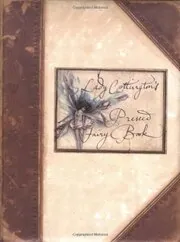
Lady Cottington's Pressed Fairy Book
by Brian Froud
1994The Cottington Family’s Pressed Fairy Books, Book 1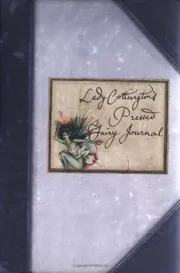
Lady Cottington's Pressed Fairy Journal
by Brian Froud
1994The Cottington Family’s Pressed Fairy Books, Book 2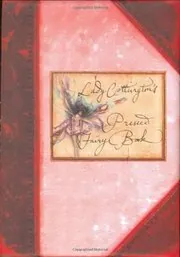
Lady Cottington's Pocket Pressed Fairy Book
by Brian Froud
1994The Cottington Family’s Pressed Fairy Books, Book 3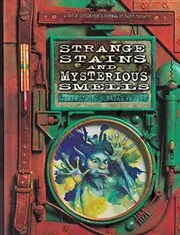
Strange Stains and Mysterious Smells: Based on Quentin Cottington's Journal of Faery Research
by Brian Froud
1996The Cottington Family’s Pressed Fairy Books, Book 4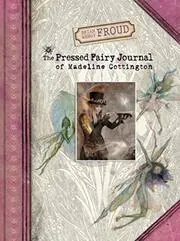
Brian and Wendy Froud's The Pressed Fairy Journal of Madeline Cottington
by Brian Froud
2016The Cottington Family’s Pressed Fairy Books, Book 5
Series background & context
The Cottington Family’s Pressed Fairy Books are not a normal fantasy series with clean chapters and a tidy plot arc. They read more like a stack of recovered family artifacts, diaries, journals, letters, albums, and odd little records, all tied to one deeply unlucky, deeply absurd family that keeps stumbling into faeries. Brian Froud's art does most of the visual heavy lifting, while the text around it shifts from book to book between parody, mock scholarship, and very dry bad manners.
The first thing to know is that these are not gentle flower-fairy books. The central joke is that members of the Cottington family do not simply glimpse faeries in moonlit glades. They trap them, squash them, catalogue them, argue with them, or uncover embarrassing evidence of how tangled family history has become with the hidden world. Lady Angelica Cottington is the best known of the clan, but later books widen the frame to include other relatives and descendants.
That fake archival approach is the whole charm.
A lot of the fun comes from format. One book may look like a battered Victorian diary. Another feels like a field notebook. Another becomes a photo album or a packet of family papers. The series is clearly playing off old fairy obsessions and the famous Cottingley fairy photographs, but it twists that material into something ruder, funnier, and much stranger.
The ongoing tension is less about defeating a villain and more about surviving contact with faeries who are never as sweet as sentimental art would have you believe. These creatures are curious, invasive, sometimes filthy, sometimes vain, and often very willing to turn human attempts at order into chaos. The Cottingtons respond with equal parts fascination, cruelty, panic, and poor judgment, which keeps the books moving even when the plots are deliberately loose.
Tone matters here. The series is darkly comic, a little grotesque, and often aimed more at older teens and adults than at small children. Terry Jones's contributions bring a wicked deadpan edge, and Wendy Froud's later work helps widen the mythology of the family itself. Even when the books are silly, they are beautifully made, and Froud's faux specimens, annotations, stains, and visual jokes are what sell the illusion.
If you like fantasy that behaves like an art prank, this is one of the best corners of Brian Froud's work. The books feel part story, part scrapbook, part museum case gone wrong. They also make a good counterweight to his more dreamy faerie projects, because here the hidden world is not noble or distant. It is right in the house, making a mess.



Edited by
Software engineer whose passion for tracking book recommendations from podcasts inspired the creation of MRB.
Lead investor at 3one4 Capital whose startup expertise and love for books helped shape MRB and its growth.
Comments
Did we miss something? Have feedback?
Help us improve this page by sharing your thoughts