
The Cairo Trilogy Books in Order
Part ofNaguib Mahfouz Books in OrderSee the Cairo Trilogy by Naguib Mahfouz in order, with short summaries, family and historical background, and simple guidance on where to start.
Last updated:
As an Amazon Associate, we earn from qualifying purchases (at no extra cost to you).
The Cairo Trilogy books in publication order
3 books
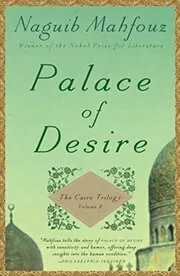
Palace of Desire
by Naguib Mahfouz
2011
The second Cairo Trilogy novel follows the al-Jawad family into the 1920s, when new freedoms bring fresh confusion. Grief, romance, and ambition reshape the household as the younger generation pushes against old rules.
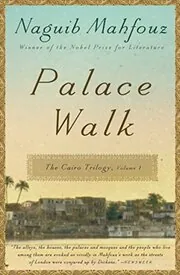
Palace Walk
by Naguib Mahfouz
2011
The first volume of the Cairo Trilogy follows the stern Ahmad Abd al-Jawad and his family in British-occupied Cairo. Inside one house, fear, love, desire, and politics collide as Egypt moves toward upheaval.
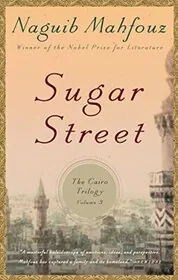
Sugar Street
by Naguib Mahfouz
2011
The trilogy's final volume shows the grandchildren coming of age in a changing Egypt. Family loyalties now meet ideology, modern politics, and new ideas, while the old patriarch watches his world slip away.
The Cairo Trilogy books in chronological order
Series background & context
The Cairo Trilogy is the place many readers start with Mahfouz, and it makes sense. Across Palace Walk, Palace of Desire, and Sugar Street, he follows one Cairo family through the first half of the twentieth century and turns domestic life into a way of seeing a whole country change.
This is where many readers start.
At the center is the household of al-Sayyid Ahmad Abd al-Jawad, a commanding father who rules his home with strict authority, and Amina, his gentle wife, whose life is shaped by duty, habit, and endurance. Around them are their children, each pulled in a different direction by love, status, faith, education, pleasure, and politics. Mahfouz is especially good at showing how one person's private decision can rattle through the whole house.
Part of the pleasure is how different the family members feel from each other. Yasin lunges toward pleasure, Fahmy toward principle, Kamal toward questions he cannot easily answer, while the daughters Khadija and Aisha carry the pressures of family, marriage, and social expectation in very different ways. No one is only an idea. Even when the trilogy is thinking about history, it never stops being interested in temperament.
The first novel, Palace Walk, brings readers inside that family world while Cairo lives under British occupation and nationalist feeling grows. Palace of Desire then opens the windows wider, following the younger generation into the 1920s, when grief, romance, new ideas, and greater freedom bring their own problems. By Sugar Street, the family is older, the city is more restless, and the grandchildren are living in an Egypt shaped by sharper ideological and political divides.
Cairo matters as much as the family.
These books are full of streets, courtyards, shops, coffeehouses, and family visits, but the trilogy never feels like local color for its own sake. The larger history of Egypt is always pressing in, from colonial rule and the 1919 Revolution to the long argument between tradition and modern life. Mahfouz lets that history arrive through meals, marriages, conversations, rumors, and arguments, which is one reason the novels feel so alive.
What should you expect as a reader? A big, patient family saga, rich in character and social detail, but also funny, tense, and emotionally direct. The trilogy is best read in order, because each book deepens the last and shows how families change even when they think they are repeating themselves. If you want Mahfouz at his broadest and most human, this is usually the right place to begin.















Edited by
Software engineer whose passion for tracking book recommendations from podcasts inspired the creation of MRB.
Lead investor at 3one4 Capital whose startup expertise and love for books helped shape MRB and its growth.
Comments
Did we miss something? Have feedback?
Help us improve this page by sharing your thoughts