
Tetsuya Honda Books in Order
Explore Tetsuya Honda's books in order, with concise summaries, Reiko Himekawa series background, and simple advice on where to start reading.
Last updated:
As an Amazon Associate, we earn from qualifying purchases (at no extra cost to you).
Tetsuya Honda books in publication order
2 books
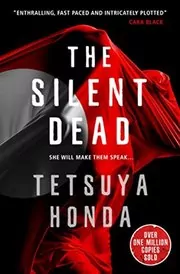
The Silent Dead
by Tetsuya Honda
2006
When a brutally murdered man is found wrapped in blue plastic near a Tokyo park, Lt. Reiko Himekawa takes the case. More bodies soon appear, sending her squad toward a shadowy online lead and a killer who may be watching back.
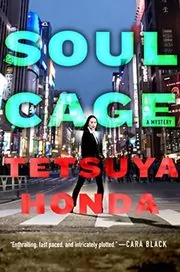
Soul Cage
by Tetsuya Honda
2007
A severed hand in an abandoned minivan points to a missing construction contractor, but the supposed victim may not be who he claims. Reiko Himekawa follows the trail through old secrets, false identities, and a threat that has not ended.
Where to start with Tetsuya Honda
For Tokyo police procedurals: The Silent Dead → Soul Cage.
For Reiko Himekawa's introduction: The Silent Dead.
For a mystery about identity and buried history: Soul Cage.
Tetsuya Honda sub-series and character series
Detective Reiko Himekawa books in order
Explore this seriesDetective Reiko Himekawa books in chronological order
Author bio
Tetsuya Honda was born in Tokyo in 1969, and the city remains central to both his life and his fiction. Tokyo's crowded streets, quiet residential corners, workplaces, and police offices all show up in his books as places where private trouble can quickly become public danger.
He studied economics at Gakushuin University, but his first long-running creative outlet was music. Honda played in rock bands from his teens until he was 30, writing lyrics and songs along the way. Music did not become his career, but the habit of building a story through voice, mood, and momentum stayed with him.
Then he turned to fiction.
Honda made his debut in 2002 after Yō no Hana won an Excellence Award in the Mu Mystery Book Grand Prize. The following year, Access received a Special Prize in the Horror Suspense Grand Prize. Those early successes gave him room to move between suspense, horror, crime, and stories about young people finding their footing.
His best-known work is the Reiko Himekawa series, which begins in English with The Silent Dead. Reiko is a young homicide lieutenant with the Tokyo Metropolitan Police, smart, forceful, and often underestimated by colleagues who do not like how quickly she has advanced. The books pair major investigations with the daily frictions of working inside a large police organization.
Soul Cage continues that approach with a case that begins with a severed hand and a missing contractor. Honda is interested in the hard work behind an investigation, but he also makes room for the people around the case: detectives with competing methods, witnesses with partial truths, and victims whose pasts do not stay buried.
His fiction reaches well beyond police procedurals.
The Jiu books also center on women working in law enforcement, while the Bushido Sixteen series follows two high school girls whose rivalry and friendship grow through kendo. Honda has written novels involving music, youth sports, supernatural elements, and everyday people pushed into difficult situations. Across those different settings, his protagonists tend to be people who make their own choices, even when the easy option is to step aside.
That range helps explain why a reader can move from a grim Tokyo murder case to a coming-of-age sports story without feeling that the author has changed subjects completely. Honda keeps returning to pressure, loyalty, competition, and the cost of doing what feels right.
The Reiko Himekawa novels have been adapted for television and film in Japan, including Strawberry Night and Strawberry Night Saga. Honda lives in Tokyo and continues to write across several genres, with police fiction still at the heart of his work.













Edited by
Software engineer whose passion for tracking book recommendations from podcasts inspired the creation of MRB.
Lead investor at 3one4 Capital whose startup expertise and love for books helped shape MRB and its growth.
Comments
Did we miss something? Have feedback?
Help us improve this page by sharing your thoughts