
Temporal Displacement Books in Order
Part ofMichael Z Williamson Books in OrderSee the Temporal Displacement books by Michael Z Williamson in order, with summaries, series background, and help choosing the best place to start.
Last updated:
As an Amazon Associate, we earn from qualifying purchases (at no extra cost to you).
Temporal Displacement books in publication order
2 books
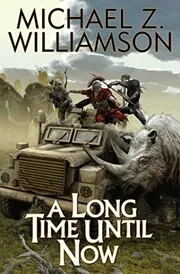
A Long Time Until Now
by Michael Z Williamson
2015
Ten U.S. soldiers on convoy in Afghanistan are thrown into Paleolithic Asia with no clear way home. Between prehistoric dangers and other time-lost groups, survival depends on discipline, improvisation, and deciding whom to trust.
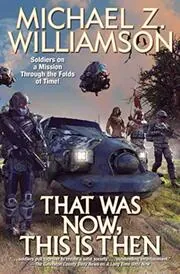
That Was Now, This Is Then
by Michael Z Williamson
2021
Sean Elliott and the other displaced soldiers are recruited by far-future scientists to help recover more people lost in time. The rescue mission opens bigger questions about prehistory, freedom, and the price of getting home.
Temporal Displacement books in chronological order
Series background & context
Temporal Displacement takes Michael Z. Williamson's military instincts and drops them into deep time. The premise sounds simple enough at first. In A Long Time Until Now, a convoy in Afghanistan is suddenly ripped out of the present and thrown into Paleolithic Asia. The soldiers still have training, weapons, and vehicles, but those advantages only go so far when the rules of the world have changed and there is no obvious route home.
What makes the series work is that it never treats time travel as a gimmick. Once the shock wears off, the real questions start. How do modern troops survive when supply chains, medicine, and reinforcement are gone? What do they do when they discover they are not the only people displaced? Romans, Neolithic Europeans, and other stranded groups turn the setting into more than a wilderness story. It becomes a collision of eras, assumptions, and survival strategies.
The first book leans hard into that practical problem solving. Food, shelter, leadership, trust, and basic adaptation matter as much as any mystery about how the displacement happened. Williamson is very good at this kind of pressure. He likes showing competent people improvising under ugly conditions, and here the ugliness comes from both prehistory itself and the simple fact that any mistake is harder to recover from when civilization is tens of thousands of years away.
The sequel, That Was Now, This Is Then, expands the scale without losing the grounded feel. First Lieutenant Sean Elliott and the other survivors are drawn into work with scientists from a far future, who want help finding and recovering more displaced groups. That turns the series from pure survival into something stranger. Prehistory is still dangerous, but now the future can be unsettling too. Going home stops being a clean idea once you realize time has more claimants than you expected.
This is time travel with ration packs and sore feet.
If you are curious about the tone, think part military survival novel, part archaeological what-if, part speculative puzzle. The series asks how much of modern life is habit, how much is infrastructure, and how much of a person remains the same when every familiar support is gone. These books will appeal to readers who like disciplined problem solving, mixed historical groups, and science fiction that gets dirt under its nails before it starts talking about the big ideas.


Edited by
Software engineer whose passion for tracking book recommendations from podcasts inspired the creation of MRB.
Lead investor at 3one4 Capital whose startup expertise and love for books helped shape MRB and its growth.
Comments
Did we miss something? Have feedback?
Help us improve this page by sharing your thoughts