
TekWar Books in Order
Part ofWilliam Shatner Books in OrderFind all the TekWar novels by William Shatner in order, with short plot summaries, series background on Jake Cardigan’s tek-ridden future, and tips on the best place to start.
Last updated:
As an Amazon Associate, we earn from qualifying purchases (at no extra cost to you).
TekWar books in publication order
9 books

TekWar
by William Shatner
1989
In the twenty-second century, ex-cop Jake Cardigan is thawed early from cryo-prison after being framed for dealing tek, an illegal digital drug. Hired by powerful fixer Walter Bascom, he dives back into the underworld to clear his name.

TekLab
by William Shatner
1991
Cardigan and partner Sid Gomez investigate a high-tech research lab where experimental versions of tek are being engineered. When a scientist vanishes and virtual reality spills into real streets, the case becomes a battle over who will own the future.
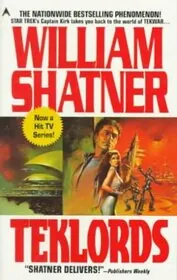
TekLords
by William Shatner
1991
Now working for private security firm Cosmos, Jake Cardigan takes on the ruthless tek lords who control the drug trade. His hunt forces him to confront old addictions, corrupt cops, and a conspiracy that reaches uncomfortably high into government.
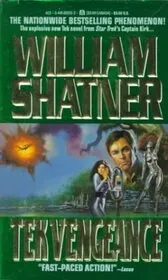
Tek Vengeance
by William Shatner
1993
Jake’s search for the people who destroyed his family draws him into a cross-border war between rival tek cartels. As bodies fall on both sides, he must decide whether revenge is worth losing the last pieces of his conscience.
TekSecret
by William Shatner
1993
A shadowy program promises to end tek addiction forever, but Cardigan suspects the cure hides something worse. Tracking assassins and missing test subjects, he uncovers a plan to turn the digital drug into a subtle tool of mass control.
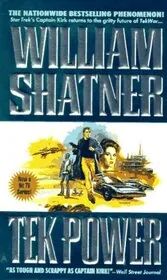
TekPower
by William Shatner
1994
A new form of tek is being used to hijack corporate networks and financial systems. Jake and Sid race through sprawling mega-cities and off-world colonies to stop a mastermind who can crash economies with a single illegal chip.
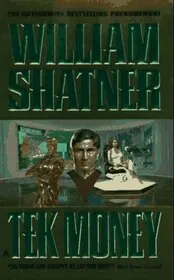
TekMoney
by William Shatner
1995
When counterfeit tek floods the streets, overdoses skyrocket and Cardigan is hired to find the source. The trail winds through virtual casinos, offshore accounts, and a scheme that turns stolen memories into the ultimate currency.
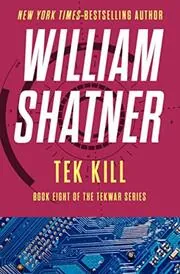
Tek Kill
by William Shatner
1996
An elite assassin uses tek-induced hallucinations to mask their hits, leaving Cardigan chasing a killer no witness can clearly describe. To stop the attacks, he may have to plug back into the drug he swore never to touch again.
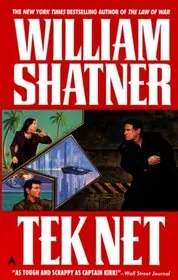
TekNet
by William Shatner
1997
Someone has woven tek directly into the global data net, trapping users inside shared hallucinations that can kill. Jake must navigate this lethal virtual maze while his own body is hunted down in the real world.
TekWar books in chronological order
Series background & context
The TekWar series imagines a twenty second century in which the most dangerous substance on the street is not a powder or a pill but a sliver of code. Tek, the illegal digital drug at the heart of these novels, offers a fully immersive simulated reality that many users would rather inhabit than the real world. It is addictive, neurologically risky and wildly profitable, which makes it the perfect engine for a long running crime saga.
At the start of the first book, TekWar, former police officer Jake Cardigan has already paid a heavy price. Framed for dealing tek and sentenced to fifteen years of cryo imprisonment, he is thawed after four years by Walter Bascom, the enigmatic head of private security firm Cosmos. Bascom insists Jake was set up and offers him a job tracking the very tek lords who once ruined his life. From that point on, Cardigan works perpetual overtime trying to clean up a mess that keeps revealing new layers.
Each subsequent novel builds on the same basic ingredients. Cardigan and his partner Sid Gomez investigate a fresh tangle of murders, smuggling, political blackmail or corporate intrigue, only to find tek at the center. The settings shift from neon drenched streets of Greater Los Angeles to off planet colonies and virtual networks where identities can be hacked as easily as bank accounts. Cardigan’s own history with tek, including occasional relapses, adds another thread of tension.
The books lean hard into their roots as police and private eye stories. There are stakeouts, informants, sting operations and gunfights, just with more holograms and androids in the background. Shatner and his collaborator Ron Goulart keep the chapters short and the dialogue sharp. Jake cracks wise even when he is in danger, Sid provides warmth and humor, and Walter Bascom hovers in the background as the boss who knows more than he is saying.
Across the series, readers watch the world itself evolve. Early novels present tek as a street level menace. Later volumes introduce refined versions, shared realities patterned on the television adaptation’s Matrix like realm, and hints that the line between virtual and physical crime is disappearing entirely. As the technology advances, so do the methods used to control it, raising questions about surveillance, corporate power and whether any system that profitable can truly be shut down.
For new readers, TekWar remains the natural starting point, but the books are designed so that each case stands on its own. The cumulative effect is a portrait of a future that is noisy, corrupt and strangely familiar, anchored by a protagonist who keeps getting knocked down yet stubbornly refuses to stay out of the fight.











Edited by
Software engineer whose passion for tracking book recommendations from podcasts inspired the creation of MRB.
Lead investor at 3one4 Capital whose startup expertise and love for books helped shape MRB and its growth.
Comments
Did we miss something? Have feedback?
Help us improve this page by sharing your thoughts