
Ted Mark Books in Order
Browse Ted Mark books in order, from The Man From O.R.G.Y. onward, with short summaries, series notes, and clear guidance on where to start.
Last updated:
As an Amazon Associate, we earn from qualifying purchases (at no extra cost to you).
Ted Mark books in publication order
25 books
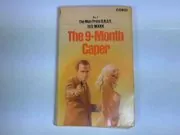
The 9-Month Caper
by Ted Mark
1965
In Miami, Steve Victor is dragged into a Caribbean mission involving Castro, revolution, and a missing British agent. The result is another globe-hopping spoof where sex comedy and spy trouble keep colliding.
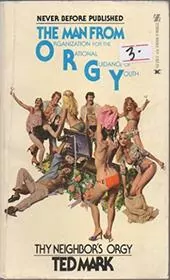
The Man From O.R.G.Y.
by Ted Mark
1965
Steve Victor, a one-man sex researcher who sometimes works as a spy, crisscrosses the globe and stumbles into a Cold War plot involving stolen Soviet nuclear secrets. It is a broad, very 1960s mix of espionage parody and adult farce.
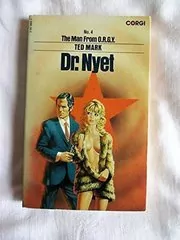
Dr. Nyet
by Ted Mark
1966
Steve Victor goes up against S.M.U.T., a moral crusade with world-domination plans hiding behind an anti-pornography campaign. It is one of the series' clearest spy spoofs, with Cold War nerves turned into outrageous farce.

Pussycat, Pussycat
by Ted Mark
1966
Penny Candie is pushed into another swinging misadventure that plays romance and social satire for laughs. This one leans more toward comic farce than spy spoof, with men and mayhem following her everywhere.

The Real Gone Girls
by Ted Mark
1966
When a dead madam's fortune is left to three missing women, Steve Victor is sent to find them before killers and grifters do. The case plays like a dirty-joke detective hunt with a surprisingly strong mystery setup.
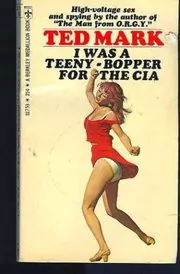
I Was a Teeny-Bopper for the CIA
by Ted Mark
1967
Vance Powers takes an assignment to find out whether the dazzling Lolly Popstick is a double agent. The result is a knowingly ridiculous spy spoof that turns Cold War suspicion into playful, paperback-era sex comedy.
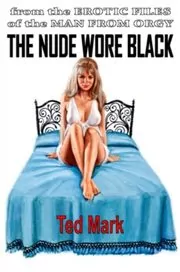
The Nude Wore Black
by Ted Mark
1967
Llona becomes a widow on her wedding night after her brand-new husband's bizarre accident, then goes looking for another man who caught her eye. Her wild search leads through massage parlors, madhouses, and a string of comic disasters.
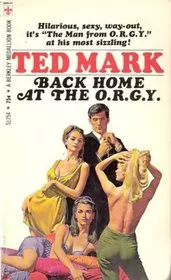
Back Home at the O.R.G.Y.
by Ted Mark
1968
A mission takes Steve Victor to Tibet, where a scientist's time machine sends him spinning into the past. Ancient history, strange inventions, and Victor's usual troublemaking energy turn this into one of the series' oddest detours.
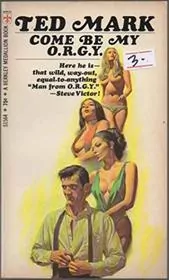
Come Be My O.R.G.Y.
by Ted Mark
1968
Steve Victor is still caught in the chaos of a malfunctioning time machine, bouncing through other eras while Ti Nih Baapuh reappears on the sidelines. It keeps the series' joke-heavy mix of sex farce, science fiction, and spy nonsense.

Here's Your O.R.G.Y.
by Ted Mark
1969
Steve Victor is pulled into a bizarre scavenger hunt after a wealthy bathroom tycoon asks for help landing a Middle Eastern deal. The setup is absurd even by series standards, and that is very much the point.
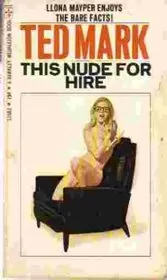
This Nude For Hire
by Ted Mark
1969
Llona returns for another noisy adult farce, where men, money, and bad decisions keep piling up around her. The book treats romance like a comic obstacle course, with embarrassment and pursuit driving almost every scene.

Square Root of Sex
by Ted Mark
1970
Two researchers publish shocking findings on human sexual behavior after using scandalously direct methods. Ted Mark turns the setup into a satirical novel about sex studies, public outrage, and what happens offstage during the experiments.
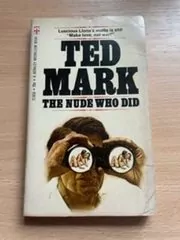
The Nude Who Did
by Ted Mark
1970
This loose Laugh Romp entry spins another adult comedy out of desire, confusion, and the question of who is really responsible. It is a small, fast paperback built on mix-ups, flirtation, and knowing 1960s satire.
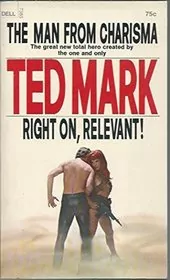
Right On, Relevant
by Ted Mark
1971
Still unsure who he really is, Jonathan Relevant stumbles into another strange caper shaped by politics, identity, and performance. It keeps the series' slippery central joke going, with satire doing as much work as the plot.
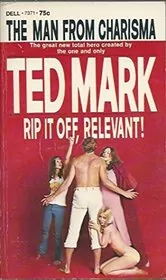
Rip It Off, Relevant!
by Ted Mark
1971
Jonathan Relevant returns for another identity-bending satire, using his peculiar gift for becoming whatever the moment demands. The book pushes the series deeper into comic absurdity, where personality itself becomes part of the problem.
Hard Day's Knight
by Ted Mark
1972
When an inventor vanishes after throwing a valuable new alloy into a lake, Steve Victor is sent to recover both man and secret. The mission folds space-race anxiety into one more loud, comic spy caper.
My Son, The Double Agent
by Ted Mark
1972
Steve Victor is framed by an exact double, accused of crimes he did not commit, and forced to question who is using his name. It adds doppelganger confusion to the series' running battle with S.M.U.T.

Regina Blue
by Ted Mark
1972
Regina Blue follows a woman being sold as the next big adult-screen sensation, with fame, desire, and exploitation tangled together from the start. It reads less like a spy spoof and more like a sleazy showbiz satire.
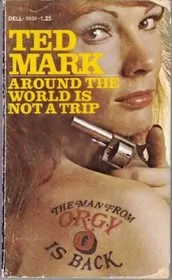
Around the World is not a Trip
by Ted Mark
1973
On a cruise around the world, Steve Victor finds himself surrounded by distractions while someone seems determined to sabotage the voyage. The book turns a pleasure trip into a loose, very pulpy conspiracy chase.
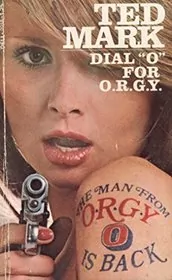
Dial O For O.R.G.Y.
by Ted Mark
1973
Steve Victor hunts a crazed computer programmer whose talent for disruption could unleash total chaos. Gorgeous distractions, gadget-era paranoia, and a very 1970s fear of runaway technology keep the spoof moving.
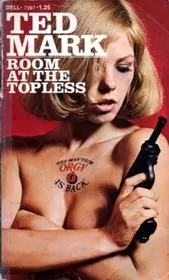
Room at the Topless
by Ted Mark
1973
The world thinks Steve Victor is dead, but his latest assignment sends him straight into dangerous trouble on the Sunset Strip. Hollywood glamour, fake deaths, and one more sinister enemy make this a gleefully trashy series entry.
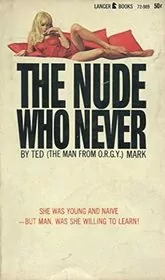
The Nude Who Never...
by Ted Mark
1976
Llona lands in yet another round of adult mischief, where eager men, shifting stories, and comic misunderstandings do most of the damage. Like the other Laugh Romp books, it favors momentum and cheeky situations over tidy plotting.

The Tight End
by Ted Mark
1981
Steve Victor gets one of his strangest jobs yet, helping a hopeless pro football team finally learn how to score. It is late-period O.R.G.Y., broad and goofy, with sports satire replacing the usual globe-trotting mission.
Stroke of Genius
by Ted Mark
1982
Steve Victor checks into a hospital to investigate a leak in a secret government genetics project. When stolen reproductive cells point toward a potential global disaster, the series swerves into science-fiction parody without losing its pulp energy.
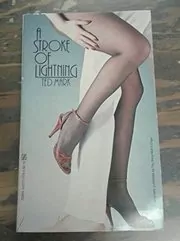
Stroke of Lightning
by Ted Mark
1982
Steve Victor returns for another late-period romp, this time in a stranger, more science-fiction-leaning caper. Like *Stroke of Genius*, it mixes espionage parody, sexual satire, and an escalating threat that is too bizarre to take straight.
Where to start with Ted Mark
If you want the classic spy spoof: The Man From O.R.G.Y. → The 9-Month Caper → Dr. Nyet
If you want Steve Victor at his wildest: The Real Gone Girls → My Son, The Double Agent → Hard Day's Knight → Room at the Topless
If you want the stranger later detours: Back Home at the O.R.G.Y. → Come Be My O.R.G.Y. → Here's Your O.R.G.Y.
If you want Ted Mark outside O.R.G.Y.: Pussycat, Pussycat → The Nude Wore Black → Square Root of Sex
Ted Mark sub-series and character series
Standalone Ted Mark books
Author bio
Ted Mark was the pen name Theodore Mark Gottfried used for a long run of fast, outrageous paperbacks, but that only tells part of the story. He was born in the Bronx on October 19, 1928, and grew up in Far Rockaway after his Russian immigrant family left the borough. He wanted to write early, and that wish stayed with him.
Before books became the job, he did a little of everything.
He worked in publicity at Warner Bros. in New York, spent time around theaters and magazines, wrote reviews and features, drove a cab, and edited men's magazines. In the 1950s he was writing for Scamp, and that kind of deadline work taught him how to produce copy fast. He learned by doing, and he did a lot of it.
His first novel, The Midway at Midnight, appeared in 1964 under another pen name. A year later, as Ted Mark, he found the run that made him famous: The Man From O.R.G.Y. and its sequels. Books like The 9-Month Caper, Dr. Nyet, The Real Gone Girls, I Was a Teeny-Bopper for the CIA, and The Nude Wore Black rode the 1960s spy boom with a grin, piling sex farce onto Cold War parody. Steve Victor, his best-known creation, is part superspy, part sex researcher, and part walking joke, which tells you a lot about Mark's comic instincts.
He was prolific, and not precious about it.
Mark wrote under several names and could turn out four or five books in a year. As his paperback career took off, he moved his family to Cedarhurst and became, for a while, a local curiosity, a bestselling writer working at home on an Underwood typewriter. A 1970 film version of The Man From O.R.G.Y. followed, though it did not turn into the screen career he might have hoped for.
In the late 1970s he spent more time editing, including work at High Society and Drake Publications. He was also one of the writers who helped found the National Writers Union in 1980. That matters because his later career was not just about pulp speed. He taught writing, worked with community groups, and kept moving toward subjects that were more openly political and historical.
By the late 1980s he was publishing much more often under his own name, Ted Gottfried, especially for younger readers. Those books included biographies like Enrico Fermi: Pioneer of the Atomic Age, James Baldwin: Voice from Harlem, and Alan Turing: The Architect of the Computer Age, along with issue books such as Gun Control: Public Safety and the Right to Bear Arms, Homelessness: Whose Problem Is It?, and several books on the Holocaust. Those later titles were clear, direct, and built for curious readers who wanted a way into big topics without a lecture. He wrote about privacy, drugs, capital punishment, the Cold War, and the Israeli-Palestinian conflict with the same drive that had once powered his paperbacks.
He seems to have carried that political energy into life off the page too. As a young man he marched for civil rights, and later he marched for women's rights. He spent most of his adult life in New York, kept writing into his seventies, and died in Manhattan on March 7, 2004, from complications of cancer of the neck.









Edited by
Software engineer whose passion for tracking book recommendations from podcasts inspired the creation of MRB.
Lead investor at 3one4 Capital whose startup expertise and love for books helped shape MRB and its growth.
Comments
Did we miss something? Have feedback?
Help us improve this page by sharing your thoughts