
Ted Chiang Books in Order
Browse Ted Chiang's books in order, with short summaries of every collection and standout story, plus reading notes and a simple guide to where to start.
Last updated:
As an Amazon Associate, we earn from qualifying purchases (at no extra cost to you).
Ted Chiang books in publication order
17 books

Tower of Babylon
by Ted Chiang
1990
In a world where ancient cosmology is literally true, a miner joins the climb to the top of Babylon's impossible tower. What begins as a feat of engineering turns into a striking rethinking of heaven, earth, and human ambition.

Understand
by Ted Chiang
1991
After an experimental treatment repairs his brain, a man becomes vastly more intelligent and increasingly isolated. Chiang turns the superhuman genius premise into a tense battle of minds and a sharp look at what intelligence can cost.

Seventy-Two Letters
by Ted Chiang
2000
Set in an alternate industrial England powered by golems and encoded names, this novella follows scholars racing to solve a crisis in human reproduction. It blends Victorian science, kabbalistic magic, and big stakes with unusual ease.
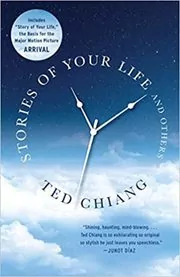
Stories of Your Life and Others / Arrival
by Ted Chiang
2002
Chiang's first collection gathers eight stories that mix alien contact, mathematics, faith, and myth. It includes Story of Your Life, the novella that later became the film Arrival.
Recommended by
4 people Naval Ravikant recommended this book
Naval Ravikant
"Drop everything and read [Understand]." - Naval Ravikant
Naval Ravikant's recommendation of this book  Patrick Collison recommended this book
Patrick Collison
Patrick Collison labeled this book "substantially above average."
Patrick Collison's recommendation of this book  Tim Ferriss recommended this book
Tim Ferriss
"Incredible collection of short stories." - Tim Ferriss
Tim Ferriss's recommendation of this book  Ezra Klein recommended this book
Ezra Klein
Ezra Klein recommended this book on Twitter.
Ezra Klein's recommendation of this book

The Merchant and the Alchemist's Gate
by Ted Chiang
2007
A fabric merchant in medieval Baghdad discovers a gate that opens onto other moments in time. The story unfolds like a set of nested tales about regret, fate, and whether the past can ever really be escaped.
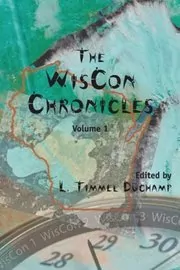
The WisCon Chronicles, Volume 1
by Ted Chiang
2007
The first WisCon Chronicles volume gathers essays, interviews, and discussions from the feminist science fiction convention WisCon. It captures a lively community thinking out loud about fandom, gender, and how to do things better.
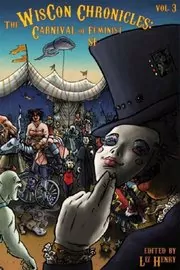
The Wiscon Chronicles, Vol.3: Carnival of Feminist SF
by Ted Chiang
2009
This volume brings together essays, talks, and debate from WisCon 32, with a focus on feminist science fiction, community, and fandom arguments. It is a snapshot of a convention that takes ideas seriously.
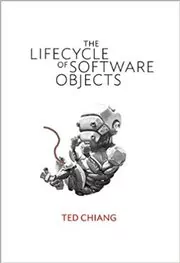
The Lifecycle of Software Objects
by Ted Chiang
2010
As digital creatures called digients grow from virtual pets into something like people, their human trainers have to decide what care, ownership, and loyalty really mean. It is a thoughtful AI novella with real emotional weight.
Recommended by
1 person- Naval Ravikant recommended this book
Naval Ravikant
"Another masterpiece of SciFi by [this author]." - Naval Ravikant
Naval Ravikant's recommendation of this book
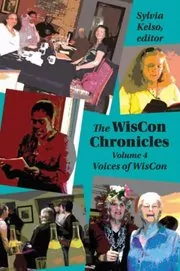
The WisCon Chronicles, Volume 4
by Ted Chiang
2010
Subtitled Voices of WisCon, this collection gathers many perspectives on WisCon 33, from celebration to critique. Essays, poems, and reports show how differently one community event can be experienced.
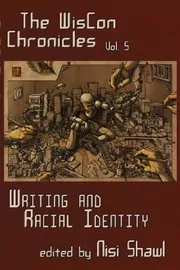
The Wiscon Chronicles Volume 5
by Ted Chiang
2011
Focused on writing and racial identity, this WisCon volume brings together essays and discussion about race, storytelling, and the habits of speculative fiction fandom. It is interested in who gets heard, and why.
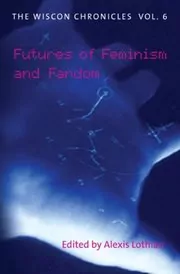
The WisCon Chronicles Vol. 6: Futures of Feminism and Fandom
by Ted Chiang
2012
This volume looks at the changing faces of WisCon, from convention politics to memorial tributes and fandom debates. Essays and speeches dig into feminism, community, and the arguments that come with trying to build better spaces.
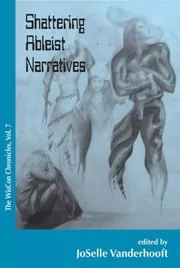
The Wiscon Chronicles Vol 7: Shattering Ableist Narratives
by Ted Chiang
2013
A collection about disability and access in science fiction and fantasy spaces, this WisCon volume challenges the stories fandom tells about disabled people. Essays and reflections ask what real inclusion would actually look like.
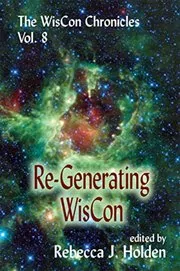
The WisCon Chronicles Vol. 8: Re-Generating WisCon
by Ted Chiang
2014
This volume asks who belongs at WisCon, whose voices get heard, and how feminist generations talk to or past one another. Essays, poems, and speeches explore community, conflict, and change.

The Great Silence
by Ted Chiang
2015
Told in the voice of a Puerto Rican parrot living near Arecibo, this brief fable asks why humans search the stars for intelligence while ignoring it on Earth. It is small in size and quietly devastating.
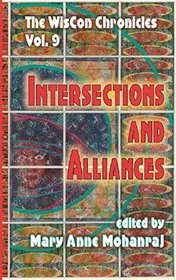
The WisCon Chronicles, Vol.9
by Ted Chiang
2015
Centered on intersections and alliances, this WisCon collection looks at feminism, race, gender, disability, and the hard work of being good allies. The essays keep one eye on community and the other on change.
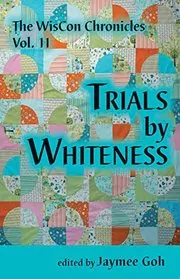
Trials by Whiteness
by Ted Chiang
2017
Edited as a WisCon volume, this collection opens up conversations about whiteness, liberation, identity, and conflict inside speculative fiction communities. It mixes essays, fiction, and informal pieces to examine power from several angles.
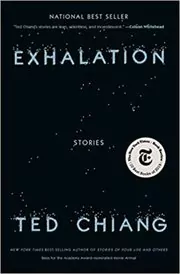
Exhalation
by Ted Chiang
2019
A nine-story collection about time, memory, free will, and artificial life. Chiang moves from ancient Baghdad to alternate universes, asking huge questions without losing sight of ordinary human feeling.
Recommended by
4 people Barack Obama recommended this book
Barack Obama
Barack Obama's favorite books of 2019 list.
Barack Obama's recommendation of this book - Tim Ferriss recommended this book
Tim Ferriss
"Just so damn good." - Tim Ferriss
Tim Ferriss's recommendation of this book - Naval Ravikant recommended this book
Naval Ravikant
Naval Ravikant tweeted about this book.
Naval Ravikant's recommendation of this book  Ryan Shea recommended this book
Ryan Shea
Ryan Shea recommended this book on his website.
Ryan Shea's recommendation of this book
Where to start with Ted Chiang
If you want the best introduction: Stories of Your Life and Others / Arrival → Exhalation
If you want a single longer AI story: The Lifecycle of Software Objects
If you like myth, religion, and alternate history: Tower of Babylon → Seventy-Two Letters → The Merchant and the Alchemist's Gate
If you want short, intense big-idea fiction: Understand → The Great Silence
Ted Chiang collections, short stories, and related book types
Short Stories/Novellas
Short Story Collections
Standalone Ted Chiang books
Author bio
Ted Chiang was born in Port Jefferson, New York, in 1967 and grew up on Long Island. His parents had both been born in mainland China, left for Taiwan with their families, and later came to the United States, where they met. His father became an engineering professor and his mother worked as a librarian, which feels like a pretty good setup for a future writer who cares about both ideas and language.
Science fiction got to him early.
As a teenager, Chiang was already sending stories to magazines. He studied computer science at Brown University, graduating in 1989, and that same year attended the Clarion Science Fiction and Fantasy Writers' Workshop, which he has called a life-changing experience. Soon after, he sold Tower of Babylon, his first published story, a bold reworking of the Babel myth that immediately showed how much he liked taking an old idea and asking what would happen if it were literally true.
Then came a long quiet stretch, at least in public.
Chiang moved to the Seattle area for technical writing work, including a stint at Microsoft, and for years he kept fiction on the side while paying the bills another way. That setup mattered. It gave him room to move slowly, and slowly is how he works. When he had the idea that became Story of Your Life, he spent years reading linguistics and building the story carefully enough to do justice to its central question: what happens when learning a language changes the way you experience time?
That patience paid off. Story of Your Life became one of his best-known works, and in 2016 it reached a much bigger audience when it was adapted as the film Arrival.
His books are still small in number, but readers tend to remember them for a long time. Stories of Your Life and Others and Exhalation are the two collections most people start with, and together they show his full range: biblical engineering in Tower of Babylon, intimate alien contact in Story of Your Life, moral and emotional questions about AI in The Lifecycle of Software Objects, and a startling animal-eye view of humanity in The Great Silence. The appeal is not just the ideas. It is the way the ideas press on ordinary feelings like grief, love, regret, curiosity, and responsibility.
A lot of Chiang's fiction circles the same few concerns, but he comes at them from different angles every time. Language, time, free will, faith, scientific method, and the ethics of technology show up again and again. So do settings that feel slightly off from our own world: ancient Babylon built according to old cosmology, medieval Baghdad with a time gate in the market, or near-future software companies trying to raise digital minds. Even when the premise is wild, the human problem is usually plain enough to feel close.
He has won four Hugo Awards, four Nebula Awards, and four Locus Awards, and in 2024 he received the PEN/Malamud Award for excellence in the short story. He has long lived near Seattle, and he has become a thoughtful public voice on technology, especially AI.
That mix of rigor and restraint is a big part of why people keep coming back to him. Ted Chiang does not write quickly, and he does not write much. But when he publishes something, it usually feels as if he has spent the time asking not only whether the idea works, but whether the human part does too.






Edited by
Software engineer whose passion for tracking book recommendations from podcasts inspired the creation of MRB.
Lead investor at 3one4 Capital whose startup expertise and love for books helped shape MRB and its growth.
Comments
Did we miss something? Have feedback?
Help us improve this page by sharing your thoughts