
Tariq Ali Books in Order
Explore Tariq Ali's books in publication order, with short book summaries and guides to the individual series to help you choose where to start.
Last updated: 45 new books added
As an Amazon Associate, we earn from qualifying purchases (at no extra cost to you).
Tariq Ali books in publication order
46 books
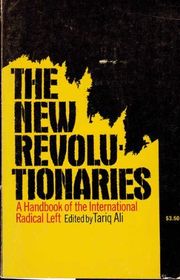
The New Revolutionaries
by Tariq Ali
1969
Edited by Tariq Ali, this collection brings together essays and addresses from the international radical left. Contributors including Ernest Mandel explore revolutionary movements, political opposition, and struggles over power across a period of widespread social upheaval.
Pakistan
by Tariq Ali
1970
Tariq Ali examines the popular movement that challenged Pakistan’s military dictatorship in 1968 and 1969. Drawing on events he witnessed, he follows students, workers and other protesters as their struggle reshapes the country’s political future.
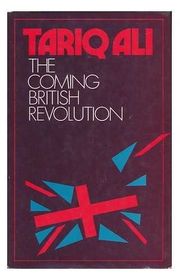
The Coming British Revolution
by Tariq Ali
1972
Tariq Ali argues that Britain's economic decline creates possibilities for revolutionary change. Examining trade unions, Labour politics, the radical left, and intellectual life, he considers why existing institutions have failed to turn working-class discontent into a challenge to capitalism.
Chile
by Tariq Ali
1974
Tariq Ali examines Chile's 1973 coup and the political lessons it raises for movements seeking workers' power. This short work approaches the overthrow through questions of revolutionary strategy and the challenges confronting the Chilean left.
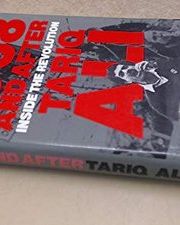
1968 and After
by Tariq Ali
1978
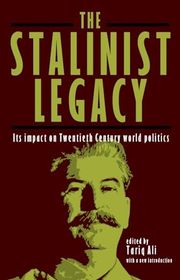
The Stalinist Legacy
by Tariq Ali
1980
Edited by Tariq Ali, this collection examines Stalinism's origins and its consequences for socialist movements around the world. Essays and historical accounts explore bureaucracy, repression, revolutionary struggles, and the continuing political legacy of the Soviet experience.
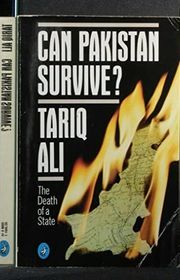
Can Pakistan Survive?
by Tariq Ali
1983
Tariq Ali examines Pakistan's political survival through its history, ruling institutions, and internal divisions. His account includes the breakup of Pakistan and the creation of Bangladesh, questioning the forces shaping the state's instability and future.

Who's Afraid of Margaret Thatcher?
by Tariq Ali
1984
Tariq Ali and Ken Livingstone discuss socialism, Labour politics, and opposition to Margaret Thatcher. Their conversations examine the difficulties facing the British left and the possibilities for building a political challenge beyond the limits of conventional parliamentary compromise.
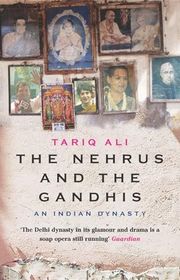
The Nehrus and the Gandhis
by Tariq Ali
1985
Tariq Ali traces modern Indian politics through the Nehru-Gandhi family, examining how its personal relationships and succession shaped national power. Interviews and political history connect the dynasty's influence to the achievements, conflicts, and contradictions of independent India.
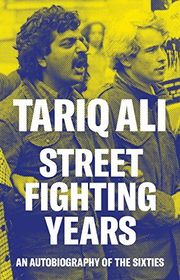
Street-Fighting Years
by Tariq Ali
1987
Tariq Ali recalls his involvement in the radical politics of the 1960s, from Pakistan and Oxford to international campaigns against the Vietnam War. Personal encounters illuminate the student uprisings, revolutionary hopes, and political arguments that shaped his generation.

Revolution from Above
by Tariq Ali
1988
Writing during Gorbachev's reforms, Tariq Ali considers the Soviet Union at a political turning point. He examines the possibilities opened by change from within its leadership and asks where the country might move in 1988 and beyond.
Iranian Nights
by Tariq Ali
1989
Written with Howard Brenton in response to the controversy over Salman Rushdie's The Satanic Verses, this short play protests the banning of the novel. Its dramatic argument confronts censorship and the pressures placed on literary expression by religious and political conflict.

Redemption
by Tariq Ali
1990
On Christmas Eve in 1989, Parisian Trotskyist Ezra Einstein watches the execution of Romania’s ruling couple on television. The collapse of Eastern European communism sets the stage for a satire of the revolutionary far left and its convictions.
Consequences
by Tariq Ali
1991

Necklaces
by Tariq Ali
1992
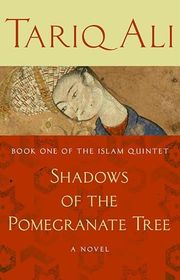
Shadows of the Pomegranate Tree
by Tariq Ali
1992
After Granada falls to Christian rule, Omar bin Abdalla's Muslim family struggles to preserve its way of life. Religious repression and the younger generation's conflicting desires place their household at the center of a world undergoing violent transformation.
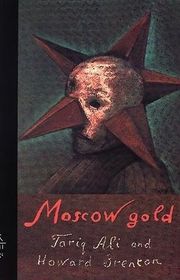
Moscow Gold
by Tariq Ali
1993
Mikhail Gorbachev rises through a Soviet system whose entrenched bureaucracy fights to retain power. Political battles with rivals and conversations with Lenin’s ghost turn the upheavals of the late Soviet era into a mixture of satire, history and farce.
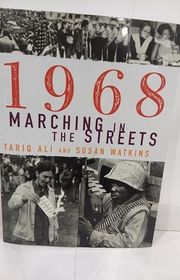
1968
by Tariq Ali
1998
Tariq Ali and Susan Watkins chronicle the upheavals of 1968 across the world. Moving through the year, they connect antiwar campaigns, Black Power, student revolts, and challenges to state authority in cities from Paris and Prague to Lahore and Mexico City.
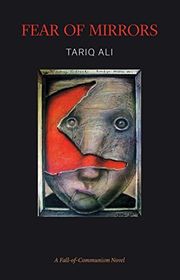
Fear of Mirrors
by Tariq Ali
1998
After German reunification, Marxist academic Vladimir Meyer loses his marriage and university job. Trying to explain his communist heritage to his estranged son, he uncovers family loyalties and betrayals stretching back to the Russian Revolution.
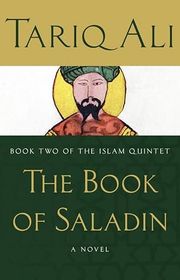
The Book of Saladin
by Tariq Ali
1998
Saladin recounts his life to a Jewish scribe, whose conversations with the ruler's household complicate the official story. His rise to power and struggle for Jerusalem unfold alongside private passions, religious divisions, and the contradictions of political authority.
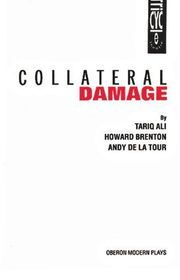
Collateral Damage
by Tariq Ali
1999
As NATO bombs Serbia and Kosovo’s Albanians flee their homes, Europe divides over military intervention. This political play brings the Balkan war into domestic arguments, examining the competing claims and consequences behind the conflict.
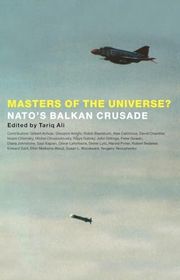
Masters of the Universe?
by Tariq Ali
2000
Edited by Tariq Ali, these essays challenge NATO's stated humanitarian justification for its 1999 war in Yugoslavia. Contributors examine American power, media consensus, interventionist ideology, and the political consequences of bombing Serbia and Kosovo after the Cold War.
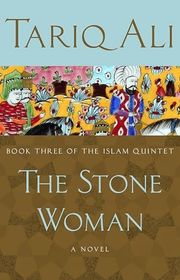
The Stone Woman
by Tariq Ali
2000
At an Ottoman family's summer palace in 1899, memories of imperial glory collide with jealousy, betrayal, and changing political convictions. As the empire declines, younger relatives and a former tutor challenge the assumptions that have held the household together.
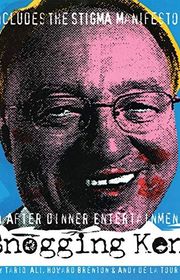
Snogging Ken
by Tariq Ali
2001
New Labour’s strategists attempt to derail Ken Livingstone’s bid to become London’s mayor. Their increasingly desperate schemes collide with his popularity in a political satire about party control, public opinion and the inconvenient workings of democracy.
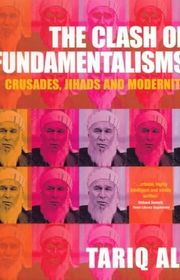
The Clash of Fundamentalisms
by Tariq Ali
2002
Tariq Ali examines the collision between Islamic fundamentalism and Western imperial power after September 11. Drawing on histories across the Muslim world, he challenges the claim that war can resolve religious extremism and considers the political conditions sustaining both forces.
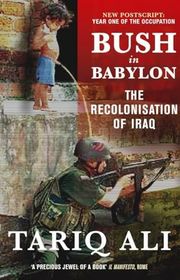
Bush in Babylon
by Tariq Ali
2003
Tariq Ali places the 2003 invasion of Iraq within a longer history of resistance to foreign domination. Examining occupation, political interests, and Iraqi cultural life, he challenges the American administration's account of the war and its consequences.
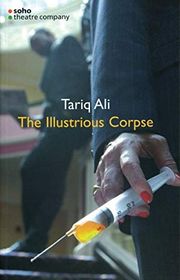
The Illustrious Corpse
by Tariq Ali
2004
A home secretary is dead, and his wife confesses to killing him. Detective Sir Richard Everall must investigate while containing a political scandal, but her reasons threaten to expose more than the government wants revealed.
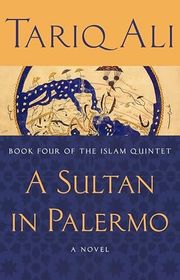
A Sultan in Palermo
by Tariq Ali
2005
In medieval Sicily, cartographer Muhammad al-Idrisi enjoys the Norman ruler's friendship while others abandon the island or resist his court. Divided loyalties and intimate attachments force him to question his place within a fragile world of competing cultures.
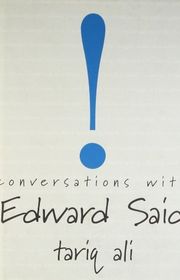
Conversations with Edward Said
by Tariq Ali
2005
Tariq Ali's conversations with Edward Said explore exile, Palestine, literature, and the responsibilities of intellectuals. Political argument meets personal reflection as Said discusses the experiences and cultural commitments that shaped his thinking about identity, power, and resistance.
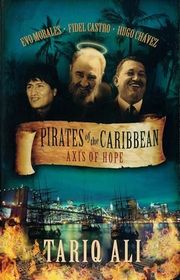
Pirates of the Caribbean
by Tariq Ali
2006
Tariq Ali examines the Latin American movements challenging American influence and market orthodoxy, focusing on Hugo Chavez's Venezuela and its regional allies. Political encounters and historical context illuminate debates over inequality, popular power, and alternatives to neoliberal government.
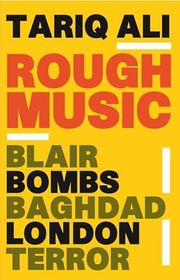
Rough Music
by Tariq Ali
2006
Responding to the July 2005 London bombings, Tariq Ali examines Tony Blair's Iraq policy, policing, and the erosion of civil liberties. He challenges political and media responses to terrorism while arguing for public resistance to the government's direction.
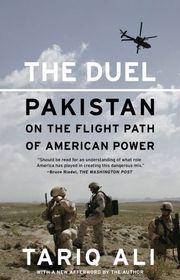
The Duel
by Tariq Ali
2008
Tariq Ali investigates Pakistan's political crisis through its military rulers, competing parties, and relationship with American power. Drawing on personal knowledge and research, he examines how foreign intervention and domestic struggles have deepened instability and undermined democratic possibilities.
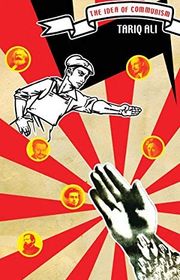
The Idea of Communism
by Tariq Ali
2009
Tariq Ali revisits communist ideas after the Soviet Union's collapse, distinguishing Marx and Engels's emancipatory ambitions from later repressive regimes. Recurrent capitalist crises frame his argument for renewed debate about democracy, economic planning, and a socialist response to ecological danger.

The Protocols of the Elders of Sodom
by Tariq Ali
2009
Tariq Ali explores the relationship between literature, history, and politics through essays on writers including Proust, Tolstoy, Cervantes, and Rushdie. Literary interpretation opens broader questions about power, identity, social change, and the worlds that shape a writer's imagination.
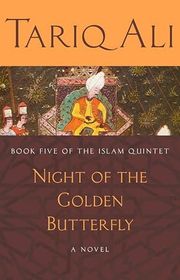
Night of the Golden Butterfly
by Tariq Ali
2010
Asked to record a Pakistani painter's life, a writer reconnects with friends and an old love across several continents. Their intertwined histories lead from Lahore's artistic circles to a Chinese Muslim family's past, exposing the distance between memory and official history.
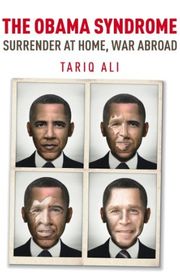
The Obama Syndrome
by Tariq Ali
2010
Tariq Ali assesses Barack Obama's presidency against its promises of change, examining continuity in overseas wars, detention policy, and economic management. He argues that the administration protects established interests while leaving the consequences of financial crisis to ordinary people.
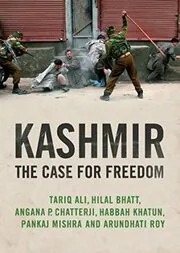
Kashmir
by Arundhati Roy
2011
This slim volume on Kashmir's struggle for self-determination gathers essays by several writers, including Roy's piece on the slogan Azadi, to trace the region's history, military occupation and the gap between official narratives and life on the ground.
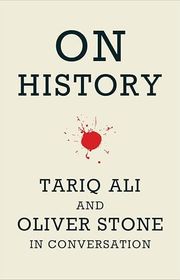
On History
by Tariq Ali
2011
Tariq Ali and Oliver Stone discuss neglected episodes in American and international history, questioning familiar accounts of political power. Their conversation ranges across revolution, labor struggles, intervention, and suppressed alternatives to the policies that shaped the twentieth century.

The New Adventures of Don Quixote
by Tariq Ali
2014
Don Quixote and Sancho Panza enter a twenty-first-century world marked by war, prejudice and greed. Meanwhile, their horse and mule conduct philosophical arguments, giving the familiar adventurers a new setting in which to question human folly.
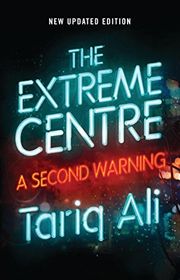
The Extreme Centre
by Tariq Ali
2015
Tariq Ali argues that the convergence of mainstream parties around market economics has narrowed democratic choice. Examining the political center's failures and emerging opposition, he considers whether movements beyond the established consensus can offer meaningful alternatives to austerity and inequality.
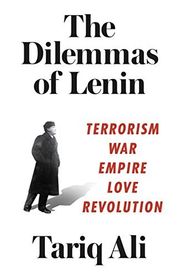
The Dilemmas of Lenin
by Tariq Ali
2017
Tariq Ali examines Lenin's political choices within the upheavals of his time, exploring revolution, imperial war, terrorism, and party organization. Intellectual history and personal relationships reveal the dilemmas behind the leader's decisions and their continuing significance for radical politics.
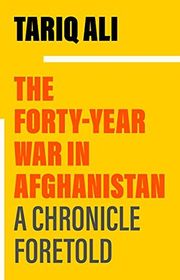
The Forty-Year War in Afghanistan
by Tariq Ali
2021
Tariq Ali gathers writings on four decades of war in Afghanistan, criticizing both Soviet intervention and the later NATO occupation. His account connects repeated foreign failures with Afghan suffering and the militarization and political transformation of neighboring Pakistan.
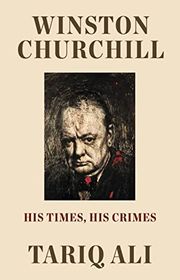
Winston Churchill
by Tariq Ali
2022
Tariq Ali offers a critical portrait of Winston Churchill centered on his commitment to empire. Examining colonial wars, India, and major political decisions alongside his opposition to fascism, Ali challenges the conventional separation of Churchill's wartime reputation from imperial rule.
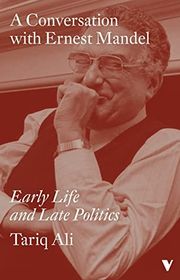
A Conversation with Ernest Mandel
by Tariq Ali
2023
In conversation with Tariq Ali, Marxist thinker Ernest Mandel reflects on his early life and later political commitments. Their discussion connects personal experience with revolutionary ideas, exploring the intellectual and activist life of a figure associated with the upheavals of 1968.

You Can't Please All
by Tariq Ali
2024
Tariq Ali recalls his political and cultural life from 1980 to 2024, tracing friendships, fiction, theater, and antiwar activism. Encounters with international movements and major historical changes reveal how his commitments developed after the revolutionary hopes of the 1960s.
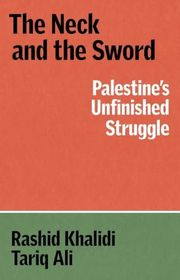
The Neck and the Sword
by Tariq Ali
2026
Rashid Khalidi and Tariq Ali discuss the history and future of Palestinian struggle, considering Gaza, the West Bank, and international solidarity. Their exchange examines American policy, the role of Arab governments, and strategic questions facing Palestinians seeking political freedom.
Tariq Ali sub-series and character series
Islam Quintet books in order
Explore this seriesStandalone Tariq Ali books









Edited by
Software engineer whose passion for tracking book recommendations from podcasts inspired the creation of MRB.
Lead investor at 3one4 Capital whose startup expertise and love for books helped shape MRB and its growth.
Comments
Spotted a missing book, a wrong order or a mistake? Tell us and we'll fix this page.
We're a reading guide, not the author or publisher, so we can't send books or pass on messages.