
Sylvie and Bruno Books in Order
Part ofLewis Carroll Books in OrderExplore the Sylvie and Bruno books by Lewis Carroll, a complex blend of fairy tale and social satire. Includes reading order and plot summaries.
Last updated:
As an Amazon Associate, we earn from qualifying purchases (at no extra cost to you).
Sylvie and Bruno books in publication order
2 books
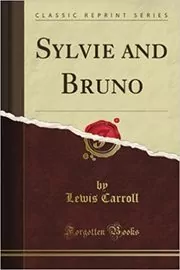
Sylvie And Bruno
by Lewis Carroll
1889
The first volume of Carroll's ambitious social fairy tale. A historian narrator drifts between Victorian society and a magical realm, observing the adventures of the sweet fairy Sylvie and her mischievous brother Bruno.
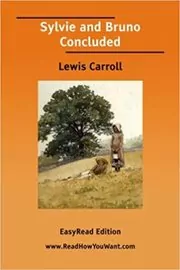
Sylvie and Bruno Concluded
by Lewis Carroll
1893
The conclusion to the duology brings together the threads of the human romance and the fairy court intrigues. It features more of Bruno's baby-talk, social philosophy, and the famous song about a "Mad Gardener."
Sylvie and Bruno books in chronological order
Series background & context
Most readers know Lewis Carroll solely through his trips down the rabbit hole or through the looking-glass. However, late in his life, the author poured his heart into a much different, far more ambitious project. Comprising two volumes—Sylvie and Bruno and Sylvie and Bruno Concluded—this series represents Carroll’s attempt to break every rule of storytelling he had previously mastered. It is not merely a fairy tale; it is a complex, multi-layered puzzle that challenges the reader to keep up.
The story is built on a radical premise.
Instead of taking a physical journey to a fantasy land, the narrator stays right where he is. He exists in a grounded, realistic Victorian England, interacting with doctors and earls. But as his mind wanders or he drifts into a drowsy state, he slips imperceptibly into the magical realm of "Outland." There are no clear borders. A conversation at a stiff dinner party might dissolve mid-sentence, replaced instantly by the political intrigues of a fairy court. This dreamlike structure was decades ahead of its time, mimicking the fluid, often confusing way human consciousness actually works.
In the "real" world, the book functions as a social novel. The characters, including the young doctor Arthur Forester and the Lady Muriel, navigate romance and ethical dilemmas. They serve as mouthpieces for Carroll’s own views on religion, charity, and science. These sections are earnest and philosophical, showing a side of the author that rarely appeared in his earlier nonsense literature. He wanted to teach, not just entertain.
Then there are the titular siblings.
Sylvie and Bruno are fairies, but they often appear as human children. Sylvie is the sweet, responsible older sister, constantly trying to keep order. Bruno is the breakout star: a mischievous, logic-defying toddler who speaks in a unique, phonetic baby-talk. While the adults discuss theology, Bruno is busy plotting minor disasters or asking impossible questions.
Despite the serious themes, the series still flashes with Carroll’s trademark wit. It contains some of his most inventive nonsense poetry, including the famous "Mad Gardener's Song," where reality constantly shifts before the observer's eyes. It also features bizarre inventions, like a map with a scale of a mile to a mile, or boots designed for horizontal weather.
This duology is certainly not a light afternoon read. It can be disjointed and strange, oscillating wildly between high-minded moralizing and slapstick fantasy. Yet for those willing to navigate its twists, it offers a fascinating glimpse into the mind of a genius who refused to be pinned down to a single genre.










Edited by
Software engineer whose passion for tracking book recommendations from podcasts inspired the creation of MRB.
Lead investor at 3one4 Capital whose startup expertise and love for books helped shape MRB and its growth.
Comments
Did we miss something? Have feedback?
Help us improve this page by sharing your thoughts