
Alice in Wonderland Books in Order
Part ofLewis Carroll Books in OrderFollow Alice down the rabbit hole in Lewis Carroll's classic nonsense series. This page lists the books in order with summaries and background.
Last updated:
As an Amazon Associate, we earn from qualifying purchases (at no extra cost to you).
Alice in Wonderland books in publication order
6 books
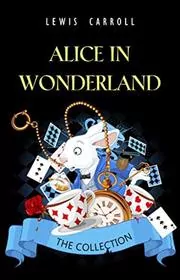
Alice in Wonderland
by Lewis Carroll
1862
The classic tale of a girl who falls into a fantasy world of anthropomorphic creatures. This edition presents the timeless story of the White Rabbit, the Mad Hatter, and the Queen of Hearts.
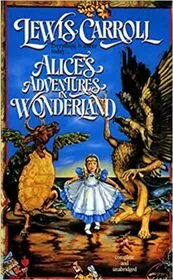
Alice's Adventures in Wonderland
by Lewis Carroll
1865
When young Alice chases a White Rabbit down a hole, she lands in a surreal world of changing sizes and nonsensical creatures. She must navigate tea parties, croquet games, and a trial, all while trying to keep her head.
Recommended by
5 people Naval Ravikant recommended this book
Naval Ravikant
Naval Ravikant's answer to "first book which started your lifelong journey of reading?"
Naval Ravikant's recommendation of this book  Richa Chadha recommended this book
Richa Chadha
"I was greatly influenced by [this book] in my formative years." - Richa Chadha
Richa Chadha's recommendation of this book  Russell Brand recommended this book
Russell Brand
"Has so much to teach us. It’s an archetypal tale about recognising that there are different layers of reality." - Russell Brand
Russell Brand's recommendation of this book  Sahil Lavingia recommended this book
Sahil Lavingia
Sahil Lavingia recommended this book on Notion.
Sahil Lavingia's recommendation of this book  Salman Rushdie recommended this book
Salman Rushdie
"The books we love change the way we see the world. For me it all began with [this book]." - Salman Rushdie
Salman Rushdie's recommendation of this book
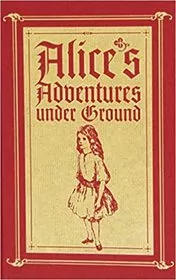
Alice's Adventures Under Ground
by Lewis Carroll
1865
This is the facsimile of the original handwritten manuscript that Carroll gave to Alice Liddell. It features his own illustrations and the early, shorter version of the story that would later become the worldwide classic.
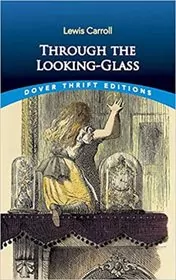
Through the Looking Glass and What Alice Found There
by Lewis Carroll
1871
Alice steps through a mirror into a world laid out like a giant chess board. To become a Queen, she must travel across the squares, meeting Tweedledum and Tweedledee, Humpty Dumpty, and the Red Queen along the way.
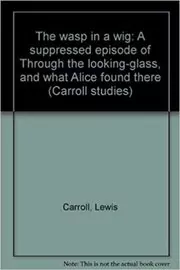
The Wasp In A Wig
by Lewis Carroll
1877
A "lost" chapter originally written for *Through the Looking Glass* but suppressed before publication. Alice meets a grumpy, elderly wasp complaining about his yellow wig. A fascinating glimpse into the editing process of the classic.
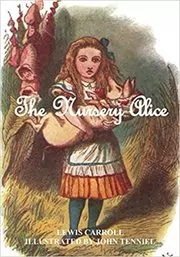
The Nursery
by Lewis Carroll
1889
Carroll adapted his own famous tale for "children from Nought to Five." This shortened version features larger illustrations and a simpler, more conversational tone suited for the very youngest readers.
Alice in Wonderland books in chronological order
Series background & context
When Lewis Carroll first sent Alice tumbling down the rabbit hole, he didn't just write a story; he dismantled the conventions of children's literature. Alice's Adventures in Wonderland and its equally famous sequel, Through the Looking-Glass, stand as defining classics that refuse to age. While other Victorian authors were busy writing stiff, moralizing tales meant to teach children how to behave, Carroll offered something far more enticing: pure, unadulterated chaos.
The journey begins with a sudden departure from the boring, structured world of the riverbank. Whether it is a slow fall down a deep well or a step through a dissolving mirror, Alice is immediately transported to a reality where logic is twisted and nothing works the way it should. It is a landscape defined by puns, parodies, and dream logic, where animals don't just talk—they argue about the meaning of words.
It’s a world where the only thing you can expect is the unexpected.
In the second installment, the motif shifts from the chaotic hierarchy of a deck of playing cards to the rigid, alternating squares of a chessboard. Through the Looking-Glass takes the surrealism a step further, playing with concepts of time and space. Alice must run as fast as she can just to stay in the same place, and she has to walk backward to reach her destination. These narrative tricks reveal the author’s background as a logician, hiding complex mathematical concepts and chess problems beneath a veneer of whimsy.
What truly sets these stories apart, however, is their refusal to talk down to the reader. There is no heavy-handed lesson waiting at the end of the chapter. Alice isn’t punished for being curious, nor is she rewarded for being polite. She is simply a sane, logical child trying to navigate a world full of insane, illogical adults. She serves as the perfect audience surrogate, approaching every absurd situation with a mix of wonder and practical frustration.
The inhabitants of this world are some of the most memorable in literary history. From the tea-sipping madness of the Hatter and the March Hare to the vanishing grin of the Cheshire Cat, every encounter is a verbal duel. The Queen of Hearts dominates her scenes not with wisdom, but with terrifying, arbitrary anger. These characters are funny, but they also capture the specific anxiety of growing up and realizing that the people in charge don't always know what they are doing.
Decades later, the "Alice" books remain a playground for the imagination. Readers continue to return to them to decipher the riddles, enjoy the linguistic gymnastics, or simply escape the dull rules of reality. It is a timeless study of childhood, nonsense, and the joy of asking "why."


Edited by
Software engineer whose passion for tracking book recommendations from podcasts inspired the creation of MRB.
Lead investor at 3one4 Capital whose startup expertise and love for books helped shape MRB and its growth.
Comments
Did we miss something? Have feedback?
Help us improve this page by sharing your thoughts