
Sven Hassel Books in Order
Explore Sven Hassel’s World War II novels in order, with book lists, short summaries, series background, and guidance on the best place to start reading.
Last updated:
As an Amazon Associate, we earn from qualifying purchases (at no extra cost to you).
Sven Hassel books in publication order
16 books
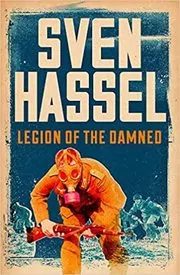
Legion of the Damned
by Sven Hassel
1953
Tried as a deserter from the German army, Sven is sent through brutal concentration camps and then “pardoned” into a penal panzer regiment on the Eastern Front. Among killers, misfits and political prisoners, he discovers that only comradeship and ruthless ingenuity keep a man alive.
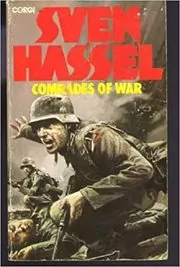
Comrades of War
by Sven Hassel
1958
Badly wounded and shipped to a hospital near Hamburg, Sven and his friends glimpse the Reich behind the lines—propaganda, brothels and black markets—before orders drag them back to the Eastern Front. Between numb boredom and sudden terror, loyalty to their comrades becomes the only constant.
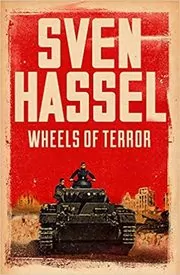
Wheels of Terror
by Sven Hassel
1958
Now serving as tank crewmen in the 27th Penal Regiment, Sven and his comrades are hurled again and again into hopeless battles on the Russian Front. With life expectancy measured in weeks, they fight not for Hitler but for each other and the faint chance of survival.
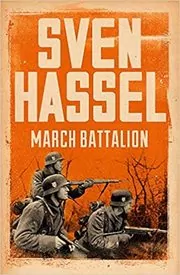
March Battalion
by Sven Hassel
1962
The 27th Penal Regiment is used wherever the German army needs bodies most, from savage assaults on the Russian Front to guarding prisoners in a notorious military jail. Treated as expendable, Sven and his comrades must choose between obedience, quiet resistance and a likely unmarked grave.
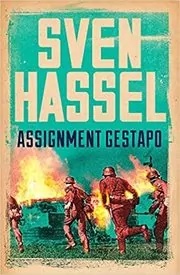
Assignment Gestapo
by Sven Hassel
1963
Seconded to the Gestapo, Sven’s penal unit suddenly finds itself policing civilians, escorting prisoners and doing the regime’s ugliest work. Surrounded by informers and torturers, the soldiers struggle to carry out orders without losing the scraps of conscience and solidarity that still bind them.
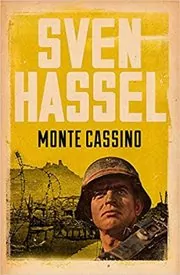
Monte Cassino / The Beast Regiment
by Sven Hassel
1963
After years on the Eastern Front, the 27th Penal Regiment is sent to Italy and ordered to hold the fortress of Monte Cassino at any cost. Under relentless Allied bombardment on a shattered mountainside, Sven and his comrades fight a defence they know they cannot win.

Liquidate Paris
by Sven Hassel
1967
As Allied forces surge inland from Normandy, Sven’s unit retreats through France with chilling orders: reach Strasbourg and destroy Paris on the way. Street fighting, sabotage and a city full of civilians force the men to weigh blind obedience against the last shreds of their humanity.

SS General
by Sven Hassel
1969
Trapped in the inferno of Stalingrad, Sven and the remnants of the 27th Penal Regiment are starving, freezing and surrounded. Led by a ruthless SS general on a desperate breakout attempt across the snowbound steppe, they face the enemy, the weather and the collapse of their own army.
Gestapo
by Sven Hassel
1972
Back from the Eastern Front to rebuild their shattered unit, Sven and his comrades see a close friend handed over to the Gestapo after a show trial. As he disappears into a maze of cells and torture chambers, they come face to face with the regime’s machinery of terror.
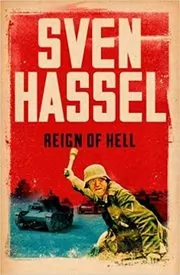
Reign of Hell
by Sven Hassel
1973
Sent into burning Warsaw to help crush the 1944 uprising, the penal regiment fights street by street through a city turned to rubble. Caught between Himmler’s SS and the Polish resistance, Sven and his friends witness a popular revolt sliding into an endless reign of hell.

Blitzfreeze
by Sven Hassel
1975
Blitzfreeze follows the regiment in the first great drive on Moscow, racing east in worn-out tanks and trucks. Between fierce Soviet resistance and the killing cold of the Russian winter, the men soon discover that frostbite, hunger and exhaustion can be deadlier than enemy fire.
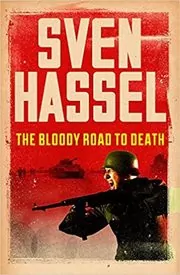
The Bloody Road to Death
by Sven Hassel
1977
As Hitler’s war pushes them through Greece, Yugoslavia and Albania, the veterans of the 27th Penal Regiment march along a bloody road of ambushes, massacres and thirst. When water and supplies run out, even hardened soldiers are ready to kill simply to stay alive one more day.
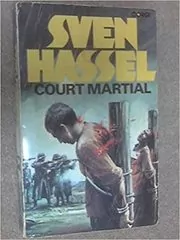
Court Martial
by Sven Hassel
1978
Court Martial explores the machinery of military “justice” that hangs over every man in the regiment. From Arctic patrols to makeshift firing squads, Sven watches officers use courts martial to enforce obedience—and sees what happens when condemned soldiers refuse to die quietly.
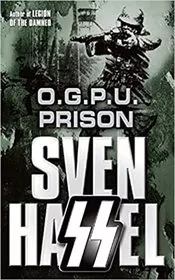
O.G.P.U. Prison
by Sven Hassel
1981
Captured or cut off behind enemy lines, members of the 27th Penal Regiment fall into the hands of the Soviet security service. Inside O.G.P.U. Prison they face interrogations, informers and sudden executions, learning that survival in a secret prison demands a different kind of courage than battle.
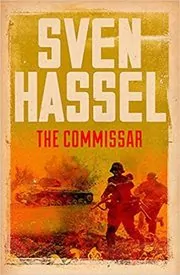
The Commissar
by Sven Hassel
1984
In The Commissar, Sven’s platoon fights through the frozen wastes of the Eastern Front while a ruthless political officer tightens his grip on their lives. Shifting between front-line Russia and memories of pre-war Germany, the story shows how propaganda and everyday cruelty pave the road to war.

Legion of the Damned: A Comic Book Adaptation
by Sven Hassel
2019
Legion of the Damned: A Comic Book Adaptation condenses Hassel’s first novel into a graphic retelling, following Sven and his comrades from desertion trial and concentration camps into a penal panzer unit on the Eastern Front, with the same mix of dark humour and battlefield horror.
Where to start with Sven Hassel
If you want to start at the beginning: Legion of the Damned → Wheels of Terror → Comrades of War.
If you’re here for tank battles on the Eastern Front: Wheels of Terror → SS General → Blitzfreeze.
If you prefer campaigns in Italy and France: Monte Cassino / The Beast Regiment → Liquidate Paris.
If you just want one book to try him out: Legion of the Damned or Monte Cassino / The Beast Regiment.
Sven Hassel sub-series and character series
Legion of the Damned (Sven Hassel) books in order
Explore this seriesLegion of the Damned (Sven Hassel) books in chronological order
Sven Hassel collections, short stories, and related book types
Graphic Novels
Author bio
Sven Hassel was the pen name of Danish writer Børge Willy Redsted Pedersen, born in 1917 in the small town of Nyhuse in Frederiksborg County. He grew up in a poor working‑class family and left school early, drawn more to work and travel than to classrooms. At fourteen he joined the merchant navy as a cabin boy and spent his teens at sea, learning hard routines and seeing more of the world than most boys his age.
In his late teens he returned to Denmark to complete his compulsory military service. The 1930s were harsh years, and when regular work proved almost impossible to find, he drifted south to Germany looking for a future. There he turned again to what he already knew: the army. He enlisted in the German Wehrmacht, later describing himself as a tank soldier who eventually landed in a penal battalion.
War, in his telling, was never clean or heroic.
Hassel would later say that he served on multiple fronts, from the invasion of Poland to the frozen wastes of the Eastern Front, and that an attempt to desert led to time in concentration camps and a punishment regiment. Parts of that story became the raw material for his fiction. At the same time, his wartime record and role under German occupation were later questioned in Denmark, and his biography has remained the subject of debate.
What is clear is that when the war ended he was a prisoner, and after the liberation he was tried in Denmark and sentenced to a long term for treason. He spent several years in prison before his release in 1949. During and after those years he began drafting the pages that would become his first novel, using writing as a way to process what he had seen and heard.
In the early 1950s he was living in Copenhagen, working day jobs and writing at night. His debut novel, Legion of the Damned, appeared in 1953 and introduced readers to a brutal, close‑up view of World War II from inside a German penal regiment. Written in the first person, it followed a small group of front‑line soldiers through concentration camps, punishment units and the Eastern Front, without much concern for official glory.
Over the next three decades he produced thirteen more novels, including Wheels of Terror, Comrades of War, SS General and Monte Cassino. The books follow the same core group of characters—Porta, Tiny, the Legionnaire, the Old Man, Julius Heide, Barcelona Blom, Gregor Martin and the narrator Sven—as they are shunted from Russia to Italy, the Balkans, Greece, France and Poland. Each volume drops them into a different campaign or assignment, from tank battles and street fighting to guard duty for the Gestapo.
Readers are drawn to the mix of graphic violence, coarse barracks humour and stubborn loyalty among men who know they are expendable. Hassel’s soldiers are not patriots in the usual sense; they fight to stay alive and to protect one another, while watching civilians and prisoners pay the heaviest price. His work keeps circling the same themes: the stupidity of high command, the thin line between victim and perpetrator, and the way ordinary people bend or break under pressure.
His novels sold in the tens of millions and were translated into many languages, especially finding an audience among readers who wanted war stories that felt raw and unvarnished. At the same time, his past in occupied Denmark and the question of how much of his fiction came from direct experience kept him controversial at home. Today his books are generally read as war novels with an anti‑war undercurrent rather than as straightforward memoir.
In 1964 Hassel moved with his family to Barcelona, attracted by the climate and by Spanish writers he admired. He continued to write there for decades, working slowly and revising heavily, often in close partnership with his wife. He lived in the city until his death in 2012 at the age of ninety‑five, leaving behind a long, bruising series of novels about a handful of soldiers trying to survive a war they never controlled.









Edited by
Software engineer whose passion for tracking book recommendations from podcasts inspired the creation of MRB.
Lead investor at 3one4 Capital whose startup expertise and love for books helped shape MRB and its growth.
Comments
Did we miss something? Have feedback?
Help us improve this page by sharing your thoughts