
Submarine Warfare in World War Two Books in Order
Part ofJohn Wingate Books in OrderThis page collects John Wingate's Submarine Warfare in World War Two books in order, with summaries, setting background, and where to begin.
Last updated:
As an Amazon Associate, we earn from qualifying purchases (at no extra cost to you).
Submarine Warfare in World War Two books in publication order
1 book
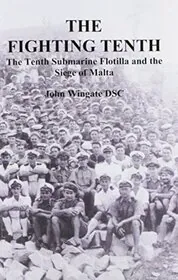
The Fighting Tenth
by John Wingate
1971
Wingate's history of the Tenth Submarine Flotilla tells how Malta-based British boats struck Axis shipping during World War II. It is a close, practical account of one of the Royal Navy's hardest and most dangerous campaigns.
Submarine Warfare in World War Two books in chronological order
Series background & context
This grouping is less a neat hero-led series than a connected set of books about one of John Wingate's defining subjects, British submarine warfare in the Second World War. The thread running through them is Malta, the Mediterranean, and the hard, dangerous work of small submarines trying to cut Axis supply lines in crowded, hostile waters.
In Go Deep, Wingate turns that world into fiction through Lieutenant John Carbis and HMS Urgent. Carbis joins the famous Fighting Tenth during the siege of Malta and has to prove himself under a demanding captain while the boat works close to enemy coasts, minefields, and convoy routes. The novel gives you action, but it also gives you the daily strain of the campaign, including the battered island base that keeps the whole effort alive.
The Fighting Tenth takes the same world and treats it directly as history. It tells the story of the Tenth Submarine Flotilla based at Malta, the force that harried Axis shipping with extraordinary persistence and paid for that success at a brutal cost. Wingate had wartime submarine experience of his own, and that shows in the way he writes about operational limits, cramped boats, and the very practical courage this campaign demanded.
Malta is not just a backdrop here. It is the pressure point.
That matters because the setting explains the tone of these books. The submarines were small, the sea lanes were vital, and there was very little room for error. Boats had to work in shallow water, under air attack, through minefields, and against escorts that could turn a patrol into a long attempt to stay alive. On shore, Malta itself was under siege, so every convoy and every sinking had a larger meaning than the fate of one ship alone.
What you should expect, then, is not glamorous submarine fiction. Wingate writes about discipline, fatigue, and skill. He is interested in how these operations actually worked and what they cost the people carrying them out. If you want a page that brings together his Malta-centered submarine war books, this one makes a lot of sense. It shows both sides of his strength, the novelist who can make the pressure immediate, and the historian who wants you to understand what the campaign really involved.
















Edited by
Software engineer whose passion for tracking book recommendations from podcasts inspired the creation of MRB.
Lead investor at 3one4 Capital whose startup expertise and love for books helped shape MRB and its growth.
Comments
Did we miss something? Have feedback?
Help us improve this page by sharing your thoughts