
Stephen Greenblatt Books in Order
Explore Stephen Greenblatt books in order, with short summaries, a quick biography, and simple tips on where to start with his Shakespeare and history books.
Last updated:
As an Amazon Associate, we earn from qualifying purchases (at no extra cost to you).
Stephen Greenblatt books in publication order
21 books
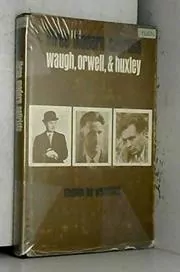
Three Modern Satirists
by Stephen Greenblatt
1965
Greenblatt studies Waugh, Orwell, and Huxley to ask what satire does and how it works. He traces the harsh, circular logic behind modern satiric fiction and shows why these three writers bite in such different ways.
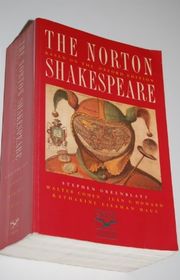
The Norton Shakespeare
by Stephen Greenblatt
1972
As general editor, Greenblatt helps present a full Shakespeare edition with freshly edited texts, introductions, and rich notes. It's built for students and serious readers who want the plays, poems, and context in one place.
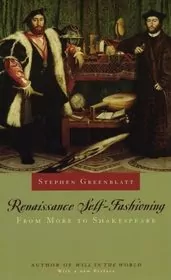
Renaissance Self-Fashioning
by Stephen Greenblatt
1981
Greenblatt examines how major Renaissance writers shaped public identity under pressure from power, religion, and social expectations. Focusing on figures from More to Shakespeare, he argues that literature helped invent new ways of making a self.
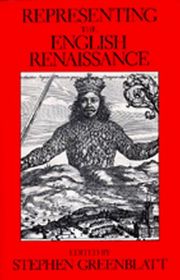
Representing the English Renaissance
by Stephen Greenblatt
1988
This edited collection gathers essays on English Renaissance literature and culture from a strongly historical angle. It asks how politics, religion, theater, and representation shaped what counted as literature in the period.
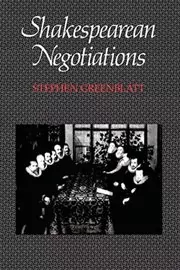
Shakespearean Negotiations
by Stephen Greenblatt
1988
Through a set of influential essays, Greenblatt follows the social energy moving between Shakespeare's plays and Renaissance life. The book shows how theater absorbed conflict, ritual, authority, and rebellion, then sent them back out transformed.
Learning to Curse
by Stephen Greenblatt
1990
In essays on Marlowe, Lear, colonialism, ritual, and rebellion, Greenblatt argues that Renaissance art is inseparable from the culture around it. It's a sharp introduction to the methods that came to be called new historicism.
Marvelous Possessions
by Stephen Greenblatt
1991
Greenblatt explores how European travelers described the peoples and lands they encountered in the Americas. He shows how wonder, curiosity, and storytelling could become tools of possession, conquest, and misunderstanding.
Redrawing the Boundaries
by Stephen Greenblatt
1992
Coedited with Giles Gunn, this volume surveys major shifts in English and American literary studies. Its essays map a field opening outward, toward history, theory, culture, and new questions about what literature includes.
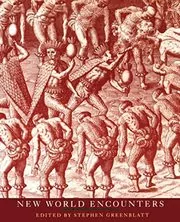
New World Encounters
by Stephen Greenblatt
1993
This edited collection revisits the first encounters between Europeans and the peoples of the Americas. Drawing on history, art history, anthropology, and literary study, it complicates easy conquest stories and looks closely at cultural exchange and misunderstanding.
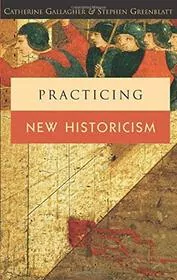
Practicing New Historicism
by Stephen Greenblatt
2000
Written with Catherine Gallagher, this book explains new historicism through examples rather than slogans. Moving from Renaissance painting to Hamlet and Great Expectations, it shows how historical reading can stay concrete, skeptical, and surprisingly lively.
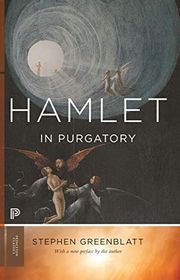
Hamlet in Purgatory
by Stephen Greenblatt
2001
Starting with the ghost of Hamlet's father, Greenblatt explores purgatory as doctrine, institution, and cultural memory. The book becomes both a gripping reading of Hamlet and a larger study of how the dead linger after belief changes.
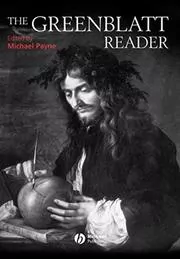
The Greenblatt Reader
by Stephen Greenblatt
2004
Edited by Michael Payne, this volume gathers Greenblatt's key essays on culture, Shakespeare, Renaissance studies, and literary method. It's an easy way to sample the range of his thinking in one place.
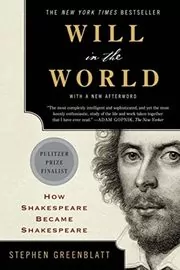
Will in the World
by Stephen Greenblatt
2004
A lively, accessible life of Shakespeare built from the scraps the archive leaves behind. Greenblatt connects the playwright's world, family, faith, theater, and ambition to the plays without pretending certainty where none exists.
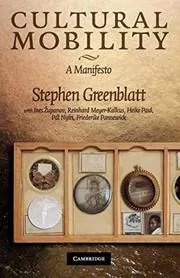
Cultural Mobility
by Stephen Greenblatt
2009
Coedited with several scholars, this manifesto argues that cultures are rarely fixed and are always shaped by movement. The essays explore travel, migration, translation, performance, and exchange across periods and places.
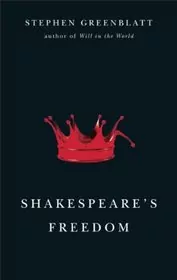
Shakespeare's Freedom
by Stephen Greenblatt
2010
Greenblatt asks what freedom meant to Shakespeare in a world built on authority and hierarchy. In short, elegant chapters, he tracks Shakespeare's resistance to absolutes through questions of beauty, hatred, power, and artistic autonomy.
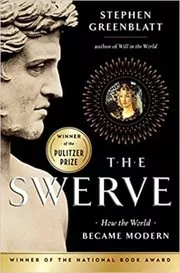
The Swerve
by Stephen Greenblatt
2011
In 1417 the humanist Poggio Bracciolini finds Lucretius's lost poem and helps return dangerous ancient ideas to circulation. Greenblatt turns that recovery into a brisk intellectual history about chance, books, and how buried texts can reshape the future.
Recommended by
2 people Nick Kokonas recommended this book
Nick Kokonas
"Great book." - Nick Kokonas
Nick Kokonas's recommendation of this book  Mark Manson recommended this book
Mark Manson
Mark Manson recommended this book on his website.
Mark Manson's recommendation of this book
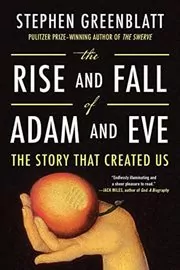
The Rise and Fall of Adam and Eve
by Stephen Greenblatt
2017
Greenblatt traces the afterlife of Adam and Eve from ancient origins through theology, art, literature, and modern doubt. He asks why this brief story has so powerfully shaped ideas about sex, freedom, shame, and human nature.
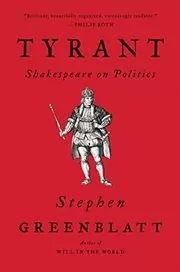
Tyrant
by Stephen Greenblatt
2018
Using figures such as Richard III, Macbeth, Lear, and Coriolanus, Greenblatt studies Shakespeare's tyrants from the inside out. He links their hunger for power to the damage they do to language, institutions, and the people around them.
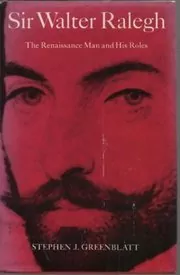
Sir Walter Ralegh
by Stephen Greenblatt
2021
Greenblatt's early study treats Ralegh as a man who turned public life into performance. Moving between court politics, writing, exploration, imprisonment, and execution, it reads his career as a revealing drama of Renaissance ambition.
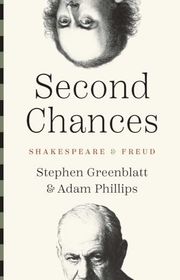
Second Chances
by Stephen Greenblatt
2024
With Adam Phillips, Greenblatt explores renewal, regret, and the wish to begin again through Shakespeare and Freud. The book moves from comedy to tragedy and psychoanalysis to ask when damaged lives can be mended, and when they cannot.
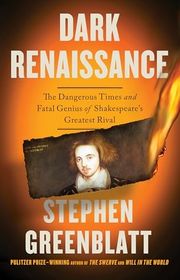
Dark Renaissance
by Stephen Greenblatt
2025
Greenblatt reconstructs Christopher Marlowe's brief, dangerous life against the violence and opportunity of Elizabethan England. It's a fast-moving biography of a radical playwright whose ambition, skepticism, and theatrical daring helped reshape English literature.
Where to start with Stephen Greenblatt
If you want the most accessible starting point: Will in the World → The Swerve
If you want Shakespeare front and center: Will in the World → Hamlet in Purgatory → Shakespeare's Freedom → Tyrant
If you want new historicism and criticism: Renaissance Self-Fashioning → Shakespearean Negotiations → Learning to Curse → Practicing New Historicism
If you want broader intellectual history: The Rise and Fall of Adam and Eve → Second Chances → Dark Renaissance
Stephen Greenblatt collections, short stories, and related book types
Biographies
Literary
Plays
Religious
Princeton Classics
Standalone Stephen Greenblatt books
Author bio
Stephen Greenblatt was born in Boston in 1943 and grew up in Newton, Massachusetts. He has described a childhood full of stories, jokes, and the pull of language. He studied at Yale, took his M.Phil. at Pembroke College, Cambridge, and returned to Yale for his Ph.D., completed in 1969.
He has said that a high school teacher, John Harris, changed the way he thought about literature. Hearing Harris admit that even after years of teaching King Lear there were lines he still didn't fully understand showed Greenblatt that reading was not about closing a case, but about staying with what remains difficult, strange, and alive.
That stayed with him.
Greenblatt spent nearly three decades at the University of California, Berkeley, before moving to Harvard, where he became John Cogan University Professor of the Humanities. He also helped found the journal Representations. Over the years he became a central figure in what came to be called new historicism, or, in his own preferred phrase, cultural poetics, a way of reading literature through history, politics, religion, institutions, and everyday life.
His early books made that method visible. Renaissance Self-Fashioning looks at how writers from Thomas More to Shakespeare built public selves under pressure. Shakespearean Negotiations, Learning to Curse, and Marvelous Possessions keep asking how power moves through theater, language, travel, and encounter, especially in Renaissance Europe and in the first European descriptions of the Americas.
Many readers outside the academy first met him through Will in the World. That book takes the thin, frustrating archive of Shakespeare's life and turns it into a vivid account of family, faith, ambition, fear, and the theater, while staying honest about how much must remain uncertain. People who enjoy it tend to like the mix of scholarship, narrative drive, and plainspoken curiosity.
Then came The Swerve, his story of Poggio Bracciolini's rediscovery of Lucretius, which won the National Book Award in 2011 and the Pulitzer Prize in 2012. It brought Greenblatt to an even wider audience. Readers who like his work often respond to the same quality across all of it: he can make old texts feel urgent without pretending they are simple, modern, or safely familiar.
He has kept returning to Shakespeare from different angles. Hamlet in Purgatory follows a ghost into the religious afterlife of the Reformation. Shakespeare's Freedom asks what liberty could mean in a world built on rank and authority. Tyrant studies what happens when power curdles into fear, narcissism, flattery, and damage to public life.
But he doesn't stay in one lane.
The Rise and Fall of Adam and Eve traces a short Biblical story across centuries of theology, art, literature, and doubt. Second Chances, written with Adam Phillips, links Shakespeare to Freud through the human wish to begin again after loss or failure. And Dark Renaissance turns to Christopher Marlowe, showing how danger, brilliance, and rivalry helped remake the English stage.
Across the whole body of work, certain themes keep returning: how stories travel, how institutions shape imagination, how belief leaves marks long after it fades, and how literature carries the feel of real social life. Even when he is writing about kings, explorers, scholars, or playwrights, he is usually asking a very human question, how did these people become who they were, and what worlds made them possible?
Greenblatt still teaches at Harvard and continues to write for both scholarly and general readers. He is the general editor of The Norton Anthology of English Literature and The Norton Shakespeare, has served as president of the Modern Language Association, and lives in Cambridge, Massachusetts.



Edited by
Software engineer whose passion for tracking book recommendations from podcasts inspired the creation of MRB.
Lead investor at 3one4 Capital whose startup expertise and love for books helped shape MRB and its growth.
Comments
Did we miss something? Have feedback?
Help us improve this page by sharing your thoughts