
Steam House Books in Order
Part ofJules Verne Books in OrderFind the Steam House books by Jules Verne in order, with short summaries, series background, and help with the split-volume editions.
Last updated:
As an Amazon Associate, we earn from qualifying purchases (at no extra cost to you).
Steam House books in publication order
2 books

Tigers and Traitors
by Jules Verne
1976
In the second half of *The Steam House*, the remarkable steam elephant keeps moving through India as treachery and pursuit close in. Adventure travel gives way to sharper danger and unfinished revenge.
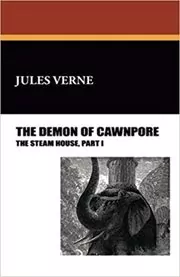
The Demon of Cawnpore
by Jules Verne
2008
This opening part of *The Steam House* sends travelers across India in a mechanical marvel while the violence of 1857 still hangs over the land. The journey is thrilling, but never truly carefree.
Steam House books in chronological order
Series background & context
The Steam House books are Verne at his most mechanically playful and politically uneasy at the same time. The great hook is unforgettable: a traveling house on wheels, hauled across India by a giant steam-powered elephant. That image tells you a lot about the series. It is part engineering fantasy, part travel adventure, and part reckoning with the aftershocks of empire.
The machine is almost a character in its own right.
Verne uses the steam house the way he often uses a vessel in his fiction, as both transport and moving stage. It lets a group of travelers cross huge distances while carrying their own little world with them. Inside it, they eat, argue, rest, and plan. Outside it lies nineteenth-century India, presented through long journeys, hunting scenes, local encounters, and the constant reminder that recent history has not settled down.
That history is the Indian Rebellion of 1857. The books take place after the uprising, when fear, grievance, and vengeance are still raw. Verne folds in the figure of Nana Sahib and uses the journey to keep the past pressing against the present. So while the steam elephant can feel whimsical at first, the story around it is often tense. The travelers are not moving through a neutral landscape.
English editions often split the novel into The Demon of Cawnpore and Tigers and Traitors, and those titles capture the blend fairly well. One side of the series is pursuit, revenge, and political violence. The other is expedition, spectacle, and travel through forests, plains, and dangerous territory. Verne is interested in both. He wants the excitement of the road, but he also wants the road to carry memory.
The cast is broad enough to keep the tone shifting. There are officers, travelers, servants, guides, and men who do not all read the land the same way. That helps the books avoid becoming just a machine showcase. The steam house may be the marvel, but the tension comes from the people riding in it and the history they cannot leave behind.
Readers should expect one of Verne's most vivid moving contraptions and one of his more unsettled adventure settings. The series gives you gadget pleasure, tiger country, long-distance travel, and a serious undertow of fear and retaliation. That combination makes it one of his more distinctive travel narratives, and one of the best examples of how invention and anxiety can share the same page.







Edited by
Software engineer whose passion for tracking book recommendations from podcasts inspired the creation of MRB.
Lead investor at 3one4 Capital whose startup expertise and love for books helped shape MRB and its growth.
Comments
Did we miss something? Have feedback?
Help us improve this page by sharing your thoughts