
Starship Troupers Books in Order
Part ofChristopher Stasheff Books in OrderSee the Starship Troupers books by Christopher Stasheff in order, with quick summaries, series background, and reading notes.
Last updated:
As an Amazon Associate, we earn from qualifying purchases (at no extra cost to you).
Starship Troupers books in publication order
3 books
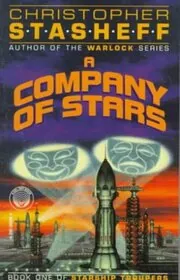
A Company of Stars
by Christopher Stasheff
1991
When theater is condemned on Earth, the newly formed Star Company buys a spaceship and takes its performances offworld. The result is a lively mix of backstage life, satire, and spacefaring adventure.

We Open on Venus
by Christopher Stasheff
1991
The Star Company heads to Venus and finds a colony tightly controlled by a powerful petroleum cartel. Performing there means tangling with corporate authority as much as entertaining an audience.

A Slight Detour
by Christopher Stasheff
1994
The Star Company lands on prosperous Citadel expecting another tour stop and finds a world so puritanical that theater is forbidden. Putting on a show becomes an act of cultural rebellion.
Starship Troupers books in chronological order
Series background & context
Starship Troupers may be the most Christopher Stasheff premise Christopher Stasheff ever came up with. Faced with a future in which political and moral crusaders have turned against theater on Earth, a troupe of performers buys a spaceship and takes the show on the road, or rather, off the planet. Right away you can see what attracts him: underdogs, institutions trying to crush imagination, and a group of people stubborn enough to keep making art anyway.
The central cast is not made up of soldiers or kings. They are actors, directors, and theater people, which gives the series a different rhythm from his wizard books. Rehearsals, performances, backstage nerves, personality clashes, and improvisation all matter. But the settings keep the stakes larger than mere show business. Each stop throws the Star Company into a society with its own form of pressure, whether that means corporate control, social repression, or outright hostility to performance.
Art is the battleground here.
That is clearest in books like We Open on Venus and A Slight Detour. One world is squeezed by a powerful oil cartel. Another is so puritanical that theater itself is scandalous. In both cases, the company is doing more than trying to put on a good production. They are testing how much freedom a society can bear, and whether ordinary people are hungry for joy, satire, and truth once someone risks offering it.
This is science fiction, but not the hardware-first kind. The ship matters because it lets the troupe move, survive, and stay independent. The real focus is on culture. Stasheff treats performance as something socially dangerous in the best sense, a way to expose hypocrisy, loosen fear, and remind people they have inner lives that authority cannot fully regulate. That gives the books a lighter feel than military SF while still keeping them tied to his usual questions about power.
It is backstage comedy with a political streak.
If you are browsing this page, expect a series that is breezier on the surface than Warlock of Gramarye but built around many of the same concerns. The actors are charming because they are working artists, not chosen ones. Their victories tend to come through nerve, timing, and collective effort. If you like the idea of theater as resistance, this is one of the more unusual side roads in Stasheff's bibliography.







Edited by
Software engineer whose passion for tracking book recommendations from podcasts inspired the creation of MRB.
Lead investor at 3one4 Capital whose startup expertise and love for books helped shape MRB and its growth.
Comments
Did we miss something? Have feedback?
Help us improve this page by sharing your thoughts