
Six Million Dollar Man Books in Order
Part ofMartin Caidin Books in OrderFind the Six Million Dollar Man books by Martin Caidin in order, with short summaries, series background, and a guide to his original Steve Austin novels.
Last updated:
As an Amazon Associate, we earn from qualifying purchases (at no extra cost to you).
Six Million Dollar Man books in publication order
4 books
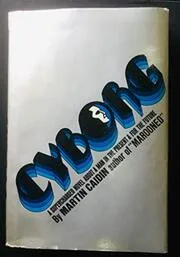
Cyborg
by Martin Caidin
1970
After a catastrophic test-flight crash, astronaut Steve Austin is rebuilt with experimental bionics and sent back into a dangerous world. Darker than the TV version, this is a tense thriller about survival, control, and weaponized technology.

Operation Nuke
by Martin Caidin
1973
Steve Austin faces a criminal network using nuclear blackmail to threaten the world. His bionic upgrades make him a unique weapon, but they do not make the mission any less lethal.
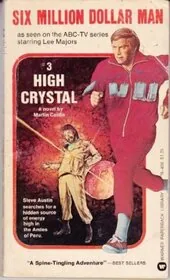
High Crystal
by Martin Caidin
1974
Sent to Peru, Steve Austin investigates an ancient site and a mysterious power source hidden high in the Andes. The mission mixes espionage, lost-civilization intrigue, and hard-driving bionic action.
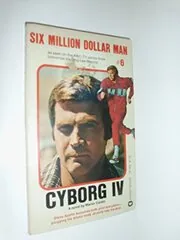
Cyborg IV
by Martin Caidin
1975
Steve Austin's bond with machinery is pushed even further when his mind is linked to an advanced spacecraft. Caidin turns the bionics idea into a stranger, bigger science fiction thriller.
Six Million Dollar Man books in chronological order
Series background & context
This is the original Martin Caidin version of Steve Austin, and it is worth separating clearly from the television franchise it inspired. The TV series made the idea famous, but Caidin's books have their own continuity, their own tone, and a much rougher version of the man at the center of it.
It starts with Cyborg.
Steve Austin is an astronaut and test pilot who is nearly killed in a catastrophic crash. To save him, doctors and government scientists rebuild large parts of his body with advanced bionics. In simple plot terms, that gives him extraordinary abilities. In Martin Caidin terms, it also creates a problem. Austin is no longer just a wounded man who survived. He is a government investment, a secret weapon, and a test case for what happens when machinery and identity become impossible to separate.
That darker edge runs through the whole sequence. Caidin's Steve Austin is more volatile and more physically unsettling than the television hero many readers know. The science is treated seriously for its time, the intelligence work is harsher, and the books are interested in consequences as much as spectacle. Austin can do things no ordinary human can do, but that power comes with surveillance, manipulation, and the constant pressure of being used.
The series then expands outward in Operation Nuke, High Crystal, and Cyborg IV. Each book keeps the core bionics idea in place but shifts the scale of the story. Nuclear blackmail, mysterious energy sources, ancient ruins, international intrigue, and eventually even deeper man-machine fusion all come into play. The books get stranger as they go, but they remain linked by the same question, what happens when technology stops being a tool and starts becoming part of the person?
That is what gives this series its identity. It is not superhero fiction in the bright, simple sense. It is near-future suspense written by someone who loved engineering and feared what institutions might do with it. Austin is heroic, but he is also under pressure from his own altered body, from the agencies that control his missions, and from enemies who see him as either a target or an opportunity.
The tone is fast, direct, and often more severe than readers expect if they know only the television franchise. There is action, certainly, but there is also a coldness to the setup that makes the series interesting. Caidin was not just inventing a gadget-man. He was imagining a world where recovery, surveillance, weapons research, and state power were all tied together inside one human body.
So if you are coming to the Six Million Dollar Man books through Martin Caidin, expect the source version. It is leaner, darker, more technical, and much more clearly rooted in Cold War science fiction thriller territory than the TV adventures that followed.








Edited by
Software engineer whose passion for tracking book recommendations from podcasts inspired the creation of MRB.
Lead investor at 3one4 Capital whose startup expertise and love for books helped shape MRB and its growth.
Comments
Did we miss something? Have feedback?
Help us improve this page by sharing your thoughts