
Ballantine's Illustrated History of World War II / the Violent Century: Weapons Book Books in Order
Part ofMartin Caidin Books in OrderSee Martin Caidin's Ballantine's Illustrated History of World War II books in order, with short summaries, series background, and what to expect.
Last updated:
As an Amazon Associate, we earn from qualifying purchases (at no extra cost to you).
Ballantine's Illustrated History of World War II / the Violent Century: Weapons Book books in publication order
2 books
ME-109
by Martin Caidin
1968
Another history of the Messerschmitt Bf 109, covering the famous German fighter's variants, performance, and long service in the war. A concise companion to his other aircraft studies.
Zero Fighter
by Martin Caidin
1969
A compact history of Japan's famed Zero, tracing how it gained its reputation and how pilots used its strengths in combat. Caidin keeps the focus on performance and wartime context.
Ballantine's Illustrated History of World War II / the Violent Century: Weapons Book books in chronological order
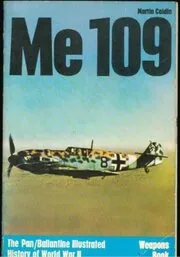
by Martin Caidin
1968Ballantine's Illustrated History of World War II / the Violent Century: Weapons Book, Book 1
by Martin Caidin
1969Ballantine's Illustrated History of World War II / the Violent Century: Weapons Book, Book 2
Series background & context
This Ballantine line is a different kind of series from Martin Caidin's fiction. There is no recurring hero, no developing plot, and no need to read every volume in sequence. Instead, this is part of a large illustrated World War II paperback library built to give readers short, focused books on weapons, aircraft, ships, campaigns, and the mechanics of modern war.
The format is a big part of the appeal.
These books were made to be readable, visual, and direct. A typical volume takes one subject, a fighter, a bomber, a carrier, a tank type, a weapons family, or a campaign problem, and builds a compact introduction around photographs, captions, clear narrative, and fast background. They were aimed at general readers and enthusiasts rather than specialists, which is why they remain useful as entry points even when later scholarship goes deeper.
Martin Caidin fits naturally into that world because he had two strengths that mattered here. First, he knew how to explain machinery without draining the life out of it. Second, he loved aviation and military hardware enough to write about them with urgency. Even in his longest books, he was often at his best when showing how a machine worked, what it could do, and what it demanded from the people using it.
That carries into the Ballantine style. A Caidin contribution to this series is likely to be brisk, concrete, and full of operational detail without turning into a textbook. He tends to connect design choices to battlefield realities. Why did this aircraft matter? What job was it supposed to do? What happened when theory met weather, enemy fire, distance, fuel, or pilot skill? Those are the questions that keep the material moving.
Another useful thing about the Weapons Book sub-series is that it lets military history stay specific. Instead of trying to explain the whole war at once, these books narrow the frame. One volume can focus on a single aircraft type or weapons class and give readers enough history, technical grounding, and combat context to understand why it mattered. That narrower scope makes the books easy to dip into according to interest.
So the best way to think about this series background is simple. It is a shelf of compact, illustrated WWII studies, and Martin Caidin belongs in it because he was very good at turning hardware into story. He could write about machines in a way that still kept crews, risk, and decision-making in view.
If you are here for Martin Caidin's Ballantine books, expect concise nonfiction rather than sweeping narrative history. These volumes are for readers who want a solid, approachable introduction to a weapon system, an aircraft, or a piece of the war without wading through a giant reference work first.






Edited by
Software engineer whose passion for tracking book recommendations from podcasts inspired the creation of MRB.
Lead investor at 3one4 Capital whose startup expertise and love for books helped shape MRB and its growth.
Comments
Did we miss something? Have feedback?
Help us improve this page by sharing your thoughts