
Sharan Newman Books in Order
Explore Sharan Newman books in order, with quick summaries, series guides, and where-to-start tips for Catherine LeVendeur, Guinevere, and more.
Last updated:
As an Amazon Associate, we earn from qualifying purchases (at no extra cost to you).
Sharan Newman books in publication order
21 books

The Dagda's Harp
by Sharan Newman
1976
Michael, a young druid apprentice, sets out to find a magical harp that could save Ierne from the Formorians. Drawing on Irish myth, the novel mixes quest fantasy, strange allies, and a young hero learning what courage costs.

Guinevere
by Sharan Newman
1980
Newman begins with Guinevere's childhood, giving her a life before the legend hardens around her. Magic, family, and politics shape the girl who will one day marry Arthur and step into the center of Britain.
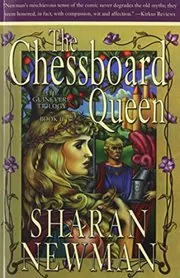
The Chessboard Queen
by Sharan Newman
1983
Now queen beside Arthur, Guinevere discovers that power at Camelot comes with loneliness, court games, and Lancelot. The second book turns the legend into a tense story of desire, duty, and the cracks opening in Arthur's world.
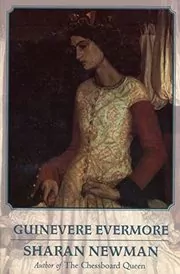
Guinevere Evermore
by Sharan Newman
1985
The final Guinevere novel follows the cost of love as Arthur's court starts to break apart. Lancelot, Modred, and old loyalties pull the story toward the familiar tragedy at the heart of the legend.

Death Comes As Epiphany
by Sharan Newman
1993
Young scholar Catherine is sent from the Paraclete to trace a missing manuscript tied to Heloise and Abelard. What starts as a church scandal turns into a deadly hunt for forgery, heresy, and the people behind both.

The Devil's Door
by Sharan Newman
1994
A battered countess is carried to the Paraclete and dies without naming who attacked her. Catherine, poised between convent life and marriage, vows to find the truth before more lives and the house she loves are destroyed.

The Wandering Arm
by Sharan Newman
1995
A missing saint's relic and a fresh murder drag Catherine into danger on both sides of the Channel. As she hunts the stolen arm of St. Aldhelm, she is forced to face the family history she can no longer ignore.

Strong as Death
by Sharan Newman
1996
After repeated miscarriages, Catherine and Edgar join a pilgrimage to Compostela in hope of a child. The road is crowded with pilgrims, secrets, and murder, and Catherine soon realizes someone is carrying an old grudge toward deadly revenge.

Cursed in the Blood
by Sharan Newman
1998
When Edgar learns two of his brothers have been murdered, Catherine follows him to civil-war Scotland with their infant son. Cut loose in a hostile household, she must uncover who wants Edgar's family wiped out.

The Difficult Saint
by Sharan Newman
1999
Catherine's estranged sister Agnes is accused of poisoning her new husband in Germany. Despite years of bitterness, Catherine travels into a hostile climate of fear and anti-Jewish violence to prove Agnes innocent.

Crime Through Time III
by Sharan Newman
2000
This anthology gathers historical mystery stories set across many centuries, from the ancient world to modern America. The fun is in the range: different crimes, different eras, and a fresh cast of sleuths in every story.

To Wear the White Cloak
by Sharan Newman
2000
Back in Paris, Catherine and Edgar find a dead man in their house wearing the white cloak of a Templar. The mystery pulls them into family secrets, rumors, and the larger upheaval of crusading France.
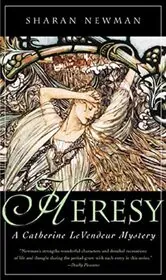
Heresy
by Sharan Newman
2002
Astrolabe, the son of Abelard and Heloise, is accused of murdering a young woman, and Catherine's family hides him. To save him, Catherine must sort through heresy charges, political grudges, and enemies eager to destroy his father's name.
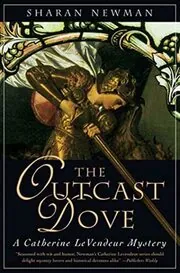
The Outcast Dove
by Sharan Newman
2003
Solomon heads to Spain to make money and instead runs into the father who abandoned him. When a monk is murdered and old religious wounds reopen, he must choose between anger, family, and the identity he has tried to protect.

The Witch in the Well
by Sharan Newman
2004
When Catherine's grandfather warns that the family well is failing, old legends and a strange woman begin to haunt the household. Then real bodies start turning up, and Catherine has to uncover the human truth behind the family curse.

The Real History Behind the Da Vinci Code
by Sharan Newman
2005
Written in an easy reference style, this nonfiction guide unpacks the people, places, and claims behind Dan Brown's novel. Newman separates medieval fact from modern invention without losing the fun of the questions.

The Real History Behind the Templars
by Sharan Newman
2007
Newman strips away legend to explain who the Knights Templar really were, what they did in the Crusades, and why myths attached themselves to them. It is a clear guide to history, trial records, and later conspiracy stories.

The Shanghai Tunnel
by Sharan Newman
2008
In 1868 Portland, newly widowed Emily Stratton arrives with her son and a husband she did not mourn. As she digs into his business affairs, she uncovers money, violence, and enemies who want her gone.

The Real History of the End of the World
by Sharan Newman
2010
This nonfiction book follows doomsday predictions from ancient religion to modern apocalypse scares. Newman asks why people keep expecting the end, and what those fears reveal about the times that produced them.

Death Before Compline
by Sharan Newman
2011
This short story collection returns to Catherine LeVendeur and her circle in twelfth-century Europe. Some tales take place before the novels, others after, but all turn everyday medieval life into sharp little mysteries.

Defending the City of God
by Sharan Newman
2014
Newman turns to nonfiction to trace Queen Melisende and the fragile politics of crusader Jerusalem. It is a focused look at power, family, and survival in a city claimed by many faiths.
Where to start with Sharan Newman
If you want the medieval mysteries: Death Comes As Epiphany → The Devil's Door → The Wandering Arm
If you want the Arthurian retelling: Guinevere → The Chessboard Queen → Guinevere Evermore
If you want the myth-busting nonfiction: The Real History Behind the Da Vinci Code → The Real History Behind the Templars → The Real History of the End of the World
If you want a standalone outside medieval France: The Shanghai Tunnel
Sharan Newman sub-series and character series
Catherine LeVendeur books in order
Explore this seriesCatherine LeVendeur books in chronological order
Sharan Newman collections, short stories, and related book types
Short Story Collections
Non-Fiction
Standalone Sharan Newman books
Author bio
Sharan Newman was born in Ann Arbor, Michigan, on April 15, 1949. She trained as a medievalist, but her career has never stayed inside the usual academic lane. From the beginning, she seems to have been interested in the past as something lived, argued over, feared, and laughed through, not just something filed away in footnotes.
She studied at Antioch College, earned a master's degree in medieval literature at Michigan State University in 1973, and then did doctoral work in medieval studies at the University of California, Santa Barbara. Her specialty was twelfth-century France, which turned out to be less a narrow field than a lifelong home base. She also became active in medieval studies organizations, including the Medieval Academy and the Medieval Association of the Pacific.
Then she made a choice that shaped the rest of her writing life.
Rather than teach full time, Newman put that training to work in fiction. She has said that the story of Abelard and Heloise first pulled her toward the Middle Ages, and that fascination runs through a lot of what she wrote later. The emotional life of history matters in her books as much as the dates do.
Her first novels were Arthurian. Guinevere, The Chessboard Queen, and Guinevere Evermore retell the legend from Guinevere's side, starting with her childhood and moving into marriage, queenship, love, and loss. They already show a habit that would become central to Newman's work: taking big historical or legendary material and bringing it down to the level of ordinary feeling, awkward choices, family pressure, and private doubt.
The books many readers know best are the Catherine LeVendeur mysteries, which begin with Death Comes As Epiphany. Set in twelfth-century France, the series follows a sharp-minded woman whose life touches convents, merchants, nobles, pilgrims, and scholars. Books like The Devil's Door, The Wandering Arm, Strong as Death, and Heresy mix murder plots with questions of faith, trade, kinship, and survival. They also make room for the daily business of living, which is one reason the setting feels solid instead of decorative.
History is never just background in these novels.
Newman keeps returning to the pressure points of the period: the legacy of Abelard and Heloise, the rise of the Cathars, the Second Crusade, and the dangerous fault line between Christians and Jews. Her fiction pays close attention to the bourgeoisie and minor nobility, people who have to live with the consequences of decisions made above them. That focus helped set her apart, and it brought awards too. Death Comes As Epiphany won the Macavity Award for Best First Mystery, Cursed in the Blood won the Herodotus Award, and The Witch in the Well later won the Bruce Alexander Award.
She has also moved comfortably into nonfiction. In The Real History Behind the Da Vinci Code, The Real History Behind the Templars, and The Real History of the End of the World, she takes subjects that attract rumor and grand claims, then patiently sorts legend from record. Later, Defending the City of God turned to Queen Melisende and the fragile politics of crusader Jerusalem, a subject that fits neatly with her long interest in the twelfth century.
Newman has never written only one kind of book. The Dagda's Harp draws on Irish myth, and The Shanghai Tunnel shifts to Portland in 1868, where a widow named Emily Stratton has to unravel the dangerous business life her husband left behind. Even when the setting changes, the curiosity is the same.
Recent public author bios have placed her in Ireland. Wherever she is working, the thread through all her books is easy to spot: serious research, clear human stakes, and a steady interest in the people history usually pushes to the side.












Edited by
Software engineer whose passion for tracking book recommendations from podcasts inspired the creation of MRB.
Lead investor at 3one4 Capital whose startup expertise and love for books helped shape MRB and its growth.
Comments
Did we miss something? Have feedback?
Help us improve this page by sharing your thoughts