
Serhii Plokhy Books in Order
Browse Serhii Plokhy books in reading order, with short summaries for each book and a clear title list to help you find a starting point.
Last updated: 18 new books added
As an Amazon Associate, we earn from qualifying purchases (at no extra cost to you).
Serhii Plokhy books in publication order
18 books
The Cossacks and Religion in Early Modern Ukraine
by Serhii Plokhy
2001
Plokhy examines how Ukrainian Cossacks became defenders of Orthodoxy and participants in early modern religious conflict. Their alliances and struggles illuminate the development of cultural identities across Ukraine, Russia, and Poland, including the turn toward Muscovite protection.
Religion and Nation in Modern Ukraine
by Serhii Plokhy
2003
Serhii Plokhy and Frank Sysyn examine how Ukraine’s Orthodox and Greek Catholic communities responded to modern nationalism. Their essays connect religious history with national revival, tracing developments from the late imperial period through the end of Soviet rule.
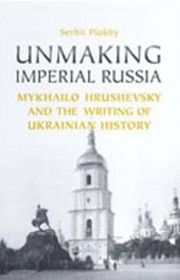
Unmaking Imperial Russia
by Serhii Plokhy
2005
Historian Mykhailo Hrushevsky challenged the imperial idea that Ukrainians formed one branch of a single Russian nation. Plokhy examines how his scholarship created a separate Ukrainian historical narrative and helped reshape the politics of national identity.
The Origins of the Slavic Nations
by Serhii Plokhy
2006
Plokhy traces the development of Russian, Ukrainian, and Belarusian identities from the Christianization of Kyivan Rus’ to the eighteenth century. He examines premodern communities and challenges attempts to assign their shared past exclusively to modern nations.
Ukraine and Russia
by Serhii Plokhy
2008
Where does Russian history end and Ukrainian history begin? Plokhy examines competing accounts of the past, considering how historians define their subjects and how opposing national traditions might move beyond the limitations of inherited historical narratives.
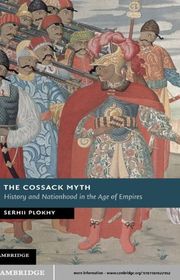
The Cossack Myth
by Serhii Plokhy
2012
A mysterious manuscript celebrating the Ukrainian Cossacks inspired conflicting visions of Russian and Ukrainian nationhood. Plokhy investigates its authorship, circulation, and influence, showing how a historical text shaped political imagination from the Napoleonic era through Soviet times.
The Last Empire
by Serhii Plokhy
2014
Plokhy reconstructs the Soviet Union’s final months through documents and interviews with participants. He challenges accounts that credit American pressure alone, examining the interaction of republican independence movements, Soviet leaders, and a United States reluctant to see the union dissolve.
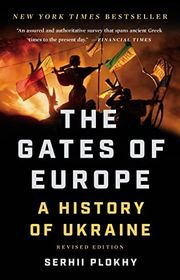
The Gates of Europe
by Serhii Plokhy
2015
This history traces Ukraine from antiquity to its modern struggle for independence. Plokhy follows the empires, political leaders, and cultural encounters that shaped its territory, examining how a country between East and West developed a national identity.
The Man with the Poison Gun
by Serhii Plokhy
2016
KGB assassin Bogdan Stashinsky defected to West Germany in 1961 after killing opponents of the Soviet regime with a concealed poison weapon. Plokhy follows his espionage career and the revelations that emerged when he turned against his employers.
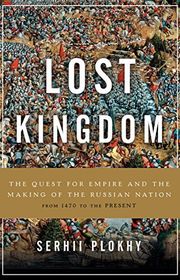
Lost Kingdom
by Serhii Plokhy
2017
Plokhy traces five centuries of efforts to expand Russian power and define a broader Russian nation. From the end of Mongol rule to the post-Soviet era, he examines the interaction of imperial ambition, territorial conquest, and national identity.
Chernobyl
by Serhii Plokhy
2018
Plokhy reconstructs the Chernobyl reactor explosion and the efforts of firefighters, scientists, and soldiers to contain it. He examines how reactor flaws, political secrecy, and the pressures of the Soviet system contributed to the disaster and shaped its aftermath.
Forgotten Bastards of the Eastern Front
by Serhii Plokhy
2019
During World War II, American airmen established bases in Soviet-controlled Ukraine for joint operations against Germany. Plokhy follows their uneasy cooperation with Soviet forces, showing how surveillance, military setbacks, and incompatible political cultures undermined the alliance.
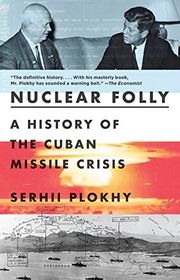
Nuclear Folly
by Serhii Plokhy
2021
This history examines the Cuban missile crisis through decisions made in Washington, Moscow, and Havana. Plokhy follows political leaders and military commanders as misunderstandings, competing objectives, and dangerous choices brought the world close to nuclear war.
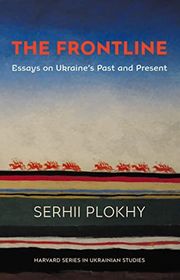
The Frontline
by Serhii Plokhy
2021
These essays explore Ukraine’s relations with Russia and the West, the Holodomor, World War II, Chernobyl, and the Soviet collapse. Plokhy connects historical events with contemporary arguments over memory, national identity, and the country’s political conflicts.
Atoms and Ashes
by Serhii Plokhy
2022
Plokhy examines six nuclear disasters, from weapons testing at Bikini Atoll to Fukushima. By following accidents in civilian and military programs, he explores technological risks and the decisions made by individuals and governments under extraordinary pressure.
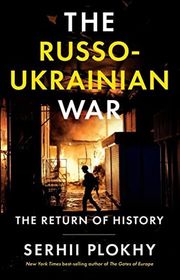
The Russo-Ukrainian War
by Serhii Plokhy
2023
Plokhy examines Russia’s war against Ukraine, connecting the full-scale invasion of 2022 with earlier fighting and the legacies of empire. His account considers the conflict’s origins, Ukraine’s resistance, and its consequences for European and international politics.
Tsars and Cossacks
by Serhii Plokhy
Serhii Plokhy investigates the political meaning of Ukrainian Cossack icons, paintings, and woodcuts. Images of tsars, religious leaders, and Cossack patrons reveal how artists and their sponsors understood authority, faith, and relations with the Russian Empire.
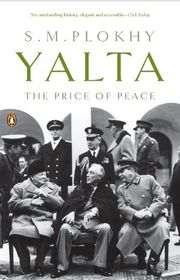
Yalta
by Serhii Plokhy
At Yalta in February 1945, Roosevelt, Churchill, and Stalin negotiated the shape of the peace that would follow World War II. Plokhy reconstructs their discussions and examines the competing priorities behind agreements that remained controversial long afterward.
Standalone Serhii Plokhy books


by Serhii Plokhy
2005Mykhailo Hrushevsky and the Writing of Ukrainian History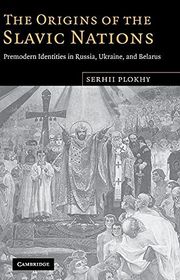
The Origins of the Slavic Nations
by Serhii Plokhy
2006Premodern Identities in Russia, Ukraine and Belarus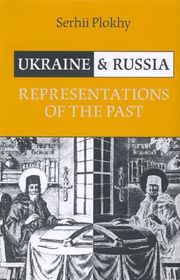




















Edited by
Software engineer whose passion for tracking book recommendations from podcasts inspired the creation of MRB.
Lead investor at 3one4 Capital whose startup expertise and love for books helped shape MRB and its growth.
Comments
Spotted a missing book, a wrong order or a mistake? Tell us and we'll fix this page.
We're a reading guide, not the author or publisher, so we can't send books or pass on messages.