
Sergei Lukyanenko Books in Order
Browse Sergei Lukyanenko books in order, from Night Watch to Labyrinth, with quick summaries, series guides, and simple advice on where to start.
Last updated:
As an Amazon Associate, we earn from qualifying purchases (at no extra cost to you).
Sergei Lukyanenko books in publication order
8 books
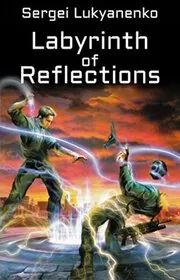
Labyrinth of Reflections
by Sergei Lukyanenko
1996
In a near-future virtual city called Deeptown, Leonid is a rare diver who can pull himself out of the Deep when others cannot. A rescue job inside a game becomes a fast, twisty chase through the line between code and reality.
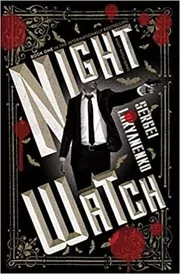
Night Watch
by Sergei Lukyanenko
1998
In contemporary Moscow, Light and Dark Others police each other under an ancient truce. When Night Watch agent Anton Gorodetsky finds a cursed young woman and a vulnerable boy at the center of rival schemes, a routine case turns into something far bigger.
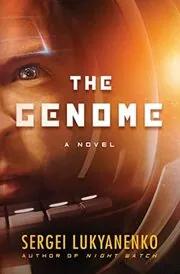
The Genome
by Sergei Lukyanenko
1999
In a future where embryos are designed for specific jobs, master pilot Alex is built for space and expected to obey. A mission aboard a troubled ship turns into both a mystery and a sharp look at freedom, class, and what genes cannot settle.
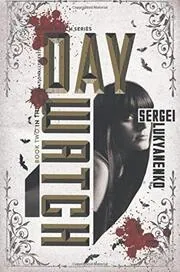
Day Watch
by Sergei Lukyanenko
2000
The war between Light and Dark looks very different from the other side in this sequel. A deadly romance, a mysterious Mirror, and an Inquisition trial push the fragile truce toward collapse.
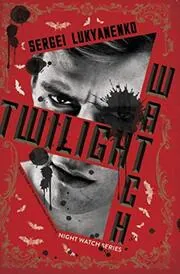
Twilight Watch
by Sergei Lukyanenko
2004
Anton investigates an impossible promise to turn a human into an Other, then follows whispers of the legendary Fuaran, a book that could rewrite the balance between Light and Dark. The deeper he digs, the less stable the old rules look.
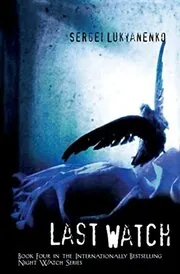
The Last Watch
by Sergei Lukyanenko
2006
Now a more powerful mage, Anton is sent to Edinburgh to investigate a killing that leads to Merlin's secrets and a hunt far beyond Moscow. Ancient artifacts and human pawns make the old conflict feel newly dangerous.
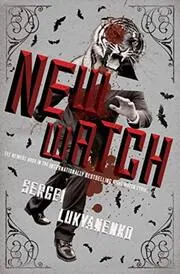
New Watch
by Sergei Lukyanenko
2012
At an airport, Anton meets a frightened boy whose prophecy should be impossible to change, then finds himself hunted by the Tiger, a terrifying force from the Twilight. The case pulls in old legends, new prophecies, and Anton's own family.
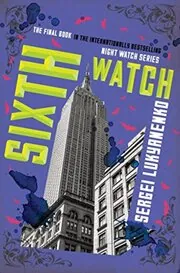
Sixth Watch
by Sergei Lukyanenko
2014
When prophets around the world warn of coming disaster, Anton faces the crisis that closes the Watch saga. To stop an ancient threat, he has to uncover the meaning of the Sixth Watch and bring it back together.
Where to start with Sergei Lukyanenko
If you want the best first taste of his fantasy: Night Watch → Day Watch
If you want the full Watch saga: Night Watch → Day Watch → Twilight Watch → The Last Watch → New Watch → Sixth Watch
If you want near-future cyberpunk: Labyrinth of Reflections
If you want a standalone science fiction novel: The Genome
Sergei Lukyanenko sub-series and character series
Standalone Sergei Lukyanenko books
Author bio
Sergei Lukyanenko was born in Karatau, in Kazakhstan, and grew up in a family of doctors. His father was a psychiatrist, his mother worked in addiction medicine, and medicine was the obvious road around him long before writing became the real one.
He moved to Alma-Ata for medical school, studied at the Alma-Ata State Medical Institute, trained as a psychiatrist, and later worked in Almaty. He started writing seriously while he was still a student, first for himself and friends, partly because he wanted more science fiction than he could find.
Then writing stopped being the side job.
His first published story appeared in 1988. In the early 1990s he worked at the magazine Miry in Almaty, became active in science fiction fandom, and kept producing stories and novels while the post-Soviet publishing world was changing under everybody's feet. By the mid-1990s he was writing full time.
He has spoken about the influence of Robert A. Heinlein, the Strugatsky brothers, and Vladislav Krapivin. You can see some of that in the early books, especially Knights of Forty Islands, which puts young characters under real pressure, and Labyrinth of Reflections, which takes cyberpunk ideas and turns them into something fast, uneasy, and human.
He has also described the beginning in very plain terms: he wanted something to read, there was nothing at hand, so he tried writing it himself. That practical streak still fits his fiction. Even when the ideas are big, the stories usually begin with one person trying to solve one immediate problem.
For many readers outside Russia, Night Watch is still the place to begin. It drops hidden magicians, vampires, and shapeshifters into contemporary Moscow, then refuses to make the moral lines neat. The Watch books made him a much bigger name, and the 2004 film adaptation of Night Watch, followed by a film version of Day Watch, brought that world to an even wider audience.
He likes stories where power solves one problem and creates three more.
That is true of The Genome too, a future-set novel about genetically engineered specialists that mixes space adventure with questions about free will and design. Across fantasy, cyberpunk, and space opera, Lukyanenko keeps returning to similar tensions: loyalty versus freedom, systems versus individuals, and the cost of staying decent when you have the strength to do damage.
His settings matter as much as his plots. Moscow, in the Watch books, feels lived-in and ordinary right up until it doesn't. Deeptown in Labyrinth of Reflections is exciting, grubby, and a little sad. Even when the action moves fast, there is usually a sense that his characters are being squeezed by the world around them, whether that world is magical, digital, or political.
Lukyanenko moved to Moscow at the end of 1996 and has lived there ever since. He is married to Sonya Lukyanenko, a psychologist and teacher, and they have two sons, Artemy and Daniil. His bibliography now runs across fantasy, science fiction, alternate history, and collaborations, but the core appeal stays simple: big ideas, clear stakes, and characters who rarely get the comfort of easy choices.










Edited by
Software engineer whose passion for tracking book recommendations from podcasts inspired the creation of MRB.
Lead investor at 3one4 Capital whose startup expertise and love for books helped shape MRB and its growth.
Comments
Did we miss something? Have feedback?
Help us improve this page by sharing your thoughts