
Labyrinth Books in Order
Part ofSergei Lukyanenko Books in OrderSee the Labyrinth books in order by Sergei Lukyanenko, with short summaries, reading order, series background, and a quick guide to where to start.
Last updated:
As an Amazon Associate, we earn from qualifying purchases (at no extra cost to you).
Labyrinth books in publication order
1 book
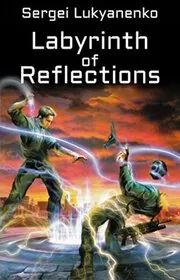
Labyrinth of Reflections
by Sergei Lukyanenko
1996
In a near-future virtual city called Deeptown, Leonid is a rare diver who can pull himself out of the Deep when others cannot. A rescue job inside a game becomes a fast, twisty chase through the line between code and reality.
Labyrinth books in chronological order
Series background & context
Sergei Lukyanenko's Labyrinth books, often grouped as the Deeptown novels, imagine a near future where virtual reality is no longer a clunky headset fantasy. People can drop into the Deep, a fully immersive digital world that feels solid, social, and dangerously convincing. Inside it sits Deeptown, a sprawling virtual city where business, crime, pleasure, and identity all blur together.
The internet has become a place you can drown in.
The first book, Labyrinth of Reflections, follows Leonid, one of the rare divers, people who can pull themselves out of the Deep at will when others cannot. That gives him a strange kind of power and a job no one else can quite do. He rescues users who get trapped too far inside virtual environments, but he also takes on riskier work around software, security, and the shadow economy that naturally grows inside a city where almost anything can be simulated.
Leonid is a good hero for this world because he is capable without ever feeling fully at ease. He knows how seductive Deeptown is. He also knows how quickly a game, a hack, or a private job can turn into something much bigger. The first novel uses that tension to build a fast cyberpunk thriller, but it is also interested in a quieter question: what happens when a fake world starts to feel more meaningful than the real one outside your apartment door?
The later books widen that question. False Mirrors shows the aftershocks of living half in love with a place that does not physically exist, while Transparent Stained-Glass Windows shifts the angle and shows how institutions try to control virtual space once they realize how powerful it has become. Along the way you get hackers, digital weapons, corporate interests, old friends who are changing in different directions, and even the idea of a virtual prison. Deeptown keeps growing, and so do the moral problems inside it.
That is what gives the series its kick.
These books are cyberpunk, but not in a cold, purely technical way. Lukyanenko is less interested in hardware specs than in dependency, temptation, role-playing, and the thin line between escape and surrender. The danger is not just that people can be fooled by images. It is that they may prefer the image, and shape their whole lives around it, while governments, companies, and talented amateurs all compete to own the rules.
The technology in the series comes from the late 1990s and early 2000s, so some details belong to that moment. The core idea still lands. Deeptown is exciting, grubby, a little melancholy, and full of people trying to be freer than they really are. If you like speculative fiction where virtual worlds have real emotional and physical consequences, Labyrinth has plenty to dig into.
















Edited by
Software engineer whose passion for tracking book recommendations from podcasts inspired the creation of MRB.
Lead investor at 3one4 Capital whose startup expertise and love for books helped shape MRB and its growth.
Comments
Did we miss something? Have feedback?
Help us improve this page by sharing your thoughts