
Secret Of The Kingdom Books in Order
Part ofMika Waltari Books in OrderThis page shows the Secret Of The Kingdom books by Mika Waltari in order, with brief summaries, series background, and help choosing where to start.
Last updated:
As an Amazon Associate, we earn from qualifying purchases (at no extra cost to you).
Secret Of The Kingdom books in publication order
2 books

The Secret of the Kingdom
by Mika Waltari
1959
Marcus Mezentius Manilianus reaches Jerusalem on the day of the Crucifixion and cannot let the mystery rest. His search for the truth about Jesus draws him toward the first Christians, even as they keep him at the edge of their inner circle.
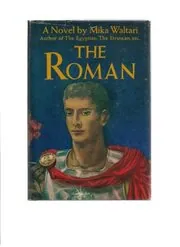
The Roman
by Mika Waltari
1966
Minutus, the son of Marcus, tries to survive the Roman Empire by staying clear of politics, which proves impossible. His travels carry him from Corinth to Rome and beyond, where friendship with Nero turns private caution into moral peril.
Secret Of The Kingdom books in chronological order
Series background & context
The Secret Of The Kingdom sequence is a two-book historical series about the rise of Christianity, but it doesn't approach that story from the center. Waltari tells it through Roman eyes, first in The Secret of the Kingdom and then in The Roman. That choice gives the books a curious, searching tone. These are novels about faith, empire, and conscience, seen by men who are close to events but never fully at home inside them.
In The Secret of the Kingdom, Marcus Mezentius Manilianus arrives in Jerusalem on the day Jesus is crucified. He is educated, wealthy, and used to observing the world with a Roman's confidence. Then he sees a city full of fear, rumor, prophecy, and political strain. What begins as curiosity turns into a serious personal search. Marcus wants to understand who Jesus was, what his followers believe, and whether there really is a kingdom hidden behind the violence and confusion of those days.
It is less a straight retelling than a search story.
Jerusalem matters here as much as any character. Under Roman occupation, the city feels crowded with competing loyalties and uneasy alliances. Pilate and the Roman administration are trying to keep order. Jesus' followers are grieving, frightened, and suspicious. Marcus can get near them, even help them, but that does not mean he is welcomed into their inner life. Much of the drama comes from that distance. He is drawn toward belief, but never allowed the comfort of easy belonging.
The Roman shifts the focus to Marcus's son, Minutus, and to a different phase of the story. Christianity is no longer a rumor at the edge of empire. It is becoming something the empire has to notice, fear, or use. Minutus tries to live cautiously and avoid political entanglements, but Waltari does not make that easy. His travels take him through Corinth, Rome, Britain, and Jerusalem, and his link to Nero pulls him toward the dangerous center of imperial power. The tone is darker, more ironic, and more openly concerned with compromise.
These books are quieter than The Adventurer, but no less tense.
What ties the duology together is Waltari's interest in how belief moves through ordinary weakness, social hierarchy, and state violence. Marcus wants truth and access. Minutus wants safety and room to maneuver. Neither man gets simple answers. Instead, the series keeps asking what a person owes to truth, what power does to the soul, and how new ideas survive in a world built to crush them.
If you like historical fiction that mixes politics, spiritual doubt, and careful world-building, this is a rewarding pair. The novels give you courtroom conversations, street-level fear, travel across the Roman world, and long moral shadows. They are thoughtful books, but not dry ones. Waltari keeps the human stakes close, even when the empires are enormous.
















Edited by
Software engineer whose passion for tracking book recommendations from podcasts inspired the creation of MRB.
Lead investor at 3one4 Capital whose startup expertise and love for books helped shape MRB and its growth.
Comments
Did we miss something? Have feedback?
Help us improve this page by sharing your thoughts