
Mika Waltari Books in Order
Browse Mika Waltari books in order, with short summaries, series guides, and where-to-start help for his historical novels, novellas, and stories.
Last updated:
As an Amazon Associate, we earn from qualifying purchases (at no extra cost to you).
Mika Waltari books in publication order
13 books
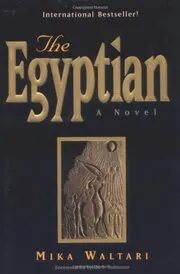
The Egyptian
by Mika Waltari
1945
Sinuhe, a physician in ancient Egypt, looks back on a life spent beside pharaohs, soldiers, and schemers during the age of Akhenaten. Sweeping and intimate at once, the novel follows his travels through power, belief, war, and disillusionment.
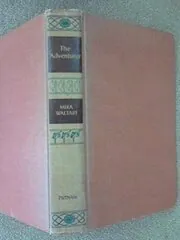
The Adventurer
by Mika Waltari
1948
Orphaned Mikael Karvajalka leaves Turku for Paris and gets swept into the political and religious upheavals of 16th-century Europe. From courts and battlefields to the Sack of Rome, his search for learning, love, and status becomes a dangerous education.
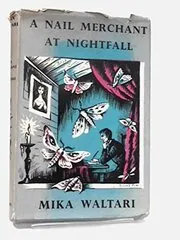
A Nail Merchant at Nightfall
by Mika Waltari
1949
Part fable, part writer's crisis, this strange novella follows a nail merchant haunted by his own imagination and by an Egyptian named Sinuhe. It's a playful, surreal look at creation, temptation, and the mess of making art.
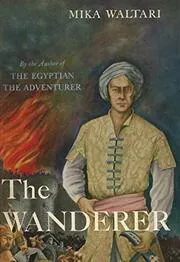
The Wanderer
by Mika Waltari
1949
After Rome falls into chaos, Mikael and his loyal companion Antti are pulled into the Ottoman world. Forced to reinvent himself as Mikael el-Hakim, he rises at Suleiman's court while wrestling with faith, ambition, and survival.

A Stranger Came to the Farm
by Mika Waltari
1952
A man from the city arrives at a remote Finnish farm already poisoned by drink, resentment, and fear. As a bond grows between the stranger and the farmer's wife, the quiet summer edges toward tragedy.

Moonscape and Other Stories
by Mika Waltari
1954
This collection gathers six stories and novellas, including the title piece about Joel and Miriam as childhood dreams harden into adult disappointment. Waltari moves between intimate relationships, memory, and quiet moral unease.
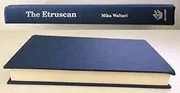
The Etruscan
by Mika Waltari
1955
Lars Turms moves through the Mediterranean world of the early fifth century BC, from Greece to Sicily to Etruria, searching for purpose and identity. Adventure, war, and prophecy shape a historical novel that is also a spiritual quest.
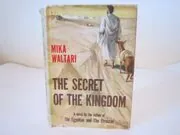
The Secret of the Kingdom
by Mika Waltari
1959
Marcus Mezentius Manilianus reaches Jerusalem on the day of the Crucifixion and cannot let the mystery rest. His search for the truth about Jesus draws him toward the first Christians, even as they keep him at the edge of their inner circle.

The Dark Angel
by Mika Waltari
1963
In the last days of Constantinople, Johannes Angelos keeps a diary as the city braces for siege and collapse. His impossible love for Anna Notaras gives the novel both intimacy and urgency as Byzantium faces its end.

The Tree of Dreams
by Mika Waltari
1965
A five-piece collection of stories and novellas, The Tree of Dreams brings together shorter Waltari works shaped by longing, danger, and uneasy choices. Expect shifting moods, from psychological tension to wartime dread and bitterly human irony.

The Tree of Dreams and Other Stories
by Mika Waltari
1965
This broader collection showcases Waltari in short form, mixing dreamlike stories, tense novellas, and sharp studies of people under pressure. The pieces return again and again to desire, uncertainty, and the thin line between ordinary life and disaster.
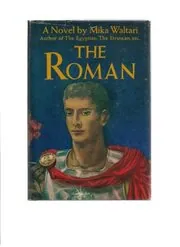
The Roman
by Mika Waltari
1966
Minutus, the son of Marcus, tries to survive the Roman Empire by staying clear of politics, which proves impossible. His travels carry him from Corinth to Rome and beyond, where friendship with Nero turns private caution into moral peril.
The Truth About the Schley Case
by Mika Waltari
2018
A compact account of the Schley controversy examines testimony, official records, and the arguments that shaped a bitter public dispute. It reads as a case study in military reputation, press pressure, and the struggle to separate fact from rumor.
Where to start with Mika Waltari
If you want his best-known classic: The Egyptian
If you want a big Renaissance adventure: The Adventurer → The Wanderer
If you want early Christianity through Roman eyes: The Secret of the Kingdom → The Roman
If you want a shorter, darker standalone: A Stranger Came to the Farm → A Nail Merchant at Nightfall
Mika Waltari sub-series and character series
Secret Of The Kingdom books in order
Explore this seriesSecret Of The Kingdom books in chronological order
Mika Waltari collections, short stories, and related book types
Short Stories/Novellas
Collections
Non-Fiction
Standalone Mika Waltari books
Author bio
Mika Waltari was born in Helsinki on September 19, 1908, and his early life was marked by loss, movement, and a strong sense that history could break into ordinary family life without warning. His father, Toimi Waltari, was a Lutheran pastor and teacher who died when Mika was only five. After that, his mother Olga, helped by relatives, raised Mika and his brothers through difficult years. During the Finnish Civil War, the family spent time in the countryside near Porvoo, and that early brush with fear and divided loyalties stayed with him.
He was supposed to study theology.
Instead, once he reached the University of Helsinki, he drifted toward literature, philosophy, and aesthetics, and graduated in 1929. He had already started publishing while still a student. His first book, Jumalaa paossa, appeared in 1925, and he was soon writing poems, stories, reviews, and magazine pieces with the energy of someone who had no intention of choosing just one lane.
A trip to Paris in 1927 gave him a turning point. There he wrote The Grand Illusion, a novel about bohemian life that became a surprise success in Finland and made him famous while he was still young. Paris also widened his sense of what a novel could do. The city, and the freedom he found there, helped push him away from the life others had mapped out for him.
He married Marjatta Luukkonen in 1931, and their daughter Satu, born the next year, later became a writer too. Through the 1930s and 1940s he worked as a journalist, critic, editor, and scriptwriter, while also publishing fiction at a speed that seems almost unreasonable now. He wrote plays, detective novels, historical epics, essays, travel pieces, radio work, and film scripts. He even produced a practical guide for aspiring writers.
He wrote fast, and he wrote everywhere.
That range is part of why readers meet different Waltaris depending on where they start. Some know him through Inspector Palmu, the blunt Helsinki detective from his crime novels. Others come for the huge historical books, especially The Egyptian, The Adventurer, The Wanderer, The Dark Angel, and The Secret of the Kingdom. What readers often like is not just the scale. It's the way he makes the past feel crowded with recognizable people, clever, frightened, vain, idealistic, compromised, and very much alive.
The war years hardened his view of power. During the Winter War and the Continuation War, he worked in Finland's government information service, using words in the service of wartime propaganda. That seems to have deepened his suspicion of slogans, official myths, and neat moral stories. Again and again, his fiction places thoughtful outsiders inside moments of massive change, then watches what belief, ambition, fear, and self-deception do to them.
History, for Waltari, was never safely in the past.
His great international breakthrough came with The Egyptian in 1945. Told by the physician Sinuhe and set in the age of Akhenaten, it became an international bestseller and later a Hollywood film. From there he kept building the kind of body of work that can keep a reader busy for years: Renaissance Europe in the Mikael books, the fall of Constantinople in The Dark Angel, the ancient Mediterranean in The Etruscan, and the early Christian world in The Secret of the Kingdom and The Roman. He was especially drawn to travelers, exiles, uncertain believers, and people who find themselves standing too close to power.
He also lived with severe swings in mood and periods of depression, sometimes serious enough to require hospital care. Even so, he kept working with fierce discipline, and later received major honors in Finland, including appointment to the Academy of Finland in 1957 and an honorary doctorate from the University of Turku in 1970. In his later years he wrote less, in part because the worldwide success of his books finally gave him financial room to slow down. He spent his last years in Helsinki and died there on August 26, 1979, one year after his wife died.











Edited by
Software engineer whose passion for tracking book recommendations from podcasts inspired the creation of MRB.
Lead investor at 3one4 Capital whose startup expertise and love for books helped shape MRB and its growth.
Comments
Did we miss something? Have feedback?
Help us improve this page by sharing your thoughts