
Sebastian Junger Books in Order
Browse Sebastian Junger's books in order, with short summaries, where to start tips, and a clear guide to his best reporting, history, and nonfiction.
Last updated:
As an Amazon Associate, we earn from qualifying purchases (at no extra cost to you).
Sebastian Junger books in publication order
7 books
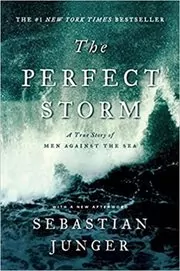
The Perfect Storm
by Sebastian Junger
1997
Junger reconstructs the 1991 storm that swallowed the Andrea Gail and the six men aboard her. He follows the fishermen, their families, and the rescue crews, building a tense account of work, weather, and disaster at sea.
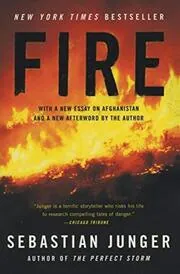
Fire
by Sebastian Junger
2001
This collection gathers Junger's reporting from wildfires, war zones, and other dangerous edges of the world. From smokejumpers to diamond smugglers, the pieces ask what risk reveals about work, fear, and survival.
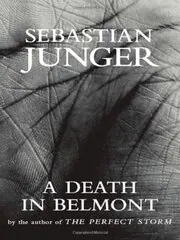
A Death in Belmont
by Sebastian Junger
2006
Junger revisits a 1963 murder in his hometown of Belmont, where Roy Smith was convicted and Albert DeSalvo later confessed to being the Boston Strangler. It is part true crime, part memoir, and part inquiry into race and justice.
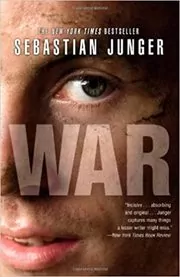
WAR
by Sebastian Junger
2010
Embedded with a platoon in Afghanistan's Korengal Valley, Junger writes about firefights, boredom, terror, and the bonds that keep soldiers going. The result is an intimate look at combat and the strange pull it can still exert afterward.
Recommended by
1 person Patrick O'Shaughnessy recommended this book
Patrick O'Shaughnessy
"This book was the best I've ever read on the psychology of war." - Patrick O'Shaughnessy
Patrick O'Shaughnessy's recommendation of this book
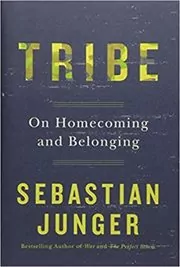
Tribe
by Sebastian Junger
2016
Junger looks at why humans crave belonging, and why modern life can leave people feeling cut off. Drawing on history, anthropology, and veterans' experiences, he argues that community, not comfort, is often what people miss most.
Recommended by
4 people Joe Rogan recommended this book
Joe Rogan
"Fucking epic. I can't recommend it enough." - Joe Rogan
Joe Rogan's recommendation of this book  Tim Ferriss recommended this book
Tim Ferriss
"I read in about a day and a half. I just ingested it rapid fire." - Tim Ferriss
Tim Ferriss's recommendation of this book  Emma Watson recommended this book
Emma Watson
On the "books read" section of Emma Watson's GoodReads profile.
Emma Watson's recommendation of this book  Josh Waitzkin recommended this book
Josh Waitzkin
"I think [this book] is really important right now." - Josh Waitzkin
Josh Waitzkin's recommendation of this book
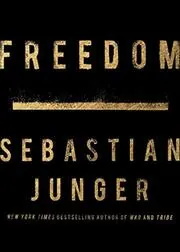
Freedom
by Sebastian Junger
2021
After walking East Coast railroad lines with three companions, Junger uses the journey to ask what freedom really means. The book mixes travel, history, and anthropology to explore the pull between independence and reliance on other people.

In My Time of Dying
by Sebastian Junger
2024
After surviving a sudden medical emergency in 2020, Junger examines mortality, consciousness, and the possibility of an afterlife. Blending memoir, reporting, and reflection, he writes about fear, family, and what it means to come close to death.
Where to start with Sebastian Junger
If you want his breakthrough book: The Perfect Storm
If you want frontline war reporting: War → Tribe
If you like true crime and moral questions: A Death in Belmont
If you want a wider sample of his journalism: Fire
If you want his most personal work: Freedom → In My Time of Dying
Sebastian Junger collections, short stories, and related book types
Non-Fiction
Standalone Sebastian Junger books
Author bio
Sebastian Junger was born in Belmont, Massachusetts, in 1962 and grew up in a household that mixed art and science. His mother, Ellen Sinclair, was a painter, and his father, Miguel Chapero Junger, was a physicist who came to the United States from Germany during World War II. He also spent part of his youth on Cape Cod, and that closeness to the coast would stay with him.
He has spent much of his career asking what people do when the stakes are high.
Junger went to Concord Academy and later studied cultural anthropology at Wesleyan University, graduating in 1984. Anthropology gave him a lasting interest in how groups hold together, how people survive under pressure, and how violence or isolation can change people. Those questions would show up again and again in his reporting and books.
Before books paid the bills, he worked a string of jobs and wrote freelance pieces whenever he could. A serious chainsaw injury while working as a tree climber pushed him toward writing about dangerous work. That line of thinking led him to Gloucester, Massachusetts, where he saw the 1991 storm that later became The Perfect Storm. Published in 1997, the book turned a fishing disaster into a gripping story about labor, weather, fear, and the sea.
He did not stay with ocean stories for long. In Fire, he gathered reporting from wildfires, war zones, and other dangerous corners of the world. In A Death in Belmont, he turned back to his own hometown and used a 1963 murder, plus his family's unsettling link to Albert DeSalvo, to think through race, memory, and justice.
Then war reporting changed the scale of his work.
As a journalist, later a contributing editor at Vanity Fair, and a special correspondent for ABC News, Junger reported from Afghanistan, Liberia, Sierra Leone, Kosovo, and elsewhere. His book War grew out of time spent with a U.S. platoon in Afghanistan's Korengal Valley. The documentary Restrepo, which he co-directed with Tim Hetherington, was nominated for an Academy Award and won the Grand Jury Prize at Sundance, and he later returned to similar material in the film Korengal.
If there is a thread running through Junger's work, it is fellowship under pressure. Tribe looks at belonging and why modern life can leave people isolated. Freedom uses a long walk along East Coast railroad lines with friends, including veterans, to think about independence, reliance, and the tension between personal liberty and community. In In My Time of Dying, written after he survived a near-fatal ruptured aneurysm in 2020, he turns inward and asks what happens when a hardheaded reporter runs into questions that facts alone may not settle.
Readers usually come to Junger for clear, urgent storytelling, but they stay because he keeps widening the frame. He has won major honors, including a National Magazine Award and a Peabody, and he founded Vets Town Hall, a project built around conversation between veterans and civilians. He lives in New York City and Cape Cod, still writing about the rough edges of modern life, on the page and on film.





Edited by
Software engineer whose passion for tracking book recommendations from podcasts inspired the creation of MRB.
Lead investor at 3one4 Capital whose startup expertise and love for books helped shape MRB and its growth.
Comments
Did we miss something? Have feedback?
Help us improve this page by sharing your thoughts