
Screenplays Books in Order
Part ofWilliam Faulkner Books in OrderExplore William Faulkner's screenplays in order, with summaries, Hollywood background, collaborations, and a guide to this lesser-known part of his career.
Last updated:
As an Amazon Associate, we earn from qualifying purchases (at no extra cost to you).
Screenplays books in publication order
1 book
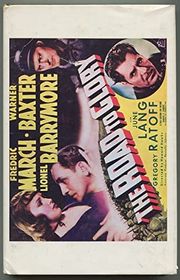
Road to Glory
by William Faulkner
1981
Written with Joel Sayre, this screenplay tells a World War I story centered on soldiers serving at the front in France. It shows Faulkner working in the direct, scene-driven form of Hollywood war drama.
Screenplays books in chronological order
Series background & context
William Faulkner spent part of his working life in Hollywood, writing and revising scripts while continuing to publish novels and stories. The screenplays grouped here show a different side of his career: practical, collaborative work made for studios, directors, actors, and deadlines rather than for the page alone.
He first went to California in the early 1930s after director Howard Hawks became interested in his writing. Faulkner worked on a wide range of projects, sometimes receiving screen credit and sometimes contributing dialogue, scenes, treatments, or revisions without a prominent credit. That uncertainty is part of the history of studio-era filmmaking, where a script could pass through many hands.
His Hollywood work included war stories, adventure pictures, detective films, and adaptations. He became a regular collaborator with Hawks and worked on films connected with titles such as To Have and Have Not and The Big Sleep. These projects often required him to reshape another writer's material into scenes that could be acted and filmed.
It was a job, but not a small one.
The screenplays are worth reading with different expectations from the Yoknapatawpha novels. They tend to move through dialogue, action, scene directions, and visual setups. Readers can see Faulkner adapting his sense of character and conflict to the faster, more outward-facing demands of film. The language may be leaner, while the pressure of a scene often comes through what people refuse to say.
They also offer a glimpse of the working writer behind the famous name. Faulkner traveled between Oxford and Hollywood, taking on assignments that helped support his household. The distance between a Mississippi county saga and a studio office is large, but both worlds fed his interest in performance, status, hidden motives, and people stuck in roles they would rather escape.
This group is a good place to start for readers curious about Faulkner beyond the novels. Read the scripts as collaborative artifacts, not as isolated literary works. They show how one major American novelist handled a medium where the finished result depended on a director, cast, crew, producer, and the machinery of a film studio.




Edited by
Software engineer whose passion for tracking book recommendations from podcasts inspired the creation of MRB.
Lead investor at 3one4 Capital whose startup expertise and love for books helped shape MRB and its growth.
Comments
Did we miss something? Have feedback?
Help us improve this page by sharing your thoughts