
Scary Stories To Tell in the Dark Books in Order
Part ofAlvin Schwartz Books in OrderFind the Scary Stories To Tell in the Dark books by Alvin Schwartz in order, with quick summaries, series background, and help picking the right fright level.
Last updated:
As an Amazon Associate, we earn from qualifying purchases (at no extra cost to you).
Scary Stories To Tell in the Dark books in publication order
4 books
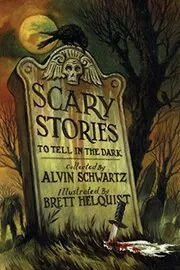
Scary Stories to Tell in the Dark
by Alvin Schwartz
1981
The book that started it all, this collection retells ghost stories, jump tales, songs, and urban legends from folklore. It mixes dread, dark humor, and perfect read-aloud timing.
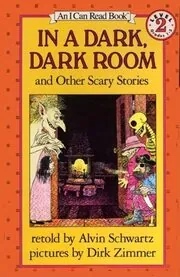
In a Dark, Dark Room and Other Scary Stories
by Alvin Schwartz
1984
Seven short tales, including the famous Green Ribbon, bring ghostly surprises and creeping suspense to beginning readers. Schwartz keeps the scares simple, quick, and perfect for reading after dark.
More Scary Stories to Tell in the Dark
by Alvin Schwartz
1984
This second collection dives into ghosts, witches, jump stories, and creepy songs drawn from folklore. The stories are short, sharp, and built for campfire reading.
More Tales to Chill Your Bones
by Alvin Schwartz
1991
The final Scary Stories collection gathers folklore-based chills, eerie legends, and darkly funny tales meant to be read aloud. Several of the stories linger long after the last line.
Scary Stories To Tell in the Dark books in chronological order
In a Dark, Dark Room and Other Scary Stories
by Alvin Schwartz
1984Scary Stories To Tell in the Dark, Book 2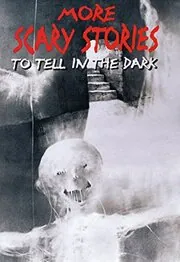
More Scary Stories to Tell in the Dark
by Alvin Schwartz
1984Scary Stories To Tell in the Dark, Book 3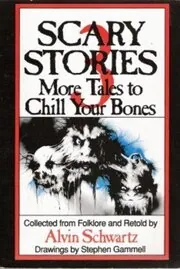
Series background & context
The Scary Stories To Tell in the Dark books are not novels with a single cast or a big running plot. They are three collections, Scary Stories to Tell in the Dark, More Scary Stories to Tell in the Dark, and More Tales to Chill Your Bones, each packed with short pieces drawn from folklore, urban legends, ghost stories, jump tales, and old songs. What links them is the feeling that someone is sitting across from you, leaning in, and saying, listen to this one.
There isn't one hero here.
Instead, the series keeps changing masks. One story may land in a lonely farmhouse, another on a dark road, another in a graveyard, a bedroom, a schoolyard, or a car full of people who should not have picked up that hitchhiker. Some tales are over in a page or two. Some build a little more slowly. A few are funny in a crooked way, and a few end so abruptly that the last line feels like a hand on your shoulder.
That mix is part of why the books last. Schwartz was not simply inventing random shocks. He spent years reading folklore collections and tracking how stories moved from place to place, changing as they went. In these books, he reshaped that material for young readers without sanding off the rough edges. You can feel the old bones of oral storytelling under almost every page. The stories want to be told aloud, with pauses in the right places and a voice that knows exactly when to drop to a whisper.
These books were built for the dark.
The original Stephen Gammell illustrations became part of the series identity for a reason. They do not just decorate the stories, they deepen the unease, making even a familiar folktale feel a little sickly and strange. But the books are not wall to wall terror. Schwartz knew how to place a silly story beside a cruel one, or a creepy song beside a full-blown nightmare. That balance matters. It gives the collections the loose, unpredictable feeling of a real campfire session, where one person tells a joke, the next person tells something gross, and then somebody lands the story that keeps everybody awake.
Because the books are anthology collections, you can open almost anywhere. Still, most readers start with Scary Stories to Tell in the Dark and then move through the other two in publication order. The tone grows a little broader, and by the third book Schwartz is happily mixing folklore, urban legend, and straight-up nightmare fuel. The series later inspired a 2019 film, but the books remain their own thing, short, sharp, and much better at letting your imagination do the worst work.





Edited by
Software engineer whose passion for tracking book recommendations from podcasts inspired the creation of MRB.
Lead investor at 3one4 Capital whose startup expertise and love for books helped shape MRB and its growth.
Comments
Did we miss something? Have feedback?
Help us improve this page by sharing your thoughts