
Sayaka Murata Books in Order
Explore Sayaka Murata books in order, with short summaries, where to start, and a quick guide to the unsettling, offbeat ideas that run through her fiction.
Last updated:
As an Amazon Associate, we earn from qualifying purchases (at no extra cost to you).
Sayaka Murata books in publication order
4 books

Vanishing World
by Sayaka Murata
2015
In an alternate Japan where children are conceived by artificial insemination and married sex is taboo, Amane struggles to fit the system. A move to a communal experiment city makes Murata's questions about love, family, and reproduction even stranger.
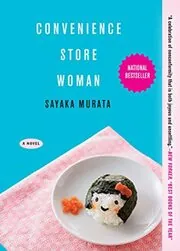
Convenience Store Woman
by Sayaka Murata
2016
Keiko Furukura has spent eighteen years in a Tokyo convenience store, where scripts and routines make perfect sense. When pressure to marry and find a better job grows, her carefully balanced life is pushed into crisis.
Recommended by
1 person Jack Edwards recommended this book
Jack Edwards
"All about the intersection between feminism and criticism of capitalism." - Jack Edwards
Jack Edwards's recommendation of this book
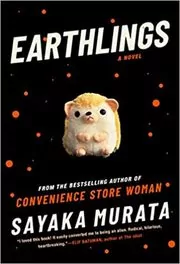
Earthlings
by Sayaka Murata
2018
As a child, Natsuki believes she and her cousin are aliens, a fantasy that helps her survive a cruel world. Years later, that private belief hardens into a fierce, disturbing rebellion against family, adulthood, and social order.

Life Ceremony
by Sayaka Murata
2022
This collection gathers twelve sharp, unsettling stories about love, bodies, food, marriage, and belonging. Murata mixes humor with horror, taking ordinary social rules and twisting them until they look bizarre all over again.
Where to start with Sayaka Murata
If you want the best entry point: Convenience Store Woman
If you want the darkest novel: Earthlings
If you like speculative social satire: Vanishing World → Earthlings
If you want short, strange fiction: Life Ceremony
Sayaka Murata collections, short stories, and related book types
Collections
Standalone Sayaka Murata books
Author bio
Sayaka Murata was born in Inzai, in Chiba Prefecture, in 1979, and spent her childhood there before moving to Tokyo after middle school. She has often written about people who feel slightly out of step with the world around them, and that angle seems to come from somewhere real. Even in her strangest books, she notices the tiny rules that shape everyday life.
She started writing stories when she was ten. After she tried to draft a novel by hand in elementary school, her mother bought her a word processor, and writing turned from a hobby into something more serious. Murata has said that writing was the point when she began to feel she had a will of her own. As a child she read mystery and science fiction, and you can still feel both influences in her work now.
At Tamagawa University, where she studied art curation, writing became more than a private habit. Her debut book, Breastfeeding, won the Gunzo Prize for New Writers in 2003. More recognition followed over the next decade, including the Noma Literary New Face Prize and the Mishima Yukio Prize. Long before many English-language readers found her, she had already built a serious literary career in Japan.
She kept the day job.
For eighteen years, Murata worked part time in a Tokyo convenience store, and even after Convenience Store Woman won the Akutagawa Prize in 2016, she returned to the shop for a while before finally stopping in 2017. For a period, she shaped her days around both kinds of work, writing early, doing a store shift, then going back to the page. That long stretch behind the counter gave her fiction a very specific texture. She understands manuals, rehearsed greetings, fluorescent routines, and the strange comfort of places where every gesture already has a script.
Convenience Store Woman is still the clearest entry point for many readers, and it was the first of her books to appear in English. Its heroine, Keiko Furukura, finds peace in the fixed rhythms of a convenience store, while everyone around her worries that she is failing at adulthood. Readers tend to love the book's dry humor, its clean style, and the way it turns a very small life into a sharp story about work, loneliness, and the pressure to look normal.
Then there is Earthlings, which starts with a lonely girl, a toy hedgehog, and a private belief that she might be an alien, and grows into something much darker. Life Ceremony, her first story collection in English, shows the same talent in shorter form, taking rules about love, food, marriage, and family and twisting them until they look eerie. Vanishing World pushes even further into speculative fiction, imagining a society that has reorganized sex, marriage, and reproduction in ways that are funny, troubling, and hard to shake.
Murata is fascinated by the rules people pretend are natural.
Again and again, her books return to outsiders, copied social behavior, family pressure, gender roles, and the odd things people call normal just because they happen every day. Her tone is plain, cool, and matter-of-fact, which makes the wildest parts of her fiction hit harder. She still lives in Tokyo, in the Shinjuku area, and keeps writing books that make ordinary life look newly strange. That is a big part of her appeal. She makes the familiar feel alien, and the alien feel uncomfortably close.




Edited by
Software engineer whose passion for tracking book recommendations from podcasts inspired the creation of MRB.
Lead investor at 3one4 Capital whose startup expertise and love for books helped shape MRB and its growth.
Comments
Did we miss something? Have feedback?
Help us improve this page by sharing your thoughts