
Erewhon Books in Order
Part ofSamuel Butler Books in OrderExplore the Erewhon books by Samuel Butler in order, with short summaries, series background, and clear guidance for choosing where to start.
Last updated:
As an Amazon Associate, we earn from qualifying purchases (at no extra cost to you).
Erewhon books in publication order
2 books
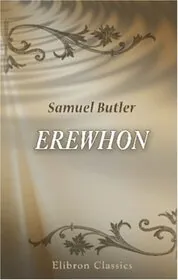
Erewhon
by Samuel Butler
1872
A traveller crossing remote mountains discovers Erewhon, a prosperous country with laws that treat illness as crime and crime as illness. Butler uses its baffling customs, and its fear of evolving machines, to satirize Victorian certainties.
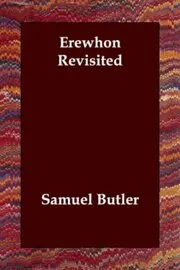
Erewhon Revisited
by Samuel Butler
1901
Twenty years after escaping Erewhon, Higgs returns to find that his departure has become the foundation of a religion. He must confront the priests and public myths built around the supposedly divine Sunchild.
Erewhon books in chronological order
Series background & context
The Erewhon books are Samuel Butler's sly, idea-packed visits to an isolated country where nearly every familiar rule has been turned inside out. The series begins with Erewhon; Or, Over the Range, first published in 1872. Its unnamed English narrator travels through rugged country modeled in part on New Zealand's South Island and discovers a society hidden beyond the mountains.
Erewhon looks orderly and prosperous at first. The longer the traveller stays, though, the stranger its rules become. Illness is treated as a moral failure and can lead to punishment, while theft and violence are regarded as conditions needing care and sympathy. Schools, religion, money, marriage, and public manners all receive the same upside-down treatment. Butler uses the country less as a fully realistic place than as a way to make Victorian habits look newly odd.
Then there are the machines.
Erewhon's people fear mechanical development because they believe machines may eventually become powerful enough to compete with, or even replace, human beings. That concern grows out of Butler's earlier writing on evolution and technology, but the novel handles it with deadpan humor rather than a lecture. Readers can expect broad satire, philosophical detours, travel writing, and a narrator who is not always the best guide to what he sees.
The first book follows the traveller, later known as Higgs, as he learns how this closed society works and tries to find a place within it. Personal relationships and practical dangers give the novel some forward movement, but its main pleasure is the continual collision between the visitor's assumptions and Erewhon's customs. It is a nineteenth-century satire, so it can be deliberately digressive, yet its questions about institutions, health, technology, and conformity still feel surprisingly current.
Erewhon Revisited, published in 1901, returns to the same country about twenty years later. Higgs comes back to find that his earlier departure has been transformed into the basis of a new religion. He is now revered as the Sunchild, while a powerful religious establishment has grown around a story he does not recognize. The sequel gives Butler a more focused plot and a fresh target: the way belief, ceremony, and official power can build themselves around a supposed miracle.
Together, the two books work best in publication order. Start with Erewhon for the discovery of the country and its great social reversals, then move to Erewhon Revisited for a sharper look at what happens when a private event becomes public doctrine. Expect playful names, dry jokes, big claims, and a writer who keeps asking whether the things people call natural are really just habits they have stopped questioning.














Edited by
Software engineer whose passion for tracking book recommendations from podcasts inspired the creation of MRB.
Lead investor at 3one4 Capital whose startup expertise and love for books helped shape MRB and its growth.
Comments
Did we miss something? Have feedback?
Help us improve this page by sharing your thoughts