
Samuel Beckett Books in Order
Browse Samuel Beckett books in reading order, with short summaries for each book and a clear title list to help you find a starting point.
Last updated: 18 new books added
As an Amazon Associate, we earn from qualifying purchases (at no extra cost to you).
Samuel Beckett books in publication order
18 books
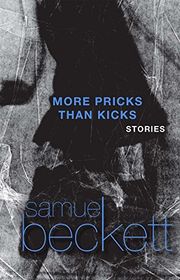
More Pricks Than Kicks
by Samuel Beckett
1934
Belacqua Shuah moves through Dublin in a sequence of linked stories about courtship, friendship, and uncomfortable social encounters. His indecision and self-absorption collide with everyday expectations, creating an early portrait of Beckett’s fascination with absurdity and frustrated human connection.
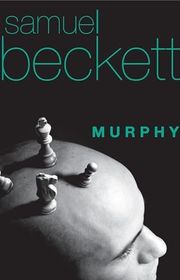
Murphy
by Samuel Beckett
1938
Murphy seeks withdrawal from ordinary life, but his lover Celia wants him to find work and stability. Employment in a mental hospital draws his fascination with the mind into a darkly comic collision with love, money, and the demands of other people.
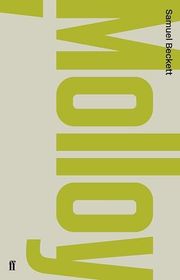
Molloy
by Samuel Beckett
1951
An aging wanderer recounts his attempt to reach his mother, while a second narrator describes a mission to track him down. Their increasingly unstable accounts turn journeys through the physical world into questions about memory, identity, and the possibility of reliable narration.
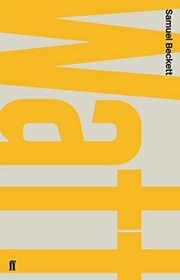
Watt
by Samuel Beckett
1953
Watt enters the service of the mysterious Mr. Knott and tries to understand the household through elaborate systems of logic. Its baffling routines and peculiar inhabitants continually frustrate him, turning an apparently simple job into an absurd investigation of knowledge and meaning.
Stories and Texts for Nothing
by Samuel Beckett
1955
Three stories follow displaced old men searching for somewhere they can remain, while thirteen shorter prose pieces reduce narrative to struggling voices. Together, these works explore persistence, dispossession, and the difficulty of continuing when familiar identities and certainties fall away.
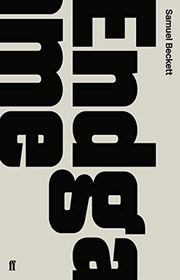
Endgame
by Samuel Beckett
1957
Blind Hamm depends on his servant Clov in an isolated room overlooking a devastated world, while Hamm’s parents live in dustbins nearby. Their repetitive exchanges expose resentment, attachment, and the difficulty of ending relationships when no alternative life seems possible.
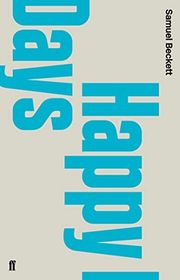
Happy Days
by Samuel Beckett
1961
Buried to her waist, Winnie maintains daily rituals and an almost continuous conversation with her largely silent husband Willie. Her determination to find comfort in familiar objects and occasional responses turns an impossible situation into a study of endurance and companionship.
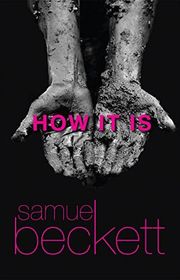
How It Is
by Samuel Beckett
1961
A voice recounts life crawling through mud and darkness, piecing together memories, encounters, and the arrival of a companion named Pim. Written in broken, unpunctuated fragments, the narrative tests how language can describe suffering, dependence, and the uncertain boundaries of the self.
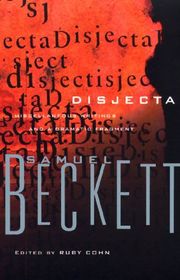
Disjecta
by Samuel Beckett
1983
Selected by Ruby Cohn, these essays, reviews, letters, and other writings reveal Beckett’s engagement with literature and art. The volume also includes the unfinished dramatic work Human Wishes, offering another view of the interests and experiments behind his better-known books.
Collected Shorter Plays
by Samuel Beckett
1984
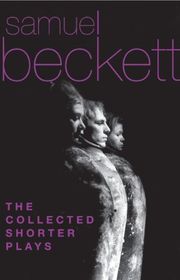
Twenty-five short dramatic works trace Beckett’s experiments across theatre, radio, television, and film. From Krapp’s recorded memories to isolated voices and tightly controlled gestures, the collection explores memory, dependence, and the struggle to communicate through increasingly spare forms.
Stirrings Still
by Samuel Beckett
1988
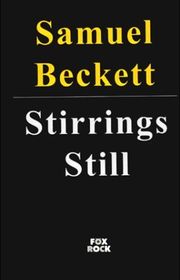
An unnamed figure experiences uncertain movements between enclosure and the world beyond, struggling to distinguish perception, memory, and thought. This brief late prose work concentrates Beckett’s questions about consciousness and existence into a spare encounter with solitude and fading certainty.

The Letters of Samuel Beckett: Volume 2, 1941-1956
by Samuel Beckett
2011
Beginning amid the dangers and disruptions of wartime correspondence, this volume follows Beckett into an extraordinary period of writing after 1945. His letters illuminate the creation of his French novels and Waiting for Godot, alongside his changing response to international recognition.

The Letters of Samuel Beckett: Volume 3, 1957–1965
by Samuel Beckett
2014
As international fame grows, Beckett seeks the quiet necessary for writing while developing work for radio, film, television, and fiction. Letters discussing his creative process and his relationship with Barbara Bray offer a detailed view of these competing personal and artistic demands.

The Letters of Samuel Beckett: Volume 4, 1966-1989
by Samuel Beckett
2016
Beckett’s final decades of correspondence follow the creation of his late plays and prose, his Nobel Prize, and the pressures of worldwide recognition. Exchanges with collaborators, biographers, and archivists also reveal his increasing attention to how his work would be preserved.
Collected Poems in English and French
by Samuel Beckett
Beckett’s poems in English and French appear alongside his translations of French poets, including Rimbaud, Éluard, and Apollinaire. The collection brings together early verse and later experiments, tracing his changing use of language across two literary traditions.
First Love and Other Shorts
by Samuel Beckett
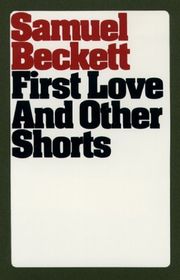
Beckett combines First Love with brief prose experiments and two works for the stage. Unstable memories and isolated voices shape pieces including From an Abandoned Work, Ping, Not I, and Breath, exploring how little remains when ordinary narrative structures disappear.

The Letters of Samuel Beckett: Volume 1, 1929-1940
by Samuel Beckett
Beckett’s early correspondence follows his developing literary voice through Europe in the 1930s. Letters to friends, artists, and colleagues reveal his artistic interests, uncertainties, and working relationships, with contextual notes placing his emerging career within its cultural surroundings.
The Theatrical Notebooks of Samuel Beckett
by Samuel Beckett
Beckett’s production notebook for his 1975 Berlin staging of Waiting for Godot appears in facsimile, transcription, and translation alongside a revised text. His detailed directions reveal how movement, repetition, rhythm, and gesture shaped his interpretation of the play.
Samuel Beckett sub-series and character series
The Letters books in order
Explore this seriesStandalone Samuel Beckett books



The Theatrical Notebooks of Samuel Beckett
by Samuel Beckett
Publication date unknownWaiting for Godot















Edited by
Software engineer whose passion for tracking book recommendations from podcasts inspired the creation of MRB.
Lead investor at 3one4 Capital whose startup expertise and love for books helped shape MRB and its growth.
Comments
Spotted a missing book, a wrong order or a mistake? Tell us and we'll fix this page.
We're a reading guide, not the author or publisher, so we can't send books or pass on messages.