
Rufus Books in Order
Part ofDouglas Jackson Books in OrderFind the Rufus books by Douglas Jackson in order, with short summaries, series background, and help starting this Roman story of slaves, emperors, and war.
Last updated:
As an Amazon Associate, we earn from qualifying purchases (at no extra cost to you).
Rufus books in publication order
2 books

Caligula
by Douglas Jackson
2008
Rufus is a gifted young slave and animal trainer whose talent brings him to the attention of the most dangerous man in Rome. As keeper of Caligula's elephant, he is dragged into palace intrigue, friendship, and a conspiracy that could kill him.
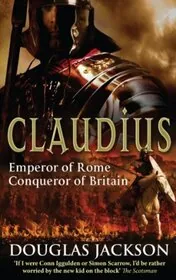
Claudius
by Douglas Jackson
2009
In AD 43, Rufus marches with the emperor's elephant as Claudius launches the invasion of Britain. Between battlefield spectacle, imperial ambition, and fierce resistance from Caratacus, survival means staying useful in a war far larger than himself.
Rufus books in chronological order
Series background & context
The Rufus books begin with a great hook. In Caligula, a young slave with a rare gift for handling animals is pulled from the brutal world of the arena into the even more dangerous world of the imperial court. Rufus is not born powerful, and that matters. He survives because he can read beasts, keep his head, and understand very quickly when a room has turned lethal.
Rufus survives by reading beasts and men.
The first novel plants him inside the court of Caligula, where cruelty, vanity, fear, and sudden favour all live side by side. Rufus becomes keeper of the emperor's elephant, Bersheba, a job that sounds strange until you see what it means. The elephant makes him visible, and visibility is risky when the ruler of the known world can switch from charm to madness in a heartbeat. His friendship with the gladiator Cupido gives the books some of their warmth, but it also raises the stakes. In this Rome, friendship can get you killed.
What makes the series work is the viewpoint. Jackson is writing about emperors, plots, and imperial spectacle, but he filters it through someone from the bottom of the system. Rufus sees the grand world from kitchens, barracks, training yards, back corridors, and the edge of the arena. That keeps the books immediate. The politics are big, but the fear is personal.
Claudius opens the story out. The setting shifts from palace intrigue to the invasion of Britain in AD 43, where Rufus and Bersheba are used as part of Rome's theatre of conquest. The book still has conspiracy and court manoeuvring, but it also becomes a war story, with Caratacus and the Britons resisting the legions as Claudius tries to stamp his name on history. Rufus is once again trapped near power, useful enough to be kept alive, but never safe enough to relax.
The tone across both books is vivid and unsentimental. You get the spectacle people want from imperial Rome, arenas, elephants, emperors, invasion, but also the dirt, hunger, fear, and improvisation needed to stay alive. Rufus is a strong guide because he is not naturally grand. He notices practical things. He worries about the next order, the next mood swing, the next betrayal.
If you like Roman fiction that keeps the history big but the viewpoint close, Rufus is an easy series to recommend. Start with Caligula and read straight into Claudius. Together they make a tight, high-stakes story about survival inside two very different reigns.









Edited by
Software engineer whose passion for tracking book recommendations from podcasts inspired the creation of MRB.
Lead investor at 3one4 Capital whose startup expertise and love for books helped shape MRB and its growth.
Comments
Did we miss something? Have feedback?
Help us improve this page by sharing your thoughts