
Jamie Saintclaire Books in Order
Part ofDouglas Jackson Books in OrderSee the Jamie Saintclaire books by Douglas Jackson in order, with summaries, series background, and a quick guide to these modern historical thrillers.
Last updated:
As an Amazon Associate, we earn from qualifying purchases (at no extra cost to you).
Jamie Saintclaire books in publication order
4 books
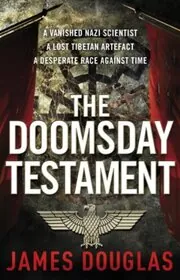
The Doomsday Testament
by James Douglas
2011
After learning his grandfather hid a strange piece of Nazi symbolism in an old journal, Jamie Saintclair is launched into a chase across Europe. The trail leads deep into Himmler's obsessions and a wartime secret people are still willing to kill for.

The Isis Covenant
by James Douglas
2012
Two modern murders, a vanished wartime object, and an older legend draw Jamie Saintclair into a case tied to ancient Egypt. What starts as research turns into a dangerous chase through greed, obsession, and the promise of eternal life.
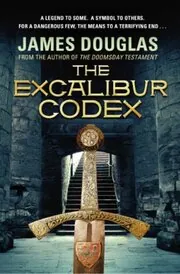
The Excalibur Codex
by James Douglas
2013
A dead veteran's will and a strange codex send Jamie Saintclair after the legend of Excalibur. The hunt pulls him from Germany into Poland, with assassins, wartime secrets, and Hitler's Wolf's Lair waiting at the end of the trail.
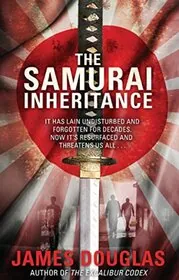
The Samurai Inheritance
by James Douglas
2014
Asked to trace a missing wartime artifact, art recovery expert Jamie Saintclair follows a trail from Berlin to Tokyo and into the Pacific war's long shadow. The deeper he digs, the clearer it becomes that the lost object still has lethal power.
Jamie Saintclaire books in chronological order
Series background & context
Jamie Saintclaire is the protagonist of Douglas Jackson's James Douglas thrillers, and he works well because his skill set feels useful before the gunfire starts. He is an art recovery expert, which means he already lives among missing objects, dubious ownership, wartime theft, and the strange afterlife of history. In these books, that professional knowledge keeps pulling him toward secrets other people would rather leave locked up.
He is not looking for adventure for its own sake.
The series starts with The Doomsday Testament, where a discovery connected to Jamie's grandfather opens a trail into the Nazi past. That setup tells you a lot about the books that follow. Jamie is often drawn in by something specific and concrete, a journal, a relic, a disputed object, a strange document, then forced to widen the search as the story spills into espionage, murder, and old ideologies that never died as neatly as people hoped.
One of the pleasures of the series is watching Jamie work out what is real. The titles promise big things, curses, secret covenants, Excalibur, hidden wartime treasures, but Jamie's first instinct is usually to test the evidence. That keeps the stories grounded. Even when the myth sounds huge, the real danger usually comes from collectors, extremists, assassins, and people with money or power who think the past belongs to whoever can seize it.
The settings help, too. These are wide-ranging books, with Jamie moving through modern cities and older scarred places, London, Berlin, Boston, Poland, Tokyo, museums, archives, ruined sites, and dark corners of wartime Europe. Jackson likes a chase, and Jamie is the kind of protagonist who can carry both the clue-hunting side and the physical jeopardy without it feeling forced.
Across the series, what holds steady is the idea that objects matter because people give them meaning. A lost sword, a vanished treasure, a wartime trophy, a hidden text, none of these are just museum pieces. They are magnets for greed, memory, nationalism, fear, and obsession. Jamie keeps stumbling into that emotional charge, and then has to survive it.
If you want modern historical thrillers that move quickly but still care about the past beneath the plot, Jamie Saintclaire is an easy recommendation. Start with The Doomsday Testament and read on if you like smart, clue-led adventures with a strong wartime shadow.




Edited by
Software engineer whose passion for tracking book recommendations from podcasts inspired the creation of MRB.
Lead investor at 3one4 Capital whose startup expertise and love for books helped shape MRB and its growth.
Comments
Did we miss something? Have feedback?
Help us improve this page by sharing your thoughts