
RT Campbell Books in Order
Explore RT Campbell books in order, with quick summaries, Professor John Stubbs series notes, standalones, and clear suggestions on where to start reading.
Last updated:
As an Amazon Associate, we earn from qualifying purchases (at no extra cost to you).
RT Campbell books in publication order
12 books
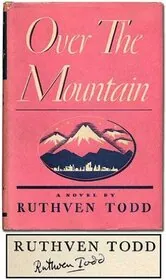
Over The Mountain
by RT Campbell
1939
A young climber crosses the Pale Peak into a strange authoritarian world, and his quest becomes a dark fable about fear, power, and freedom. Todd's first novel mixes fantasy, satire, and anti-fascist unease.

The Laughing Mulatto
by RT Campbell
1939
Todd's biography of Alexandre Dumas follows the novelist's rise with a lively eye for appetite, energy, and contradiction. It is a compact portrait of the man behind The Three Musketeers and The Count of Monte Cristo.
The Lost Traveller
by RT Campbell
1943
After a bomb blast, a young man is thrown into a dreamlike wasteland and a city ruled by irrational laws. This strange, unsettling novel turns a journey through nonsense and authority into a surreal quest.
Unholy Dying
by RT Campbell
1945
At an international gathering of geneticists, a much-disliked scientist dies, and Professor John Stubbs cannot resist the case. The result is a sharp mystery that mixes academic rivalry, fraud, and old-fashioned detection.
Bodies in a Bookshop
by RT Campbell
1946
Botanist Max Boyle goes hunting for books near Tottenham Court Road and finds two corpses instead. Stubbs and Chief Inspector Bishop follow the trail into blackmail, shady print dealing, and the murkier corners of literary London.
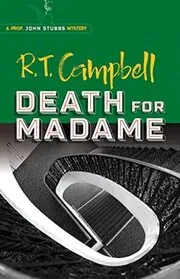
Death for Madame
by RT Campbell
1946
A strangled landlady in a shabby Notting Hill boarding house leaves Professor Stubbs facing a closed circle of suspects with airtight alibis. It is a compact, characterful puzzle built on secrets, grudges, and close observation.
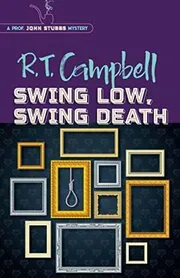
Swing Low, Swing Death
by RT Campbell
1946
At the unveiling of a new modern art gallery's showpiece, a dead art dealer appears hanging from the picture hook. Stubbs steps into a world of art-world vanity, performance, and murder dressed up as spectacle.
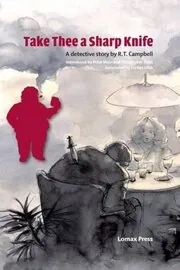
Take Thee A Sharp Knife
by RT Campbell
1946
A man is stabbed at his nightclub table in full view of the room, yet no one seems able to have done it. Professor Stubbs, Max Boyle, and Chief Inspector Bishop tackle the impossible-looking puzzle.
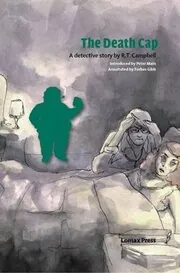
The Death Cap
by RT Campbell
1946
When a young woman in a bohemian London circle is poisoned with a deadly mushroom, Professor Stubbs pushes into the inquiry. The case blends artistic egos, suspicious friendships, and one very nasty method of murder.
Tracks In The Snow
by RT Campbell
1946
This essay collection moves between art, literature, and scientific imagination, with major pieces on William Blake, Henry Fuseli, and John Martin. It shows the range of Todd's interests and the sharpness of his critical eye.
Loser's Choice
by RT Campbell
1953
In an unnamed dictatorship at war, a new propaganda chief, a cabaret singer, and a troubled pastor circle one another as the regime tightens. Todd uses their story to build a bleak political novel about desire, fear, and collapse.
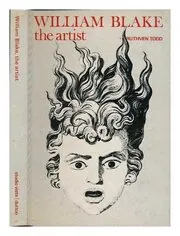
William Blake The Artist
by RT Campbell
1971
A short, practical study of Blake's life as a working artist, following his career year by year. Todd pays close attention to materials, techniques, and the labor behind Blake's prints, paintings, and illuminated books.
Where to start with RT Campbell
For the John Stubbs mysteries from the beginning: Unholy Dying → Take Thee A Sharp Knife → Bodies in a Bookshop
If you want bookish London crime: Bodies in a Bookshop → Death for Madame
If you like stranger allegorical fiction: Over The Mountain → The Lost Traveller → Loser's Choice
If you're here for Todd the critic and art scholar: Tracks In The Snow → William Blake The Artist
RT Campbell sub-series and character series
Professor John Stubbs books in order
Explore this seriesProfessor John Stubbs books in chronological order
Standalone RT Campbell books
Author bio
RT Campbell was the mystery pen name of Ruthven Campbell Todd, a Scottish writer born in Edinburgh on June 14, 1914. He grew up there as the eldest of ten children in a comfortable family with a strong connection to the arts. His father was the architect William Walker Todd, and books, drawing, and talk about culture were around him from the start.
He went to Fettes College and then to Edinburgh College of Art, but the straight path never really suited him. After a short and unhappy time at art school, he spent about two years on the Isle of Mull, working as an agricultural labourer. That mix, privileged schooling on one side, rough practical life on the other, helps explain why his books can move so easily between learned talk and very earthy detail.
He was never just one kind of writer.
In the 1930s Todd moved through a restless set of jobs, bookseller, advertising copywriter, journalist, gallery worker, teacher, and editorial assistant, while trying to make literature pay the bills. He was pulled into the orbit of British surrealism and served as assistant secretary for the 1936 International Surrealist Exhibition in London. He also spent time in Paris and in literary circles that included figures such as David Gascoyne and Dylan Thomas, friendships that stayed important to him for years.
His first novel, Over The Mountain, appeared in 1939 and used fantasy and satire to think about fascism and power. Then came The Lost Traveller in 1943, a stranger, dreamlike book about a young man pushed into a land of irrational rules. During the war Todd was a conscientious objector and worked in civil defence, while also publishing poetry such as Until Now and The Acreage of the Heart. A lot of his work circles the same concerns, fear, displacement, authority, the natural world, and the uneasy business of getting through history with your humanity intact.
Another big part of Todd's life was scholarship, especially his long fascination with William Blake. He edited Blake-related books, studied Blake's printing methods, and wrote criticism that cared as much about materials and craft as about ideas. Tracks In The Snow brings together essays on art and science, while William Blake The Artist gives a compact, practical look at Blake as a working maker. That technical curiosity also fed his fiction, which often notices tools, processes, and the small mechanics behind larger dramas.
Then he turned to murder.
Writing as R.T. Campbell in the mid-1940s, he produced the Professor John Stubbs mysteries, including Unholy Dying, Bodies in a Bookshop, Death for Madame, and Swing Low, Swing Death. These are brisk, witty detective novels built around a blustering Scottish botanist who solves crimes by pestering everyone, following odd hunches, and refusing to mind his own business. Readers who like them usually respond to the mix of Golden Age puzzle-making, academic or bookish settings, and the comic friction between Stubbs, Max Boyle, and Chief Inspector Bishop.
Todd's life kept moving. In the late 1940s he went to the United States, became a citizen there in the late 1950s, ran the Weekend Press in New York from 1950 to 1954, taught at universities in Iowa and Buffalo, and wrote children's books too, most famously the Space Cat series. By 1960 he had settled in Mallorca, later living in Galilea in Spain. He kept writing through illness, won major fellowships including Guggenheim support, and died in 1978. He left behind a body of work that is hard to file neatly, which is part of what makes him memorable.



Edited by
Software engineer whose passion for tracking book recommendations from podcasts inspired the creation of MRB.
Lead investor at 3one4 Capital whose startup expertise and love for books helped shape MRB and its growth.
Comments
Did we miss something? Have feedback?
Help us improve this page by sharing your thoughts