
Roth Books in Order
Part ofAndrew Taylor Books in OrderFind the Roth books in order by Andrew Taylor, with summaries, trilogy background, and where-to-start guidance for this dark psychological crime series.
Last updated:
As an Amazon Associate, we earn from qualifying purchases (at no extra cost to you).
Roth books in publication order
5 books
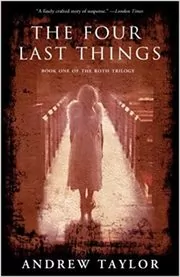
The Four Last Things
by Andrew Taylor
1997
A child's disappearance opens the first stage of Taylor's dark Roth trilogy. What looks like a crime investigation soon turns into a disturbing study of family damage, fear, and violence.
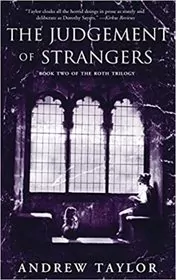
The Judgement of Strangers
by Andrew Taylor
1997
David Byfield, a widowed parish priest, becomes entangled in desire, village gossip, and mounting menace. The novel is a slow-burning portrait of weakness, secrecy, and the making of disaster.
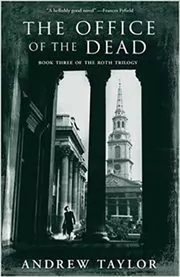
The Office of the Dead
by Andrew Taylor
1999
The final Roth novel reaches further back to show how a killer is made. It works as both a mystery and a chilling origin story for everything the earlier books only half explain.

Requiem for an Angel
by Andrew Taylor
2002
This omnibus brings together the full Roth trilogy, a dark backward-tracing story of murder, damaged faith, and the making of a killer. It is the complete arc in one deeply unsettling volume.

Fallen Angel
by Andrew Taylor
2014
Reissued under the title used for the television adaptation, this volume collects the complete Roth trilogy. It is a bleak, gripping account of how violence grows out of secrecy, family damage, and time.
Roth books in chronological order
Series background & context
The Roth books are among Andrew Taylor's darkest and most ambitious crime novels. On paper they are a trilogy about murder. In practice they are a long, unsettling study of how a killer is made, and of how family history, religion, secrecy, and emotional damage keep passing from one generation to the next.
What makes the series distinctive is its structure. The books do not simply move forward in a straight line toward a solution. Instead, each novel digs deeper into the past and throws new light on the one before it. By the time you reach the end, what looked like a crime story has turned into something closer to a private history of corruption, obsession, and spiritual rot. Taylor is less interested in the quick shock of who did it than in the slower, more disturbing question of why this person became capable of doing it at all.
The setting helps. Roth and the surrounding communities are ordinary enough on the surface, with churches, suburban houses, villages, schools, and familiar routines. That normality is important because the books keep showing how violence can grow in places that look respectable. Clergy, parents, children, lovers, and local worthies all have their part to play. Public morality and private behavior are rarely aligned, and the gap between the two is where much of the menace lives.
The trilogy also has a strong religious current running through it. Faith, hypocrisy, judgement, guilt, and the language of sin all matter here, not as decoration but as part of how the characters see themselves and each other. That gives the books a distinctive tone. They are psychological thrillers, but with a gothic chill and a moral seriousness that make them feel heavier than a standard serial killer story.
These are not comfortable books, and that is a compliment. The violence matters because the emotional groundwork matters. Taylor takes time with the wounded, needy, vain, frightened people around the crimes, and that patience is what gives the trilogy its force. Even when a character repels you, the writing keeps asking how they reached that point.
The trilogy was later adapted for television as Fallen Angel, which makes sense because the story has real sweep. But the novels themselves are more intricate, and more interested in the slow accumulation of cause and effect.
This is crime fiction with a long memory.
If you want a series that moves beyond puzzle solving into something darker, stranger, and more psychologically searching, Roth is one of Andrew Taylor's major achievements.







Edited by
Software engineer whose passion for tracking book recommendations from podcasts inspired the creation of MRB.
Lead investor at 3one4 Capital whose startup expertise and love for books helped shape MRB and its growth.
Comments
Did we miss something? Have feedback?
Help us improve this page by sharing your thoughts