
Robin Wall Kimmerer Books in Order
This page shows Robin Wall Kimmerer’s books in order, with short summaries, where to start guidance, and a handy path for first-time readers.
Last updated:
As an Amazon Associate, we earn from qualifying purchases (at no extra cost to you).
Robin Wall Kimmerer books in publication order
5 books
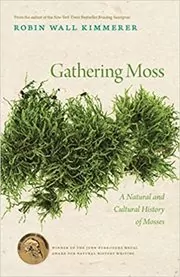
Gathering Moss
by Robin Wall Kimmerer
2003
Through linked essays on one of nature’s smallest life-forms, Kimmerer explores how mosses live, spread, and shape the world around them. It blends science, personal reflection, and a fresh way of paying attention.
Recommended by
1 person Maria Popova recommended this book
Maria Popova
"An extraordinary celebration of smallness and the grandeur of life." - Maria Popova
Maria Popova's recommendation of this book
Braiding Sweetgrass
by Robin Wall Kimmerer
2013
Kimmerer braids personal stories, botany, and Potawatomi teachings into essays about what plants can teach us about reciprocity, gratitude, and care. It asks readers to see the living world as kin, not backdrop.
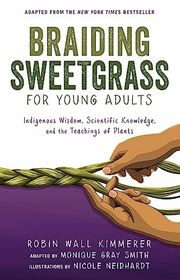
Braiding Sweetgrass for Young Adults
by Robin Wall Kimmerer
2023
Adapted by Monique Gray Smith, this edition brings Kimmerer’s ideas to younger readers with reflection questions, sidebars, and art. It explores how plants, place, and Indigenous knowledge can change the way we understand the world.
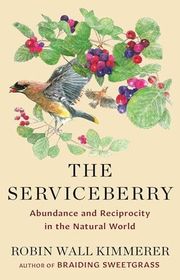
The Serviceberry
by Robin Wall Kimmerer
2024
Using the serviceberry as her guide, Kimmerer asks what an economy built on reciprocity, sharing, and mutual care might look like. The book is short, direct, and rooted in both ecology and everyday life.
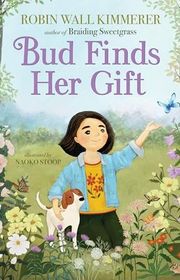
Bud Finds Her Gift
by Robin Wall Kimmerer
2025
Young Bud wants to do something important, and her grandmother Nokomis helps her slow down and notice the gifts of the natural world. As Bud looks closer, she begins to wonder what she can give back.
Where to start with Robin Wall Kimmerer
If you're starting with her best-known book: Braiding Sweetgrass → The Serviceberry
If you want a shorter introduction first: The Serviceberry → Braiding Sweetgrass
If you love close nature writing: Gathering Moss → Braiding Sweetgrass
If you're reading with teens: Braiding Sweetgrass for Young Adults
If you're sharing with younger kids: Bud Finds Her Gift
Robin Wall Kimmerer collections, short stories, and related book types
Non-Fiction
Picture Books
Standalone Robin Wall Kimmerer books
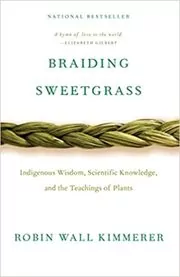
by Robin Wall Kimmerer
2013Indigenous Wisdom, Scientific Knowledge and the Teachings of Plants
Author bio
Robin Wall Kimmerer was born and raised in upstate New York, where woods, fields, and streams were part of everyday life. That early closeness to the natural world stayed with her. It also helps explain why so much of her writing begins with careful looking, at moss on a log, strawberries in a field, or the quiet work of trees.
She came to botany through wonder.
Kimmerer studied botany at the SUNY College of Environmental Science and Forestry, then earned her master's and PhD in botany at the University of Wisconsin. She built her career as a plant ecologist and teacher, and for many years taught at SUNY ESF in Syracuse. She also founded the Center for Native Peoples and the Environment, a program built around the idea that Indigenous knowledge and scientific knowledge can work together instead of talking past each other.
That braided way of thinking sits at the heart of her work. Kimmerer is an enrolled member of the Citizen Potawatomi Nation, and she writes with both scientific training and Indigenous teachings in view. Rather than treating those as opposites, she keeps asking what becomes possible when each helps us notice the living world more fully.
Her first major book for a general audience, Gathering Moss, came out in 2003. It takes a subject many readers might overlook and makes it feel intimate, strange, and surprisingly big. The book won the John Burroughs Medal, and it showed a pattern that would define her later work: close observation, plainspoken science, and questions about how humans should live among other beings.
Then Braiding Sweetgrass changed the size of the conversation.
In that book, Kimmerer moves between memoir, botany, creation stories, teaching, and reflections on reciprocity. Readers often come to it for nature writing, then stay for the way it links everyday life to ethics, gratitude, and responsibility. It became a long-running bestseller, and its reach widened again when Braiding Sweetgrass for Young Adults, adapted by Monique Gray Smith, brought those ideas to younger readers with sidebars, art, and questions for reflection.
Her later books keep building on the same concerns, but in new shapes. The Serviceberry looks at gift economies, community, and what plants can teach us about abundance without hoarding. Bud Finds Her Gift, her picture book, turns toward children and families, following a young girl as she learns that belonging is tied to attention, gratitude, and giving something back.
A lot of Kimmerer’s writing returns to the same themes: reciprocity, restoration, language, kinship, and the difference between seeing land as property and seeing it as relationship. Her settings are often the places she knows best, upstate New York woods, gardens, ponds, and meadows, but the questions travel well. How do we learn to notice? What do we owe the world that feeds us? And what kinds of communities are we trying to build?
In recent years, her work has been recognized well beyond environmental circles. She was named a MacArthur Fellow in 2022 and received the 2023 National Humanities Medal. She lives on an old farm in upstate New York, tends cultivated and wild gardens, and has also invited readers into action through Plant Baby Plant, a grassroots effort centered on caring for the living world close to home.
















Edited by
Software engineer whose passion for tracking book recommendations from podcasts inspired the creation of MRB.
Lead investor at 3one4 Capital whose startup expertise and love for books helped shape MRB and its growth.
Comments
Did we miss something? Have feedback?
Help us improve this page by sharing your thoughts