
Robertson Davies Books in Order
Explore Robertson Davies books in order, from his major trilogies to essays and letters, with short summaries, series notes, and where to start.
Last updated:
As an Amazon Associate, we earn from qualifying purchases (at no extra cost to you).
Robertson Davies books in publication order
31 books
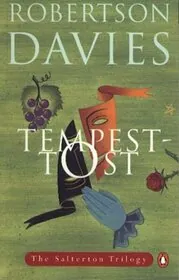
Tempest-Tost
by Robertson Davies
1951
An amateur production of Shakespeare's The Tempest stirs up love, vanity, jealousy, and chaos in Salterton. Davies uses rehearsal-room drama to skewer ambition and self-deception with a light, amused touch.
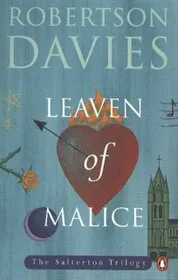
Leaven of Malice
by Robertson Davies
1954
A false engagement notice planted in the local paper throws Salterton into confusion. What begins as a joke grows into a comedy of gossip, wounded pride, and small-town consequences.
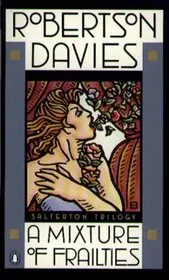
A Mixture of Frailties
by Robertson Davies
1958
Chosen by chance and charity, Monica Gall is sent from small-town Ontario to Europe to study music. Her education becomes a sharp, funny coming-of-age story about class, talent, and the making of an artist.
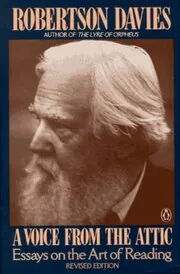
A Voice from the Attic
by Robertson Davies
1960
Davies writes about reading with relish, impatience, and strong opinions. These essays ask what good reading really is, what culture asks of readers, and why books still matter.
A Masque of Mr. Punch
by Robertson Davies
1963
Written for school performance, this brisk masque sets the old anarchic spirit of Mr. Punch against modern theatrical fashions and cultural fussiness. It is playful satire, light on its feet and fond of argument.
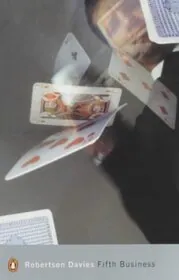
Fifth Business
by Robertson Davies
1970
A boyhood snowball in Deptford alters several lives, especially Dunstan Ramsay's. Looking back over war, sainthood, guilt, and wonder, he tries to understand the strange part he has played in other people's stories.
Stephen Leacock
by Robertson Davies
1970
Davies offers a compact portrait of Stephen Leacock, tracing the humorist's career, comic style, and place in Canadian letters. It is part literary study, part appreciative conversation between two witty public writers.
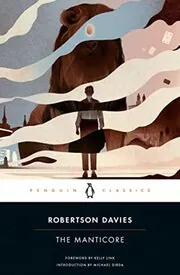
The Manticore
by Robertson Davies
1972
After his father's death, David Staunton travels to Switzerland and begins Jungian analysis. The novel turns inward, following his struggle with family myth, guilt, and the damaged inheritance left by Boy Staunton.
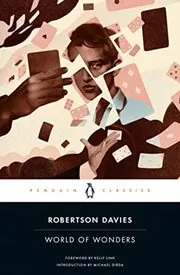
World of Wonders
by Robertson Davies
1975
Magnus Eisengrim, once Paul Dempster of Deptford, tells the story of his stolen childhood and his rise as a master magician. His account brings the Deptford books to a dark, theatrical finish.
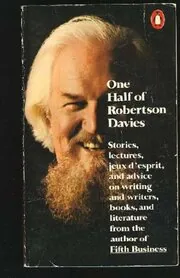
One Half of Robertson Davies
by Robertson Davies
1978
Speeches, lectures, and occasional pieces show Davies thinking out loud about books, universities, evil, theatre, and public life. It is conversational, digressive, and often most interesting when he turns unexpectedly serious.

The Enthusiasms of Robertson Davies
by Robertson Davies
1979
Reviews, essays, profiles, and occasional pieces show what Davies cared about as a critic and reader. Books lead the way, but the collection also reveals his taste for character, argument, and civilized mischief.
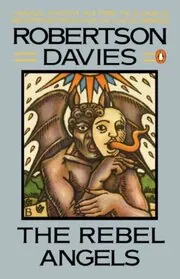
The Rebel Angels
by Robertson Davies
1981
After collector Francis Cornish dies, a tangled will pulls professors, a priest, a graduate student, and an heir into a world of manuscripts, paintings, desire, and suspicion. Davies turns campus life into a witty, high-stakes comedy of intellect and appetite.
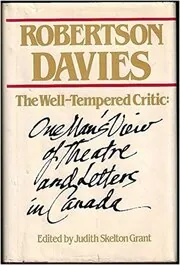
The Well-Tempered Critic
by Robertson Davies
1981
This essay collection gathers Davies on theatre and literary life in Canada. He writes as a seasoned reviewer and man of the stage, mixing argument, anecdote, and impatience with cant.

High Spirits
by Robertson Davies
1982
These eighteen ghost stories began as Christmas entertainments at Massey College. They mix the supernatural with academic vanity, social comedy, and the pleasure of a well-timed chill.
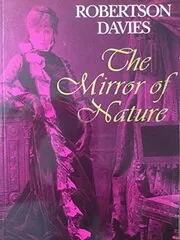
The Mirror of Nature
by Robertson Davies
1983
In these Alexander Lectures, Davies looks at nineteenth-century melodrama and the theatre's power to turn feeling into spectacle. It is short, sharp criticism, full of stage knowledge and delight in performance.
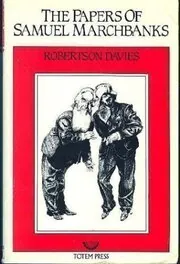
The Papers of Samuel Marchbanks
by Robertson Davies
1985
Davies's alter ego Samuel Marchbanks grumbles, jokes, and wanders across politics, manners, weather, books, and daily annoyances. This omnibus gathers the best of the columns and shows how funny Davies could be on the page.
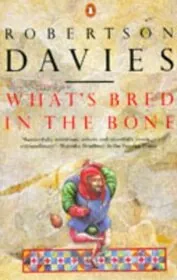
What's Bred in the Bone
by Robertson Davies
1985
This novel circles back to the life of Francis Cornish, the dead collector whose will drives The Rebel Angels. Following him from hidden childhood truths to art, forgery, and espionage, Davies builds a rich portrait of talent shaped by secrecy.
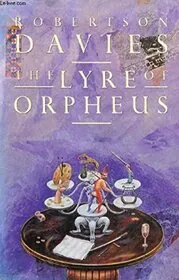
The Lyre of Orpheus
by Robertson Davies
1988
The Cornish Foundation backs a completion of E.T.A. Hoffmann's unfinished opera, and the project draws artists, scholars, and schemers into fresh trouble. It is a comic, crowded novel about music, desire, and old secrets refusing to stay buried.

At My Heart's Core Overlaid
by Robertson Davies
1991
This volume pairs two early plays. One follows gifted women in Upper Canada during the Rebellion of 1837, the other pits rural habit against hunger for art and a fuller life.
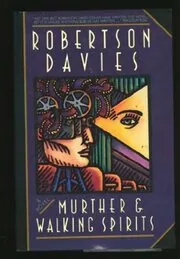
Murther and Walking Spirits
by Robertson Davies
1991
Murdered in the opening pages, Connor Gilmartin finds himself stuck in an afterlife film festival beside his killer. As he watches the lives of his ancestors unfold, Davies turns family history into a ghostly, slyly comic meditation on fate.

Fortune, My Foe and Eros at Breakfast
by Robertson Davies
1993
Two early plays show Davies testing ideas he would keep returning to. One looks at art, scholarship, and cultural compromise, while the other turns a young man's breakfast into a comic battle among the forces inside him.

Hunting Stuart and The Voice of the People
by Robertson Davies
1994
This pair of plays moves from Ottawa satire to newspaper farce. One follows a civil servant's royal connection, the other shows how a letter to the editor can set off comic trouble.
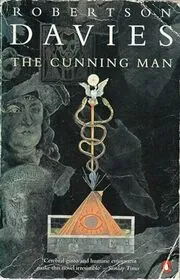
The Cunning Man
by Robertson Davies
1994
When a priest dies mysteriously at the altar on Good Friday, Toronto doctor Jonathan Hullah starts looking backward as much as forward. The result is a funny, searching novel about medicine, faith, friendship, and hidden motives.

A Gathering of Ghost Stories
by Robertson Davies
1995
Davies gathers classic supernatural tales with the knowing pleasure of a lifelong ghost-story lover. It is an invitation to read the eerie tradition he cared about so much, from subtle hauntings to sharper shocks.
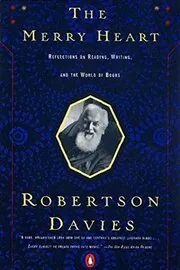
The Merry Heart
by Robertson Davies
1996
This posthumous collection brings together essays and lectures on reading, writing, painting, aging, and the life of books. It is wide-ranging, thoughtful, and a good entry into Davies outside the novels.
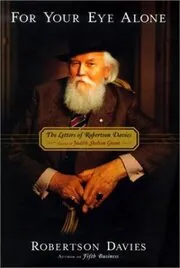
For Your Eye Alone
by Robertson Davies
1999
These later letters catch Davies in his final decades, writing about the Cornish books, public life, friendships, and the work still ahead of him. They are candid, clever, and full of literary gossip and self-scrutiny.
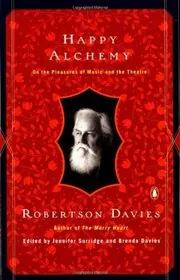
Happy Alchemy
by Robertson Davies
1999
A posthumous gathering of essays, speeches, and reviews centered on theatre, opera, and music. Davies ranges widely, but the pleasure comes from his lively mind and his feeling for performance.
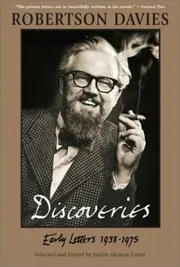
Robertson Davies Discoveries
by Robertson Davies
2002
This first volume of Davies's letters follows him from Oxford and the Old Vic through newspapers, teaching, and the rise of his fiction. It shows a younger writer becoming the sharp, funny public voice readers know.

Modern Classics Selected Works On the Art of Writing
by Robertson Davies
2008
This selection gathers Davies on craft, imagination, theatre, criticism, and the daily work of being a writer. It is a strong sampler of his nonfiction mind, curious, exacting, and funny.

Selected Works on the Pleasures of Reading
by Robertson Davies
2008
Here Davies writes as an ideal companion for serious readers. The essays roam through books, taste, rereading, and literary companionship, always making reading feel like an active and joyful art.

A Celtic Temperament
by Robertson Davies
2015
These diary selections from 1959 to 1963 catch Davies in middle life as journalist, public figure, and novelist-in-the-making. They show ambition, self-doubt, sharp observation, and the long road toward Fifth Business.
Where to start with Robertson Davies
If you want his best-known fiction: Fifth Business → The Manticore → World of Wonders
If you like campus novels and art-world intrigue: The Rebel Angels → What's Bred in the Bone → The Lyre of Orpheus
If you prefer small-town comedy: Tempest-Tost → Leaven of Malice → A Mixture of Frailties
If you want a late standalone: The Cunning Man
Robertson Davies sub-series and character series
The Cornish Trilogy books in order
Explore this seriesThe Cornish Trilogy books in chronological order
The Deptford Trilogy books in order
Explore this seriesThe Deptford Trilogy books in chronological order
The Salterton Trilogy books in order
Explore this seriesThe Salterton Trilogy books in chronological order
Robertson Davies collections, short stories, and related book types
Collections
Non-Fiction
Standalone Robertson Davies books
Author bio
Robertson Davies was born in Thamesville, Ontario, in 1913 and spent part of his childhood in Renfrew. His father was a newspaperman and later a senator, and his mother was a serious reader, so Davies grew up in a house where print, opinion, and performance all had a place. That mix of public life and private reading stayed with him for the rest of his career.
He was drawn to theatre almost as strongly as he was drawn to books.
Davies went to Upper Canada College, studied for a time at Queen's University, and then moved on to Balliol College, Oxford, where he earned a BLitt degree in 1938. In England he worked with the Old Vic Company as an actor, assistant stage manager, and teacher of theatre history. That practical experience with costume, timing, voice, and stage illusion mattered. You can feel it later in his fiction, where people are always acting, posing, performing, or discovering that they have been cast in roles they did not choose.
In 1940 he married Brenda Matthews, who became an important partner in his working life as well as his family life. After returning to Canada, he worked as literary editor at Saturday Night and then spent many years at the Peterborough Examiner as editor and publisher. He also wrote comic columns under the name Samuel Marchbanks, a cranky, funny alter ego who let him complain about weather, politics, books, bad manners, and the daily absurdity of being alive.
The newspaperman never really left him.
His early books included plays and the three Salterton novels, Tempest-Tost, Leaven of Malice, and A Mixture of Frailties. Those books are lively, sharp about class and ambition, and very alert to what it means to try to make art in a provincial Canadian setting. Even when he was satirical, Davies had a real sympathy for people reaching beyond the limits of the lives they had been handed.
His biggest turn as a novelist came with the Deptford books, Fifth Business, The Manticore, and World of Wonders. These novels begin with a snowball thrown in a small Ontario village and open out into war, psychology, sainthood, stage magic, guilt, and identity. Readers who love Davies often start here because the trilogy shows so much of what he could do: dry humor, memorable talk, strange spiritual undercurrents, and a feeling that ordinary lives may be shaped by myth as much as by accident.
The later Cornish books, The Rebel Angels, What's Bred in the Bone, and The Lyre of Orpheus, carried those interests into the worlds of universities, scholarship, collecting, and opera. He was also still writing essays, lectures, reviews, and later novels such as Murther and Walking Spirits and The Cunning Man. He liked priests, scholars, frauds, doctors, collectors, and gifted oddballs, and he was especially good at showing how intellect and vanity, culture and appetite, seriousness and nonsense all live side by side. The Manticore won the Governor General's Literary Award, and What's Bred in the Bone was shortlisted for the Booker Prize.
Academic life gave him another stage. He taught literature at the University of Toronto and became the founding head of Massey College, where he helped shape the college's tone and traditions. One Christmas custom he started there, an annual ghost story for Gaudy Night, later became High Spirits.
Davies stayed busy almost to the end, writing fiction, essays, speeches, letters, and diaries, and remaining a large public presence in Canadian cultural life. He died in 1995. What remains is a body of work that still feels companionable as much as formidable: books full of wit, talk, memory, masks, hidden motives, and the nagging sense that nobody is ever only what they seem.

Edited by
Software engineer whose passion for tracking book recommendations from podcasts inspired the creation of MRB.
Lead investor at 3one4 Capital whose startup expertise and love for books helped shape MRB and its growth.
Comments
Did we miss something? Have feedback?
Help us improve this page by sharing your thoughts