
Roberto Bolaño Books in Order
Explore Roberto Bolaño books in order, with publication details and book summaries to help you choose where to start and plan your next read.
Last updated:
As an Amazon Associate, we earn from qualifying purchases (at no extra cost to you).
Roberto Bolaño books in publication order
21 books
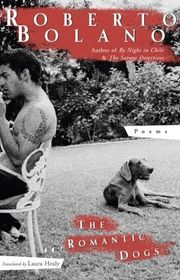
The Romantic Dogs
by Roberto Bolaño
1993
Forty-four poems explore exile, youth, literary ambition, and the unstable boundary between memory and dream. Presented in Spanish and English, the collection reveals the poetic voice behind Bolaño's fiction through encounters, journeys, and reflections on writing.
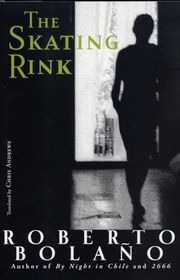
The Skating Rink
by Roberto Bolaño
1993
A murder on a secret ice rink brings together three men in a Spanish seaside town. Their conflicting accounts reveal entangled desires, political corruption, and the obsession surrounding a figure skater determined to regain her place.
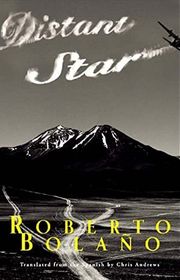
Distant Star
by Roberto Bolaño
1996
An aspiring poet encounters an air force pilot whose artistic ambitions flourish under Pinochet's dictatorship. Years later, he searches for traces of the man, following a disturbing trail where poetry, political terror, and violence converge.
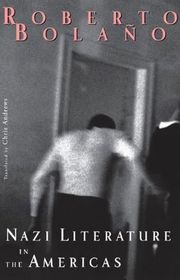
Nazi Literature in the Americas
by Roberto Bolaño
1996
An invented biographical dictionary traces extremist writers across the Americas, detailing their lives, works, and literary connections. Its portraits expose the overlap between cultural ambition and fascist ideology through a mixture of scholarly form, dark comedy, and menace.
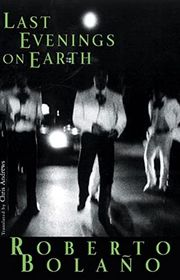
Last Evenings on Earth
by Roberto Bolaño
1997
Fourteen stories follow writers and other displaced people across Latin America and Europe. A troubled holiday, literary competitions, and memories of exile reveal lives shaped by disappointment, precarious belonging, and the uneasy relationship between literature and experience.
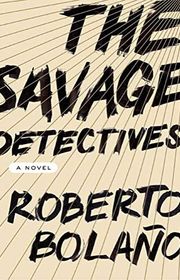
The Savage Detectives
by Roberto Bolaño
1998
Young poets Arturo Belano and Ulises Lima leave Mexico City to find a vanished literary predecessor. Their search launches a sprawling journey, reconstructed through the voices of friends, lovers, critics, and strangers encountered over subsequent decades.
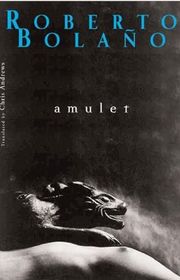
Amulet
by Roberto Bolaño
1999
Hiding in a university lavatory during a military occupation, Auxilio Lacouture revisits her life among Mexico City's poets. Her memories and visions transform a period of confinement into an account of youth, artistic ambition, and political violence.
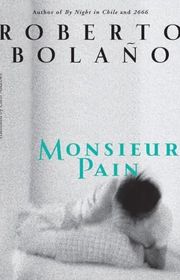
Monsieur Pain
by Roberto Bolaño
1999
In Paris in 1938, mesmerist Pierre Pain is asked to treat the ailing poet César Vallejo. Mysterious strangers urge him to stay away, and his attempts to help draw him into a maze of suspicion and guilt.
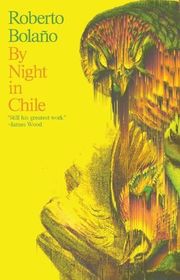
By Night in Chile
by Roberto Bolaño
2000
During a feverish night, a dying Chilean priest and literary critic revisits his relationships with writers, wealthy patrons, and the military regime. His self-justifying recollections gradually expose the compromises linking cultural life, religious authority, and political terror.
Tres
by Roberto Bolaño
2000
Three sequences move from a fractured account of unrequited love to the travels of a young Chilean band and brief literary dreams. Prose poems and verse narratives explore longing, artistic ambition, and encounters with imagined writers.

A Little Lumpen Novelita
by Roberto Bolaño
2002
After their parents die, teenage Bianca and her brother struggle to survive in Rome. Two criminals move into their apartment and draw them toward a planned robbery, forcing Bianca to confront the direction her life is taking.
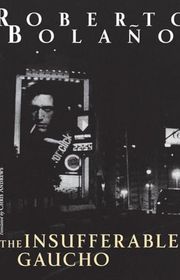
The Insufferable Gaucho
by Roberto Bolaño
2003
Five stories follow unsettling figures including a possible plagiarist and a lawyer who abandons city life for his neglected family estate. Two essays accompany these tales, extending their concerns with literature, estrangement, and the absurd.
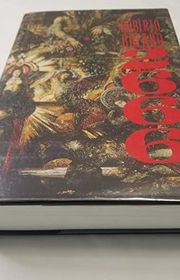
2666
by Roberto Bolaño
2004
Critics, a sportswriter, a professor, and others converge around the Mexican border city of Santa Teresa. Their intersecting stories unfold against the disappearances and murders of women and a search for an elusive German novelist.
Between Parentheses
by Roberto Bolaño
2004
Columns, essays, speeches, and prologues from Bolaño's final years form a fragmented portrait of his literary life. Reflections on family, places, admired writers, and criticism reveal his judgments about courage, reading, and the demands of artistic work.
The Secret of Evil
by Roberto Bolaño
2007
Stories and fragments recovered after Bolaño's death revisit recurring characters and literary obsessions. Mysterious calls, disappearances, homecomings, and unsettling memories form a collection concerned with violence, storytelling, and lives caught between recognizable reality and nightmare.
The Return
by Roberto Bolaño
2010
Thirteen stories explore people haunted by lost lovers, departed poets, violence, and death. Moving between the everyday and the uncanny, they follow troubled lives at society's margins while examining how stories persist and return.
Woes of the True Policeman
by Roberto Bolaño
2011
After a scandal forces professor Óscar Amalfitano from Barcelona, he settles with his daughter in a Mexican border city. Their separate romantic entanglements and his troubled past unfold amid police scrutiny and the city's pervasive violence.

The Spirit of Science Fiction
by Roberto Bolaño
2016
Two young poets seek a literary life in Mexico City but follow different paths. While Jan retreats into science-fiction correspondence and dreams, Remo ventures through the city's streets, writers' circles, and sexual encounters in pursuit of experience.
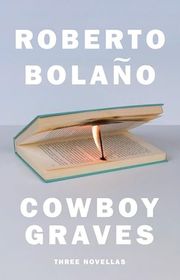
Cowboy Graves
by Roberto Bolaño
2017
Three novellas follow a revolutionary returning to Chile, a teenager recruited by a clandestine surrealist society, and a young poet confronting a fascist coup. Political upheaval and artistic longing unfold through unstable encounters and surreal events.
The Third Reich
by Roberto Bolaño
German war-game champion Udo Berger returns to a Spanish seaside resort with his girlfriend. After a fellow holidaymaker disappears, he remains behind and becomes absorbed in a strategy game whose stakes begin to feel dangerously real.
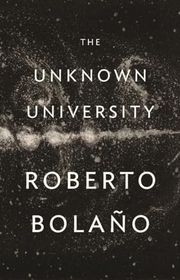
The Unknown University
by Roberto Bolaño
This bilingual collection gathers Bolaño's poetry across his writing life, ranging from prose poems to narratives in verse. Dreams, literary encounters, exile, and personal experience recur in work that repeatedly crosses the boundaries between poetry and fiction.
Where to start with Roberto Bolaño
For a short introduction: By Night in Chile
For poetry and political terror: Distant Star
For the wandering poets: The Savage Detectives
For the large, many-stranded novel: 2666
For the poetry: The Romantic Dogs → Tres → The Unknown University
Standalone Roberto Bolaño books
Author bio
Roberto Bolaño was born in Santiago, Chile, in 1953 and moved with his family to Mexico City in 1968. He helped found the Infrarealist poetry movement there, before making a life in Spain. Barcelona, Gerona and the coastal town of Blanes formed part of that later itinerary. Writers who leave home, cross borders and reconstruct a past from fragments would become central figures in his fiction.
Poetry remained part of the work, alongside the novels and stories.
The Romantic Dogs, Tres and The Unknown University offer a route into that side of his writing. The last of these gathers poems across his writing life and places prose poems beside narratives in verse. Readers coming from the novels will find familiar preoccupations with dreams, wandering and encounters between writers, but in a different form.
The Savage Detectives follows the poets Arturo Belano and Ulises Lima across countries and decades. Its wandering structure makes the search for writers into a way of encountering many other lives. Rather than supplying a single stable account of its central figures, the novel builds their presence through different voices. It won the Herralde Prize in 1998 and the Rómulo Gallegos Prize in 1999.
For a shorter introduction, Distant Star joins poetry to political terror. Its Carlos Wieder is an air-force pilot whose artistic performances become entangled with a military dictatorship. The novel treats a literary reputation as something to investigate, with uncertainty about identity giving the inquiry its disturbing force. Art is implicated in violence rather than placed safely beyond it.
By Night in Chile turns that question inward. The priest and critic Sebastián Urrutia Lacroix recalls his life over the course of a night. His effort to account for himself makes the voice telling the story as important as the events it describes. This is a compact starting point for readers interested in memory, self-justification and the relationship between intellectual life and political power.
The scale changes dramatically in 2666.
Its searchers include academics pursuing a reclusive German writer, a reporter and a philosopher. Their separate paths lead toward the Mexican border city of Santa Teresa, where women are disappearing. The connections between intellectual pursuits and violence become harder to contain within a single character's experience. Readers comfortable with a long novel and multiple centers of attention can begin here, though it asks for a different commitment from the shorter books.
Bolaño died in 2003 at fifty, and 2666 appeared after his death. The books offer several distinct ways into his work: the compressed voice of By Night in Chile, the pursuit in Distant Star, the traveling poets of The Savage Detectives, or the much larger convergence of 2666. They need no shared reading order.








Edited by
Software engineer whose passion for tracking book recommendations from podcasts inspired the creation of MRB.
Lead investor at 3one4 Capital whose startup expertise and love for books helped shape MRB and its growth.
Comments
Spotted a missing book, a wrong order or a mistake? Tell us and we'll fix this page.
We're a reading guide, not the author or publisher, so we can't send books or pass on messages.