
Robert Langdon Books in Order
Part ofDan Brown Books in OrderThe complete guide to the Robert Langdon books by Dan Brown, featuring the Harvard symbologist’s high-stakes adventures in order.
Last updated:
As an Amazon Associate, we earn from qualifying purchases (at no extra cost to you).
Robert Langdon books in publication order
6 books
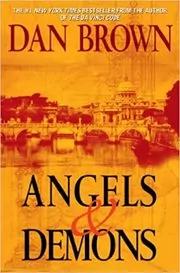
Angels & Demons
by Dan Brown
2000
Robert Langdon is summoned to a Swiss research facility to analyze a mysterious symbol burned into a murdered physicist. The trail leads to the Vatican, where the ancient Illuminati have planted a weapon of mass destruction on the eve of a papal conclave.
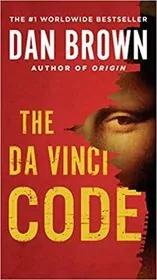
The Da Vinci Code
by Dan Brown
2003
A curator is murdered inside the Louvre, leaving behind a trail of baffling codes. Harvard symbologist Robert Langdon and French cryptologist Sophie Neveu must solve the riddles hidden in Da Vinci’s art before a powerful secret is lost forever.
Recommended by
2 people Shah Rukh Khan recommended this book
Shah Rukh Khan
"I like what [this author] writes, it also helps me understand certain aspects of the religion that he writes about, so that’s good." - Shah Rukh Khan
Shah Rukh Khan's recommendation of this book  Ev Williams recommended this book
Ev Williams
On the "books read" section of Ev Williams' GoodReads profile.
Ev Williams's recommendation of this book
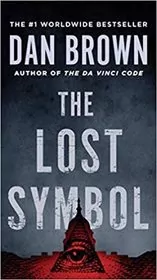
The Lost Symbol
by Dan Brown
2009
Expecting to give a lecture at the U.S. Capitol, Langdon instead finds a severed hand pointing toward a hidden world of Masonic secrets. To save his kidnapped mentor, he must decipher an ancient legend buried within the architecture of Washington, D.C.
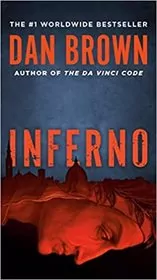
Inferno
by Dan Brown
2013
Waking up in an Italian hospital with no memory of the past thirty-six hours, Langdon finds himself the target of a manhunt. With the help of a doctor, he flees through Florence, decoding clues drawn from Dante’s *Divine Comedy* to stop a global plague.
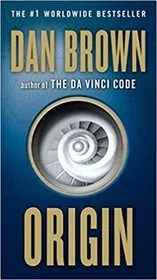
Origin
by Dan Brown
2017
Robert Langdon arrives at the Guggenheim Museum Bilbao for an announcement by futurist Edmond Kirsch, who promises to reveal the origin of humanity. When the event descends into chaos, Langdon and museum director Ambra Vidal race to unlock Kirsch’s discovery.
Recommended by
1 person Mukesh Ambani recommended this book
Mukesh Ambani
"I just finished [this book]. I like [the author]." - Mukesh Ambani
Mukesh Ambani's recommendation of this book

The Secret of Secrets
by Dan Brown
2025
Robert Langdon travels to Prague to support noetic scientist Katherine Solomon as she unveils a breakthrough on human consciousness. When she disappears, Langdon is plunged into a mystery involving ancient folklore and the question of what happens after death.
Robert Langdon books in chronological order
Series background & context
Robert Langdon is arguably the world’s most famous fictional academic. A professor of religious symbology at Harvard University, he is a man of intellect rather than action. He prefers the quiet solitude of a library or a lecture hall to the chaos of the field. However, his expertise makes him a magnet for trouble. He is repeatedly pulled away from his academic life and dropped directly into the path of international conspiracies, forced to rely on his encyclopedic knowledge of history to survive.
The structure of these stories is designed to keep your heart rate up.
Dan Brown builds each narrative around a relentless "ticking clock" mechanism. The events rarely span more than a single, frantic day. This compressed twenty-four-hour timeline forces the characters to move at a breakneck speed, creating a sense of urgency that makes the books difficult to put down. Langdon finds himself sprinting through historic cities like Rome, Paris, Florence, and Washington D.C., usually while being hunted by local authorities or shadowy organizations.
In every installment, the environment itself becomes a puzzle to be solved. Famous works of art, towering cathedrals, and ancient literature are not just background scenery; they are the keys to the mystery. Langdon’s role is to look at a Renaissance painting or a government seal and see the hidden codes that others miss. He peels back layers of history to reveal messages left behind by long-dead masters, turning the study of art history into a high-stakes scavenger hunt.
He rarely faces these challenges alone.
To navigate the modern crises he encounters, Langdon is typically paired with a highly skilled partner. These women are experts in fields that Langdon knows little about, such as bio-physics, cryptology, or marine science. The dynamic creates a necessary bridge between two worlds. While Langdon interprets the symbols of the past, his partner handles the cutting-edge technology and immediate physical threats. Together, they form a team that balances old-world wisdom with new-world capability.
At the heart of the series is the eternal tension between science and religion. The stories often pit modern innovation against ancient dogma, whether it involves a canister of unstable antimatter threatening the Vatican or a man-made virus designed to solve overpopulation. Langdon acts as the mediator in this conflict. He is the voice of reason, often demonstrating that what appears to be divine intervention or sorcery is actually just a misunderstood piece of history.
What makes these thrillers stick with readers is how they blur the line between fact and fiction. While the plots are invented, the groundwork is widely reported to be real. The books are famous for citing actual artwork, existing secret societies, and legitimate historical documents as the foundation for their puzzles. This mix of verified fact and high-stakes speculation encourages readers to question history, blurring the edges of the story until it feels unsettlingly real.












Edited by
Software engineer whose passion for tracking book recommendations from podcasts inspired the creation of MRB.
Lead investor at 3one4 Capital whose startup expertise and love for books helped shape MRB and its growth.
Comments
Did we miss something? Have feedback?
Help us improve this page by sharing your thoughts