
Rion Amilcar Scott Books in Order
Browse Rion Amilcar Scott books in order, with short summaries, reading path tips, and a quick guide to where to start with Cross River and beyond.
Last updated:
As an Amazon Associate, we earn from qualifying purchases (at no extra cost to you).
Rion Amilcar Scott books in publication order
4 books
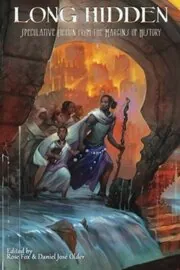
Long Hidden
by Rion Amilcar Scott
2014
This anthology gathers speculative stories set at the edges of recorded history, where people usually pushed aside take center stage. Scott's contribution, 'Numbers,' adds his mix of history, imagination, and resistance to the larger chorus.
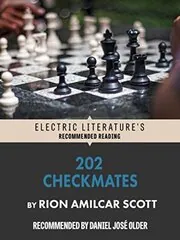
202 Checkmates
by Rion Amilcar Scott
2016
An eleven-year-old girl measures herself against her father across a long series of chess games. What starts as a close bond becomes a sharp lesson about pride, love, and the moment a child sees an adult more clearly.
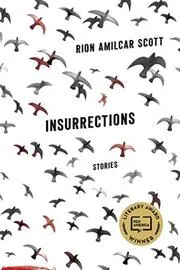
Insurrections
by Rion Amilcar Scott
2016
Set in Cross River, Maryland, this linked story collection follows residents facing family strain, violence, faith, and hard choices. Scott keeps the stakes intimate and human, showing how whole histories can press on everyday lives.
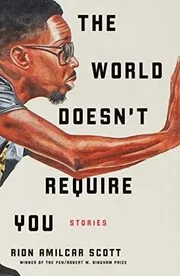
The World Doesn't Require You
by Rion Amilcar Scott
2016
In the fictional town of Cross River, linked stories blend satire, folklore, horror, and alternate history. Musicians, robots, scholars, and strivers move through a place where the past never stays buried and the strange feels oddly familiar.
Where to start with Rion Amilcar Scott
If you want the full Cross River story: Insurrections → The World Doesn't Require You
If you want a quick way in: 202 Checkmates → Insurrections
If you want the stranger, more speculative side: The World Doesn't Require You → Long Hidden
Rion Amilcar Scott collections, short stories, and related book types
Short Stories/Novellas
Short Story Collections
Standalone Rion Amilcar Scott books
Author bio
Rion Amilcar Scott was born in Washington, D.C., and raised in Silver Spring, Maryland. His parents came to the United States from Trinidad to study at Howard University, and that blend of local Maryland life and larger diasporic history quietly shapes a lot of what he writes.
He has said writing got hold of him early, right after a first poem came to him as a preteen. There was nothing else after that. He later earned a B.A. from Howard University and an MFA from George Mason University, where he won the Mary Roberts Rinehart Award, a Completion Fellowship, and later an Alumni Exemplar Award.
Cross River came out of those Mason years.
That invented Maryland town sits at the center of Insurrections, his 2016 debut collection. The book follows people across linked stories full of family trouble, neighborhood lore, faith, violence, jokes, stubborn love, and everyday survival. A suicidal father seeks shelter, a man tries to reach an estranged brother, and a child's chess match with her father turns unexpectedly deep. The collection won the 2017 PEN/Bingham Prize for Debut Fiction and the Hillsdale Award.
One of the stories readers often remember is 202 Checkmates, about a girl, her father, and the lessons tucked inside a long chess rivalry. Scott has said that writing it changed something for him. It helped him move past his fear of writing female characters and trust the people on the page to become more fully themselves.
Then came The World Doesn't Require You, which returns to Cross River and opens the town even further. Here Scott leans harder into satire, folklore, religion, horror, and alternate history without losing sight of the people at the center. The book moves between musicians, scholars, robots, and believers, all living under the weight of a town founded after a successful slave revolt. It was a finalist for the PEN/Jean Stein Book Award and won the 2020 Towson Prize for Literature.
Cross River turned out to be his recurring character.
He does not treat genre like a fence. Readers who like Scott tend to like the way he can move from a realistic family scene to something eerie or absurd, then circle back to heartbreak. You can see that range again in Long Hidden, the historical speculative anthology that includes his story 'Numbers,' and in shorter pieces published in places like The New Yorker and The Kenyon Review.
Across the work, certain concerns keep returning. He writes about Black communities carrying history in the present tense, about fathers and children, men and masculinity, faith, shame, pride, and the ways humor can live right beside pain. Even when a story gets wild, the emotional pressure is usually close to home. He has also said parenthood changed the questions he asks of his work, giving him more ideas and less time.
Teaching has stayed part of his life too. He taught at Bowie State University and now teaches creative writing at the University of Maryland, where he is an associate professor in English. Along the way he has received fellowships from Bread Loaf, Kimbilio, and the Colgate Writing Conference, and his work has been recognized in Best American Essays, Best American Stories, and Best American Science Fiction and Fantasy.


Edited by
Software engineer whose passion for tracking book recommendations from podcasts inspired the creation of MRB.
Lead investor at 3one4 Capital whose startup expertise and love for books helped shape MRB and its growth.
Comments
Did we miss something? Have feedback?
Help us improve this page by sharing your thoughts