
Rinker Buck Books in Order
Explore Rinker Buck's books in order, with short summaries, reading guidance, and an easy way into his adventure memoirs, reporting, and American history.
Last updated:
As an Amazon Associate, we earn from qualifying purchases (at no extra cost to you).
Rinker Buck books in publication order
6 books
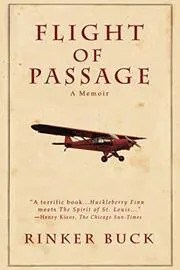
Flight of Passage
by Rinker Buck
1997
In 1966, teenage brothers Rinker and Kernahan Buck buy a battered Piper Cub, rebuild it, and fly from New Jersey to California without a radio. The adventure is exciting on its own, but the book also becomes a sharp, funny story about family, rivalry, and growing up.
If We Had Wings
by Rinker Buck
2001
Buck traces the long human dream of flight, from early inventors and daredevil pioneers to astronauts and the space age. Letters, diary pages, and other documents give the history a lively, hands-on feel.

First Job
by Rinker Buck
2002
Fresh out of Bowdoin in 1973, Buck lands in the Berkshire Eagle newsroom and learns reporting from the ground up. It's a funny, affectionate memoir about mistakes, ambition, and the odd mentors who teach him how newspapers really work.

Shane Comes Home
by Rinker Buck
2005
Buck reconstructs the life of Marine Lieutenant Shane Childers, killed early in the Iraq War, and follows the grief that reaches his family, hometown, and fellow Marines. It's intimate, careful reporting about duty, loss, and the human cost of war.
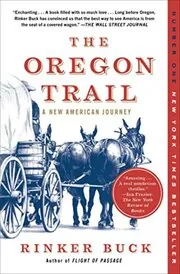
The Oregon Trail
by Rinker Buck
2015
Buck and his brother Nick cross the Oregon Trail in a covered wagon pulled by mules, moving slowly enough to feel the land and its history. The trip mixes comic mishaps, hard travel, and a searching look at the route that helped remake the United States.
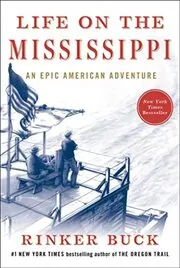
Life on the Mississippi
by Rinker Buck
2022
Buck builds a wooden flatboat and heads down the Ohio and Mississippi rivers toward New Orleans, trying to understand America's forgotten flatboat era. The book blends river adventure, mechanical trouble, and a rich history of the waterways that shaped the country's early growth.
Where to start with Rinker Buck
If you want the classic starting point: Flight of Passage → The Oregon Trail
If you want a big American journey: The Oregon Trail → Life on the Mississippi
If you love aviation and flight history: Flight of Passage → If We Had Wings
If you want Buck the reporter: First Job → Shane Comes Home
Rinker Buck collections, short stories, and related book types
Non-Fiction
Author bio
Rinker Buck was born in Morristown, New Jersey, in 1950 and grew up in northern New Jersey in a family so large and noisy that ordinary life probably never had much of a chance. He was one of eleven children, and his father, Tom Buck, was a former barnstorming pilot and magazine publisher who filled the house with stories, schemes, horses, planes, and very little interest in staying small.
Adventure was part of the household routine.
The family story most readers know begins in 1966, when Buck was fifteen and his older brother Kernahan was seventeen. The two rebuilt a worn 1948 Piper Cub and flew it from New Jersey to California, navigating without a radio and becoming the youngest duo to make a coast-to-coast flight. Buck turned that experience, and the knotty feelings around trying to prove something to their father, into Flight of Passage, a memoir readers still love for its speed, humor, and family tension.
Writing came by way of reporting. After Bowdoin College, Buck spent time traveling on his motorcycle, saw that the Berkshire Eagle had just won a Pulitzer Prize, stopped by the newsroom, and, by his own telling, more or less blundered into a job interview. He started with obituaries and weather stories in 1973, which is about as practical an apprenticeship as a writer can get.
That accidental stop at a newspaper office changed his life.
Buck went on to work at the Hartford Courant and write for national magazines that included New York, Life, Adweek, and Vanity Fair. His journalism won major awards, but what matters most on the page is the reporter's habit of looking twice, then asking one more question. You can see that especially in First Job, his warm, rueful memoir of learning the newspaper trade, and in Shane Comes Home, his close account of Marine Lieutenant Shane Childers and the grief that follows his death in Iraq.
He has always been drawn to subjects that move, literally. If We Had Wings widens his early love of flying into a compact history of aviation, stretching from dreamers and early inventors to the space age. Even when Buck is writing history, he tends to look for the machines, the weather, the bad luck, and the ordinary people inside the big national story.
The Oregon Trail takes that instinct to full scale. For that book, Buck and his brother Nick crossed the old trail in a covered wagon pulled by mules, a stunt that could easily have become a gimmick in the wrong hands. Instead it became a big, funny, sometimes bruising travel narrative, and also a serious look at the trail, the settlers who used it, and the Native people whose world it cut through. The book became a number one New York Times bestseller and won the PEN New England Award.
History, for Buck, works best when it has dust on it.
He took a similar approach in Life on the Mississippi, building a wooden flatboat and taking it down the Ohio and Mississippi rivers toward New Orleans while digging into the nearly forgotten flatboat era that helped build the early American economy. Readers tend to come to Buck for adventure, but they stay for the side roads: sibling friction, fathers and sons, oddballs, breakdowns, and the feeling that the country looks different when you slow down enough to notice it. Recent profiles show that Buck still flies for recreation, which feels exactly right. His books keep returning to the same question in different forms: what do people learn about themselves when they leave comfort behind and try something difficult, old-fashioned, and a little unreasonable?










Edited by
Software engineer whose passion for tracking book recommendations from podcasts inspired the creation of MRB.
Lead investor at 3one4 Capital whose startup expertise and love for books helped shape MRB and its growth.
Comments
Did we miss something? Have feedback?
Help us improve this page by sharing your thoughts