
Richard Rothstein Books in Order
Explore Richard Rothstein books in order, with quick summaries, where to start, and a clear guide to his work on education, labor, and housing policy.
Last updated:
As an Amazon Associate, we earn from qualifying purchases (at no extra cost to you).
Richard Rothstein books in publication order
10 books
Keeping Jobs In Fashion
by Richard Rothstein
1990
A policy argument against treating the decline of U.S. apparel manufacturing as inevitable. It looks at trade, industry structure, and labor policy, and asks what might keep more garment jobs in American communities.
Photographic Case Studies in Gastroenterology
by Richard Rothstein
1992
A visual teaching guide built around gastroenterology case studies and diagnostic images. It helps practitioners compare presentations, think through test findings, and sharpen day to day diagnostic judgment.
The Prosperity Gap
by Richard Rothstein
1997
A data-heavy chartbook on American living standards in the 1990s. It tracks widening gaps in income, job quality, and growth, arguing that rising prosperity was being shared far more unevenly than headline economic numbers suggested.
The Way We Were?
by Richard Rothstein
1998
Rothstein pushes back against the idea that American public schools have simply gone downhill. Looking at test scores, dropout rates, and changing student demographics, he argues the story is more complicated than the panic suggests.
Can Public Schools Learn From Private Schools
by Richard Rothstein
1999
Drawing on case studies of California elementary schools, this book tests the usual claims about private-school advantages. It finds that community and social conditions often matter more than whether a school is public or private.
All Else Equal
by Richard Rothstein
2002
This book takes a hard look at the public versus private school debate and challenges easy assumptions. Comparing schools in similar communities, it argues that local context and student background shape outcomes as much as school type.
The Korean Economy at the Crossroads
by Richard Rothstein
2003
An essay collection on South Korea's rise, the 1997 financial crisis, and the uneven recovery that followed. It examines chaebols, finance, industry, and policy choices at a moment when the country's economic model was under pressure.
Class and Schools
by Richard Rothstein
2004
This book argues that the Black-white achievement gap cannot be understood through school reform alone. It connects learning outcomes to health, housing, income, and other social conditions that shape children's lives before they enter a classroom.
Grading Education
by Richard Rothstein
2008
A critique of narrow, test-driven accountability in public education. It argues that schools should be judged by a broader set of goals, including critical thinking, citizenship, social skills, and students' physical and emotional health.
The Color of Law
by Richard Rothstein
2017
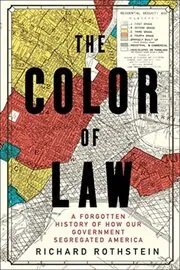
A history of how federal, state, and local governments deliberately created and maintained residential segregation in the United States. It links housing policy to the racial lines that still shape neighborhoods, schools, and wealth.
Where to start with Richard Rothstein
If you want the big housing book first: The Color of Law
If you want the education debate from the start: The Way We Were? → Can Public Schools Learn From Private Schools → All Else Equal
If you want the wider structural argument: Class and Schools → Grading Education
If you want his earlier labor policy work: Keeping Jobs In Fashion
Richard Rothstein collections, short stories, and related book types
Non-Fiction
by Richard Rothstein
1990Alternatives To The Euthanasia Of The U. S. Apparel Industry
Can Public Schools Learn From Private Schools
by Richard Rothstein
1999Case Studies in the Public and Private Nonprofit Sectors
by Richard Rothstein
2004Using Social, Economic, and Educational Reform to Close the Black-White Achievement Gap
by Richard Rothstein
2017A Forgotten History of How Our Government Segregated America
Author bio
Richard Rothstein is an American writer and policy researcher whose books sit at the crossroads of education, labor, housing, and race. Born in New York in 1939, he later spent much of his working life in California, turning big policy arguments into plainspoken books for general readers.
Long before The Color of Law made him widely known, Rothstein was working close to the ground. In the 1980s he organized in the garment and textile world in California, and that experience fed into Keeping Jobs In Fashion, a study of the U.S. apparel industry and the policy choices shaping those jobs.
He came to writing through public fights, not from the sidelines.
In the late 1980s and early 1990s, Rothstein worked as a budget analyst for the elected school board of the Los Angeles Unified School District. That work pushed him deeper into education policy and into a long association with the Economic Policy Institute. From 1999 to 2002 he was the national education columnist for The New York Times, writing about schools in a way that tied classroom debates to housing, health, family income, and the labor market.
That wider frame runs through The Way We Were?, Can Public Schools Learn From Private Schools, and All Else Equal. In those books he challenged familiar stories about American education, especially the idea that public schools had simply collapsed or that private schools were an automatic answer. He looked closely at test scores, dropout rates, school organization, and student background, and kept returning to the same point: if you ignore the conditions children live in, you miss a big part of what schools are up against.
Sometimes that meant puncturing panic. Sometimes it meant reminding readers that schools matter a lot, but they cannot by themselves undo poverty or segregation.
He kept asking the annoying question.
In Class and Schools, Rothstein argued that the Black-white achievement gap could not be narrowed by classroom reform alone. He wrote about health care, stable housing, after-school time, family stress, and income inequality, the everyday forces that shape how ready children are to learn before the school bell even rings. Later, in Grading Education, he and his coauthors pushed back against narrow test-based accountability and argued for a broader view of what schools should be responsible for, including citizenship, judgment, social skills, and physical and emotional well-being.
The Color of Law brought those interests together and reached a much wider audience. The book argues that residential segregation in the United States was not just the accidental result of private prejudice or market forces, but something created and reinforced by federal, state, and local government policy. Rothstein arrived at that subject through school policy: if schools are segregated because neighborhoods are segregated, then housing history is school history too.
Today he is a Distinguished Fellow at the Economic Policy Institute and a Senior Fellow emeritus at the Thurgood Marshall Institute of the NAACP Legal Defense Fund. He has also been affiliated with policy work at Berkeley. Readers usually come to Rothstein for the research, but they stay because he writes without much fog. Even when the subject is dense, he keeps the human stakes in view.
















Edited by
Software engineer whose passion for tracking book recommendations from podcasts inspired the creation of MRB.
Lead investor at 3one4 Capital whose startup expertise and love for books helped shape MRB and its growth.
Comments
Did we miss something? Have feedback?
Help us improve this page by sharing your thoughts