
Richard A. Clarke Books in Order
Find Richard A. Clarke books in order, with short summaries and guides to the author's series that help you choose where to start and what to read next.
Last updated:
As an Amazon Associate, we earn from qualifying purchases (at no extra cost to you).
Richard A. Clarke books in publication order
10 books
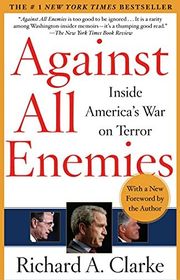
Against All Enemies
by Richard A. Clarke
2004
Drawing on decades in national security, Richard Clarke examines America’s struggle against al-Qaeda and the decisions preceding September 11. His account questions how successive administrations assessed terrorism and why warnings failed to produce an effective response.
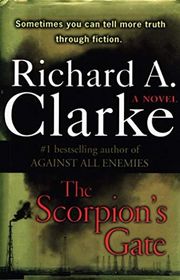
The Scorpion's Gate
by Richard A. Clarke
2005
After a bombing in Bahrain, British intelligence officer Brian Douglas investigates competing agendas in a transformed Middle East. With Saudi rulers overthrown and a nuclear-armed Iran dominating Iraq, shifting alliances threaten to draw the region into another war.
Breakpoint
by Richard A. Clarke
2007
Coordinated attacks begin destroying the technological networks connecting the world, targeting satellites, communications cables, computer grids, and biotechnology companies. An investigative team searches among extremists, criminals, and hostile states as the escalating destruction threatens to push society beyond recovery.
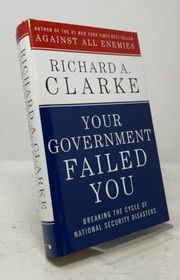
Your Government Failed You
by Richard A. Clarke
2008
Richard Clarke examines recurring failures in American national security, from terrorism and the Iraq War to Hurricane Katrina. Drawing on his government career, he identifies institutional patterns behind these disasters and argues for changes that could prevent their repetition.
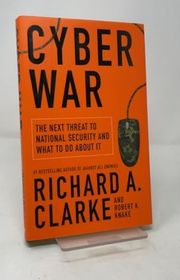
Cyber War
by Richard A. Clarke
2010
Richard Clarke and Robert Knake examine how digital attacks threaten national security, infrastructure, and ordinary citizens. Explaining the capabilities of hackers, spies, and military forces, they explore vulnerabilities in connected systems and propose ways to prepare for cyber conflict.
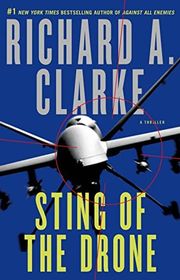
Sting of the Drone
by Richard A. Clarke
2014
American officials select drone targets while pilots and intelligence teams execute their decisions from a Nevada airbase. In the regions under attack, an adversary prepares retaliation against the people operating the weapons, bringing distant warfare dangerously close to home.
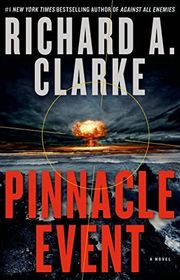
Pinnacle Event
by Richard A. Clarke
2015
Five murders across three continents expose the black-market sale of nuclear weapons shortly before an American presidential election. Intelligence expert Ray Bowman joins Israeli and South African operatives to locate the bombs and uncover a plan more destructive than Washington anticipates.
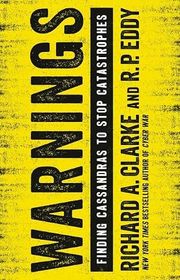
Warnings
by Richard A. Clarke
2017
Why are experts who correctly foresee disasters so often ignored? Richard Clarke and R. P. Eddy investigate warnings preceding catastrophes and propose a method for distinguishing credible forecasts from alarmism, then examine emerging threats that remain insufficiently addressed.
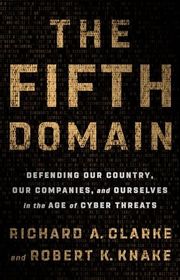
The Fifth Domain
by Richard A. Clarke
2019
Richard Clarke and Robert Knake explore how governments, businesses, and individuals can withstand cyberattacks. Drawing on security practitioners and real incidents, they argue for resilient systems that protect privacy, democracy, and economic activity while reducing the risks of escalating digital conflict.

Artificial Intelligencia
by Richard A. Clarke
2022
Chinese detective Wei Bao discovers a global conspiracy embedded in surveillance and computer systems that track billions of people. Pursued by technology more powerful than his own creation, he races to identify an impending disaster and the people planning it.
Where to start with Richard A. Clarke
For his account of counterterrorism: Against All Enemies
For the cyber security books: Cyber War → The Fifth Domain
For recognizing threats before disaster: Warnings
For a military technology thriller: Sting of the Drone
Standalone Richard A. Clarke books
Author bio
Richard A. Clarke writes about national security from both sides of the fiction shelf. His nonfiction asks how governments recognize danger, make decisions and fail to protect people. His thrillers turn related questions into conflicts involving intelligence officials, technology and adversaries looking for weaknesses in systems meant to keep them out. The connection comes from decades spent doing security work inside the United States government.
Born in Boston, Clarke attended Boston Latin School, the University of Pennsylvania and the Massachusetts Institute of Technology. He began federal service in 1973 in the Office of the Secretary of Defense, working as an analyst on nuclear weapons and European security. He joined the State Department in 1979, later serving in intelligence under Ronald Reagan and as Assistant Secretary for Politico-Military Affairs under George H. W. Bush.
His White House service ran from 1992 to 2003.
Under Bill Clinton, Clarke became National Coordinator for Security and Counterterrorism, a role he continued under George W. Bush. He also served as Special Advisor for Cyber Security. Those jobs put conventional security questions alongside a developing concern with the vulnerability of computer networks. After leaving government, he taught at Harvard's Kennedy School, worked as an ABC News analyst and led the security consulting firm Good Harbor.
Against All Enemies is the most direct starting point for his nonfiction about terrorism and al-Qaeda. It reached number one on the New York Times bestseller list. Readers approaching Clarke through public policy can move from that account to Cyber War, written with Robert Knake. The focus shifts toward computer attacks, the systems they can disrupt and the problem of defending a connected country. The Fifth Domain, also written with Knake, returns to the changing balance between attack and defense, extending the question beyond government to companies and individuals.
The recurring problem is deciding what to do before a threat becomes a disaster.
That problem takes a wider form in Warnings, coauthored with R. P. Eddy. They examine experts who saw catastrophes coming but struggled to persuade others to act, and ask how credible predictions can be distinguished from unfounded alarms. It is an entry point for readers interested in institutional judgment as much as military or intelligence operations. Across these books, specialist knowledge has to pass through organizations and people before it can become a useful decision.
For fiction, Sting of the Drone turns remote warfare into a conflict that reaches back toward the people conducting it. A committee in Washington selects targets, crews near Las Vegas carry out its orders, and people on the receiving end plan retaliation against the Americans controlling the aircraft. That setup gives the technology a human chain of responsibility, rather than treating the machines as independent actors. Clarke's novels and nonfiction can be read separately, with the former offering imagined scenarios and the latter making explicit arguments about policy and preparedness. He lives in Virginia and hosts the Future State podcast.














Edited by
Software engineer whose passion for tracking book recommendations from podcasts inspired the creation of MRB.
Lead investor at 3one4 Capital whose startup expertise and love for books helped shape MRB and its growth.
Comments
Spotted a missing book, a wrong order or a mistake? Tell us and we'll fix this page.
We're a reading guide, not the author or publisher, so we can't send books or pass on messages.